NOTES
[1] Pete Daniel, Dispossession: Discrimination Against African American Farmers in the Age of Civil Rights (Chapel Hill: University of North Carolina Press, 2013); Daniel, Breaking the Land: The Transformation of Cotton, Tobacco, and Rice Cultures since 1880 (Urbana: University of Illinois Press, 1985); Melissa Walker, All We Knew Was to Farm: Rural Women in the Upcountry South, 1919–1941 (Baltimore: Johns Hopkins University Press, 2000); Katherine Jellison, Entitled to Power: Farm Women and Technology, 1913–1963 (Chapel Hill: University of North Carolina Press, 1993); Rebecca Sharpless, Cooking in Other Women’s Kitchens: Domestic Workers in the South, 1865–1960 (Chapel Hill: University of North Carolina Press, 2010); Jessamyn Neuhaus, Manly Meals and Mom’s Home Cooking: Cookbooks and Gender in Modern America (Baltimore: Johns Hopkins University Press, 2003); Greta de Jong, You Can’t Eat Freedom: Southerners and Social Justice after the Civil Rights Movement (Chapel Hill: University of North Carolina Press, 2016); Adam Green, Selling the Race: Culture, Community, and Black Chicago, 1940–1955 (Chicago: University of Chicago Press, 2006).
[2] Darlene Clark Hine, Hine Sight: Black Women and the Re-Construction of American History (Bloomington: Indiana University Press, 1997); Ula Y. Taylor, The Promise of Patriarchy: Women and the Nation of Islam (Chapel Hill: University of North Carolina Press, 2017); Evelyn Brooks Higginbotham, Righteous Discontent: The Women’s Movement in the Black Baptist Church, 1880–1920 (Cambridge: Harvard University Press, 1993); Stephanie Shaw, What a Woman Ought to Be and to Do: Black Professional Women Workers During the Jim Crow Era (Chicago: University of Chicago Press, 1996); Thavolia Glymph, Out of the House of Bondage: The Transformation of the Plantation Household (Cambridge: Cambridge University Press, 2008); Deborah Gray White, Ar’n’t I a Woman?: Female Slaves in the Plantation South (New York: W.W. Norton, 1985).
[3] Thomas J. Ward Jr., Black Physicians in the Jim Crow South (Fayetteville: University of Arkansas Press, 2003); Noliwe Rooks, Cutting School: Privatization, Segregation, and the End of Public Education (New York: The New Press, 2017); Jarvis R. Givens, Fugitive Pedagogy: Carter G. Woodson and the Art of Black Teaching (Cambridge: Harvard University Press, 2021); Christopher M. Span, From Cotton Field to Schoolhouse: African American Education in Mississippi, 1862–1875 (Chapel Hill: University of North Carolina Press, 2009).
[4] Michel-Rolph Trouillot, Silencing the Past: Power and the Production of History (Boston: Beacon Press, 1995).
[5] Toni Morrison, “The Site of Memory,” in Inventing the Truth: The Art and Craft of Memoir, ed. William Zinsser (Boston: Houghton Mifflin, 1987), 183–200.
[6] Verne Harris, Archives and Justice: A South African Perspective (Chicago: Society of American Archivists, 2007)
[7] Michelle Caswell and Marika Cifor, “From Human Rights to Feminist Ethics: Radical Empathy in the Archives,” Archivaria 81 (2016): 23–43.
[8] Jarrett Drake, “Documenting Dissent in the Contemporary United States: A Theoretical Framework for an Activist Archives,” Archivaria 82 (2016): 23–47.
[9] Randall C. Jimerson, Archives Power: Memory, Accountability, and Social Justice (Chicago: Society of American Archivists, 2009).
[10] Lauren Klein, An Archive of Taste: Race and Eating in the Early United States (Minneapolis: University of Minnesota Press, 2020); Kim Gallon, “Making a Case for the Black Digital Humanities,” Debates in the Digital Humanities (Minneapolis: University of Minnesota Press, 2016).
[11] Terry Cook, “The Archive(s) Is a Foreign Country: Historians, Archivists, and the Changing Archival Landscape,” The American Archivist 74, no. 2 (Fall/Winter 2011): 600–632.
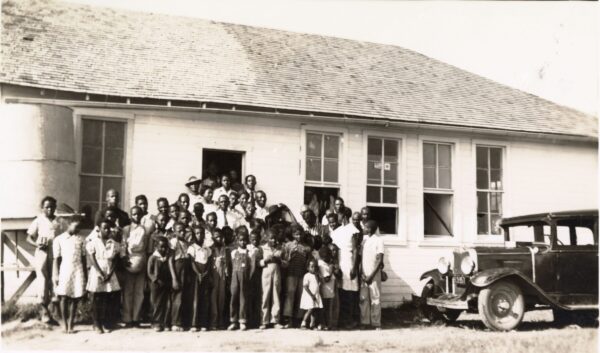
[12] Saidiya Hartman’s method of critical fabulation provides an essential historiographical framework for reconstructing the lives of Black children whose presence in the archival record has been fragmented, distorted, or silenced by the racialized logic of state power. In “Venus in Two Acts,” Hartman theorizes critical fabulation as a practice of narrating possibility within and against the gaps of the colonial archive—a way of restoring humanity, agency, and emotional depth to subjects whose experiences were systematically reduced to administrative fragments or juridical shorthand. This framework is especially generative for interpreting youth materials in the CE&HD collection, where the voices, achievements, and everyday lives of rural Black children appear only indirectly through enrollment lists, brief performance summaries, or adult-authored reports. As scholars such as Marisa Fuentes and Jessica Marie Johnson have demonstrated, the absences, silences, and distortions of the archive are themselves products of violent historical structures; therefore, reconstructing marginalized lives requires methodological approaches that refuse to reproduce that violence. When applied to 4-H records, achievement booklets, and scattered county reports, critical fabulation allows the historian to read beyond bureaucratic surfaces and to imagine the worlds of aspiration, learning, fear, pride, and creativity that shaped Black childhood in rural Texas. Rather than treating youth as passive objects of state programs, the method foregrounds their agency and lived experience. In this sense, critical fabulation becomes not an embellishment but an ethical imperative—one that recognizes that restoring complexity to Black children’s histories is part of a larger scholarly project of repairing the harms of archival marginalization; see, Saidiya Hartman, “Venus in Two Acts,” Small Axe 12, no. 2 (2008): 1–14; Christen A. Smith, Afro-Paradise: Blackness, Violence, and Performance in Brazil (Urbana: University of Illinois Press, 2016).
[13] Brenda Gail Gunn, “Archives and Human Rights: Contextualizing Archival Authority,” Archival Science 14, nos. 3–4 (2014): 277–290.
[14] Saidiya Hartman, Wayward Lives, Beautiful Experiments: Intimate Histories of Social Upheaval (New York: W.W. Norton, 2019), xvii–xxii.
[15] Davarian L. Baldwin, In the Shadow of the Ivory Tower: How Universities Are Plundering Our Cities (New York: Bold Type Books, 2021).
[16] Lae’l Hughes-Watkins, “Moving Toward a Reparative Archive: A Roadmap for Black Women’s Collections,” Journal of Contemporary Archival Studies 5 (2018): 1–12.
[17] See Hannah-Rose Murray, Advocates of Freedom: African American Transatlantic Abolitionism in the British Isles (Cambridge: Cambridge University Press, 2020); Monica M. White, Freedom Farmers: Agricultural Resistance and the Black Freedom Movement (Chapel Hill: University of North Carolina Press, 2019); and Catherine Stewart, Long Past Slavery: Representing Race in the Federal Writers’ Project (Chapel Hill: University of North Carolina Press, 2016).
[18] Elsa Barkley Brown, “Negotiating and Transforming the Public Sphere: African American Political Life in the Transition from Slavery to Freedom,” Public Culture 7, no. 1 (1994): 107–46.
[19] Lae’l Hughes-Watkins, “Moving Toward a Reparative Archive: A Roadmap for Black Women’s Collections,” Journal of Contemporary Archival Studies 5 (2018): 1–12.
[20] Michelle Caswell, Urgent Archives: Enacting Liberatory Memory Work (New York: Routledge, 2021); Tonia Sutherland, “Archival Amnesty: Memory, Erasure, and the ‘Improper’ Archive,” in Critical Archival Studies, ed. Michelle Caswell et al. (Sacramento: Litwin Books, 2017), 87–110; Verne Harris, Archives and Justice: A South African Perspective (Chicago: Society of American Archivists, 2007).