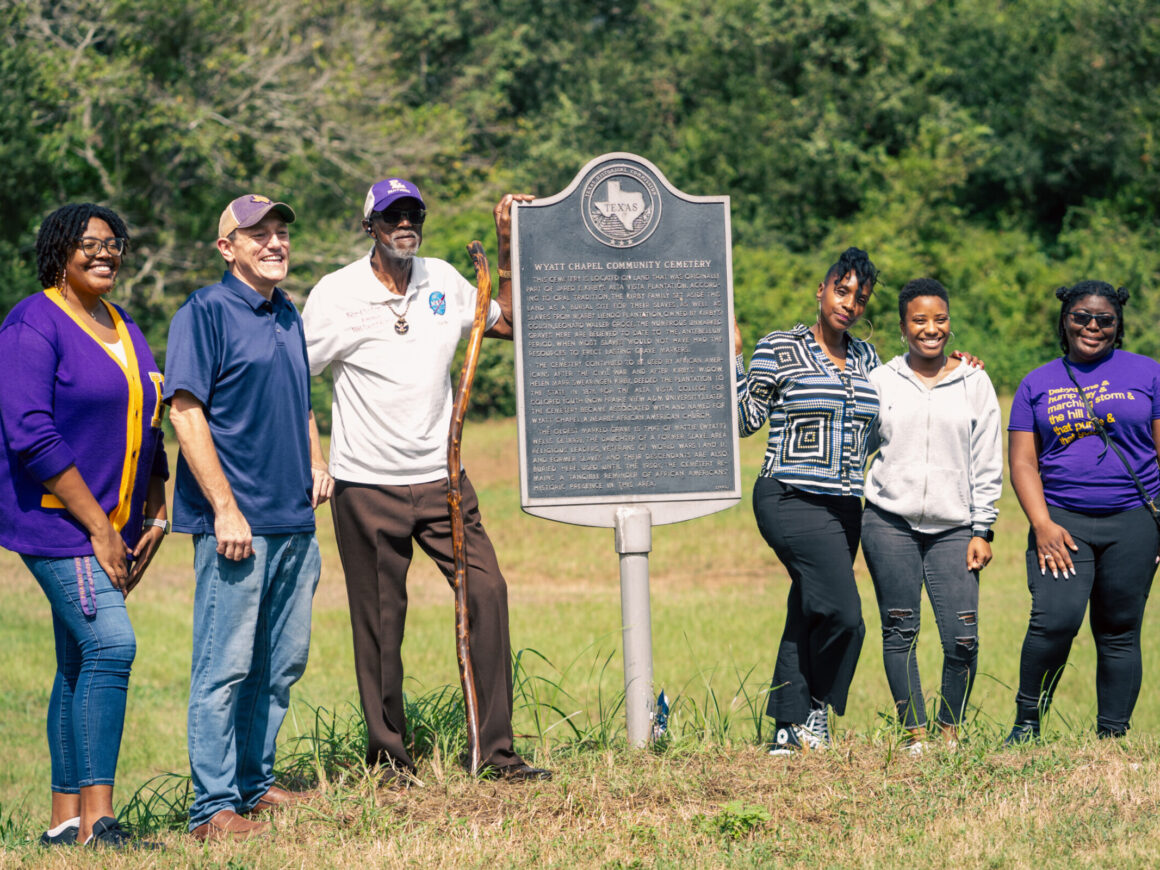
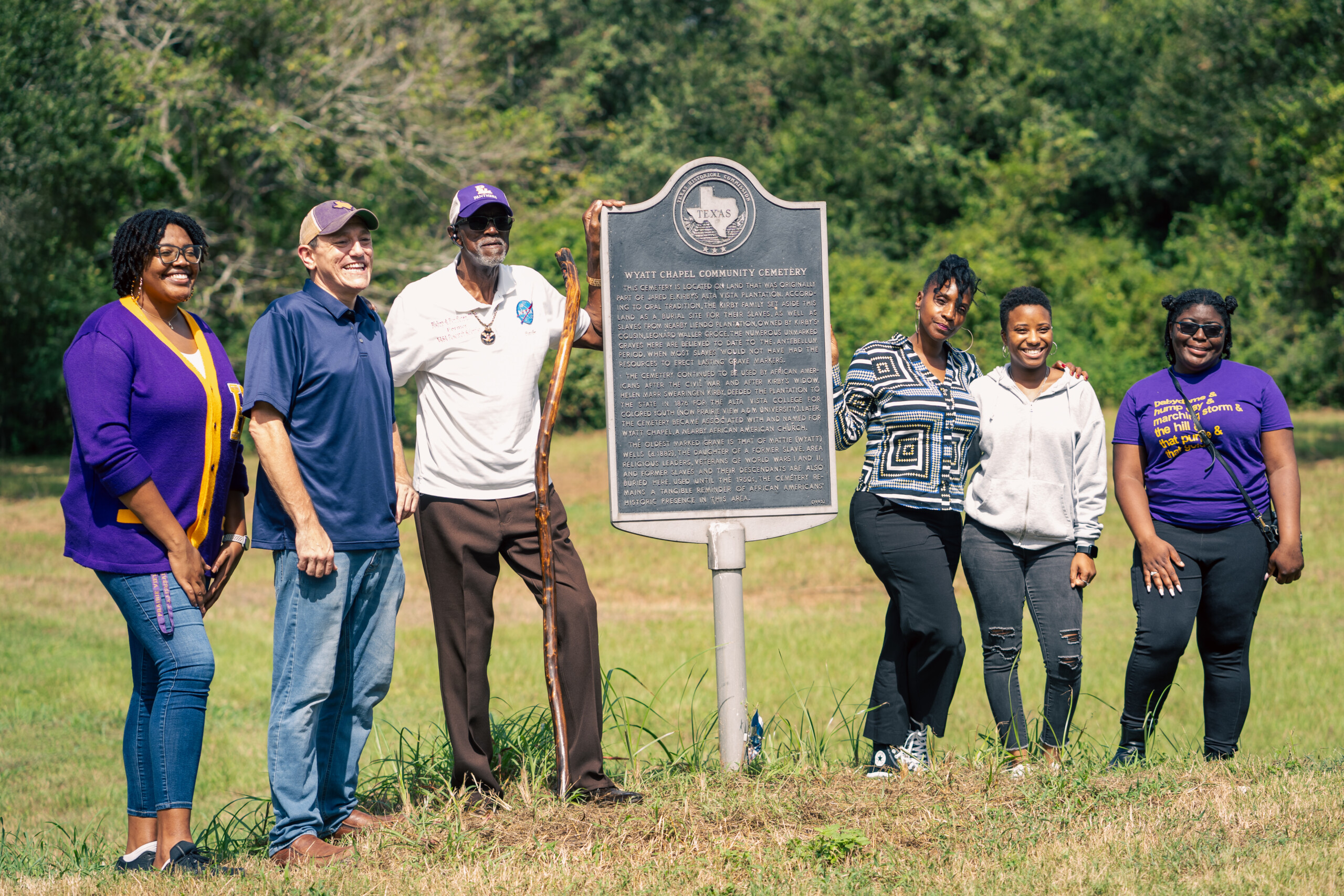
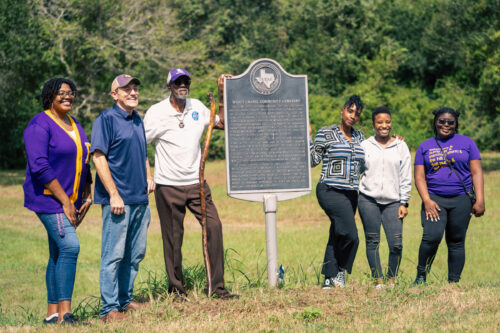
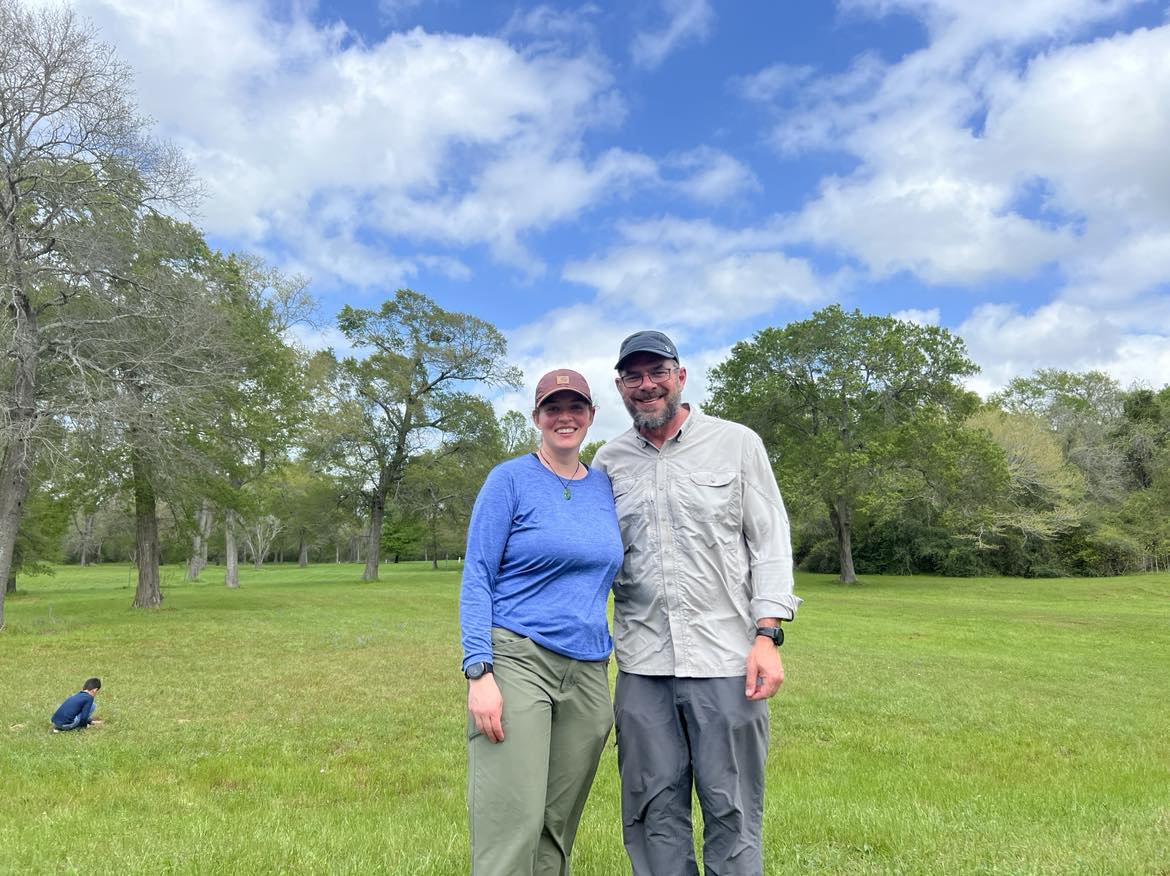
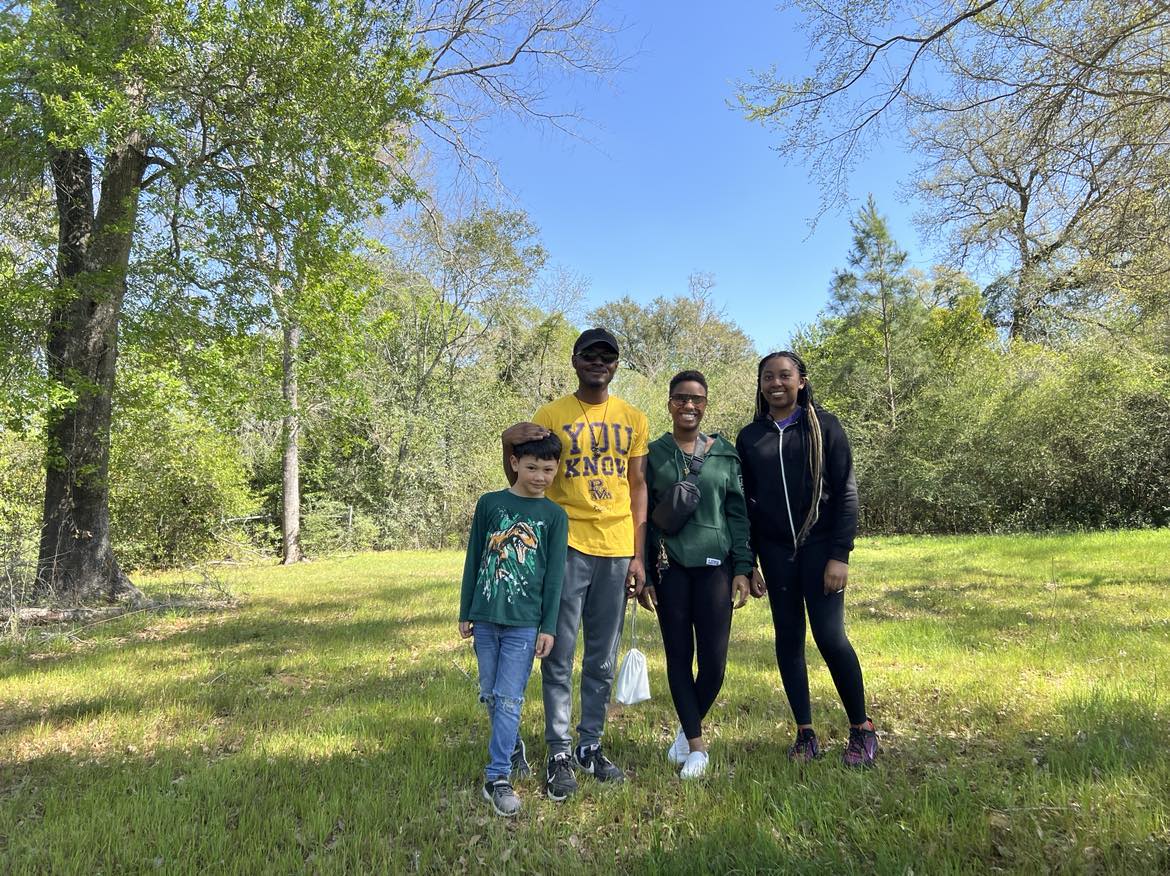
PVAMU graduate student Evelyn Todd, PVAMU Assistant Professor of History Dr. DeWayne Moore, descendant partner Bishop Pendleton, Descendant Committee Chairperson Pamela Morgan, PVAMU architecture major Zynitra Durham, and PVAMU undergraduate Kalayah Jammer
Through the process, the project hopes to tell more completely the story of the formerly enslaved, buried in the hallowed grounds, and the hardships they endured at the Alta Vista Plantation, where PVAMU stands today.
Historic
&
Abandoned
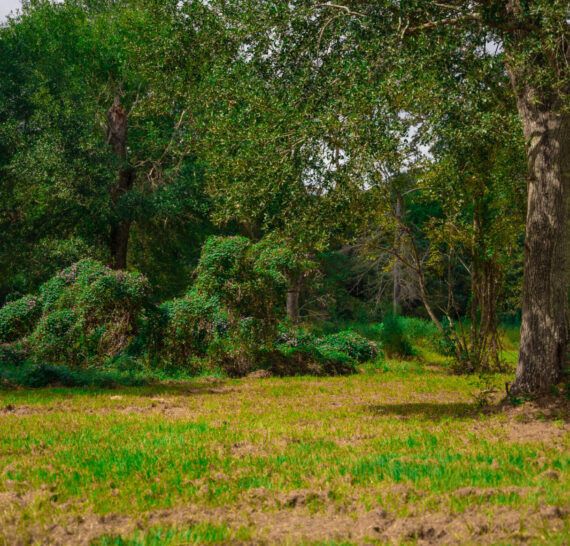
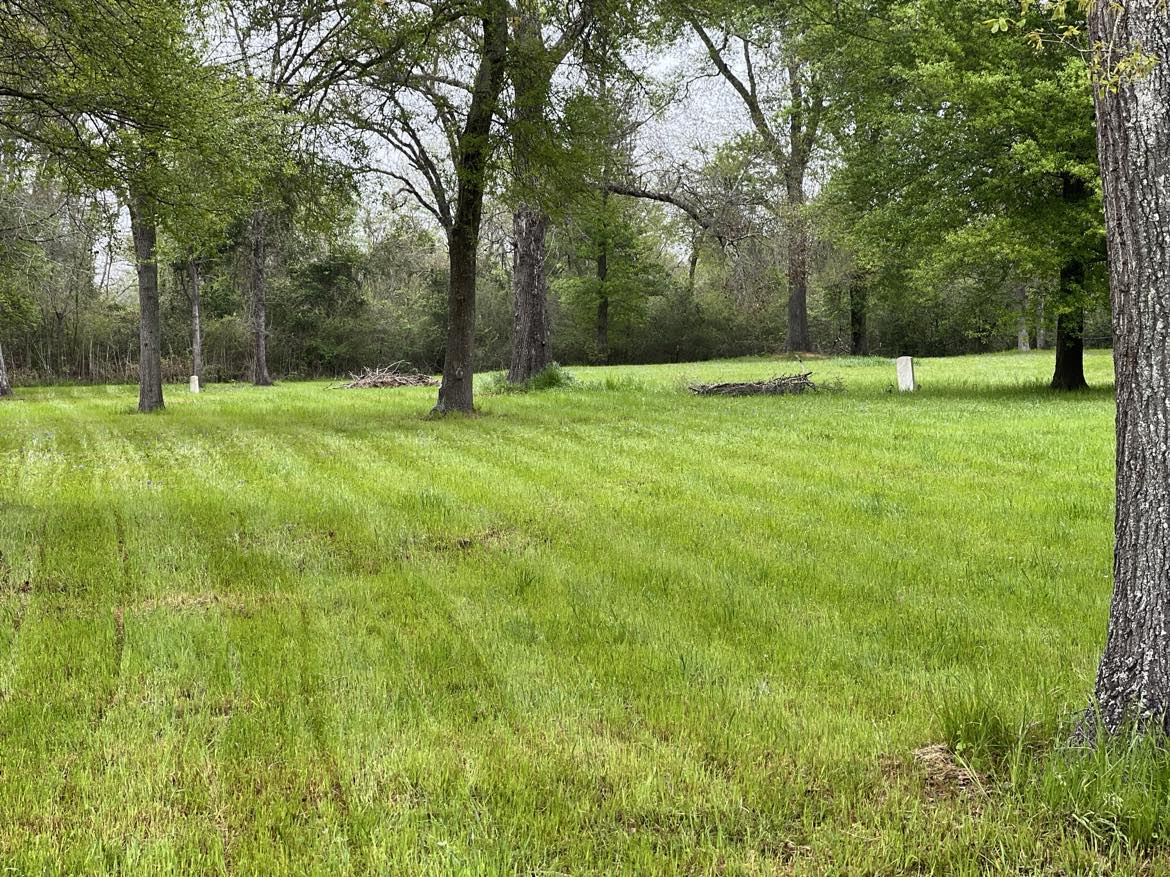
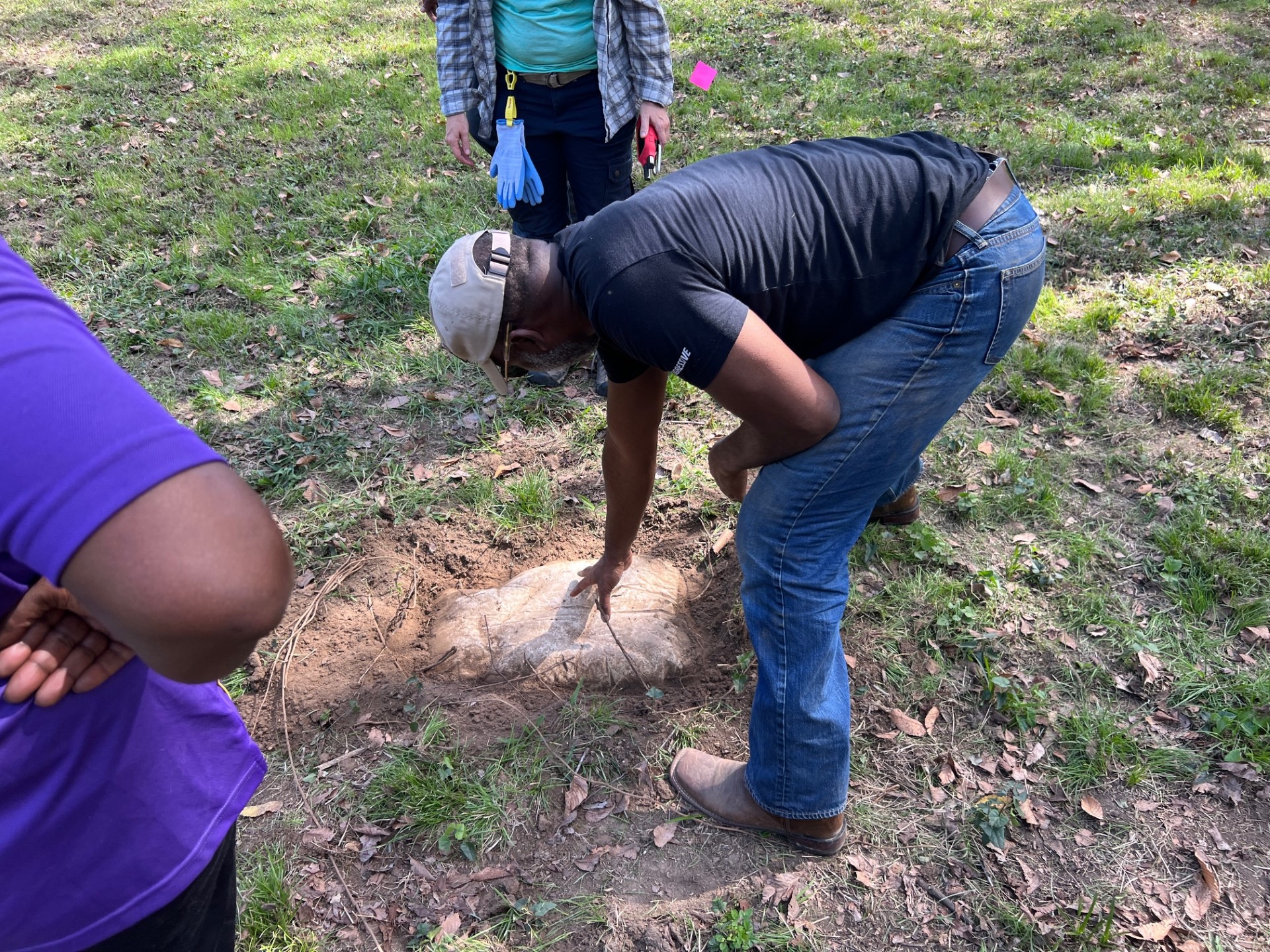
Unmarked graves in Wyatt Chapel Community Cemetery
“This study will explore the African American-lived experience through participatory and archival research, digital humanities, oral history, geospatial data collection and analysis, and the creation of interactive and immersive maps in preparation for the 150th anniversary of PVAMU in 2026,” said Dr. DeWayne Moore, a U.S. and public history professor at PVAMU.
The project was inspired by former PVAMU President Ruth Simmons, who encouraged such studies ‘to affirm to our students that we are awake, that we are concerned for their future, and that we are the Prairie View of our lineage.’”
Dr. Moore said the project is a true community effort, comprising faculty, staff, students, administrators, experts and community members to carry out the research and disseminate the resulting information.
Dr. Moore’s students have conducted interviews with several descendants of those buried in the cemetery. and he hopes that this article will encourage other descendants to reach out and contribute to the project. Due to her strong kinship ties to the University, graduate student Evelyn Todd ’21 is working on the project.
“As a student, you always hear the stories about the cemetery in the back of campus. So, it was sad to find out this was it and watch it go downhill over the years,” said Todd, who is working towards her MBA.
“I wanted to do my part to not just preserve the cemetery but honor it. I’m also really big on learning our history because if we don’t know what we’ve done or where we’ve been, then we won’t know where we’re going.”
‘To Honor Those Who Came Before Us’
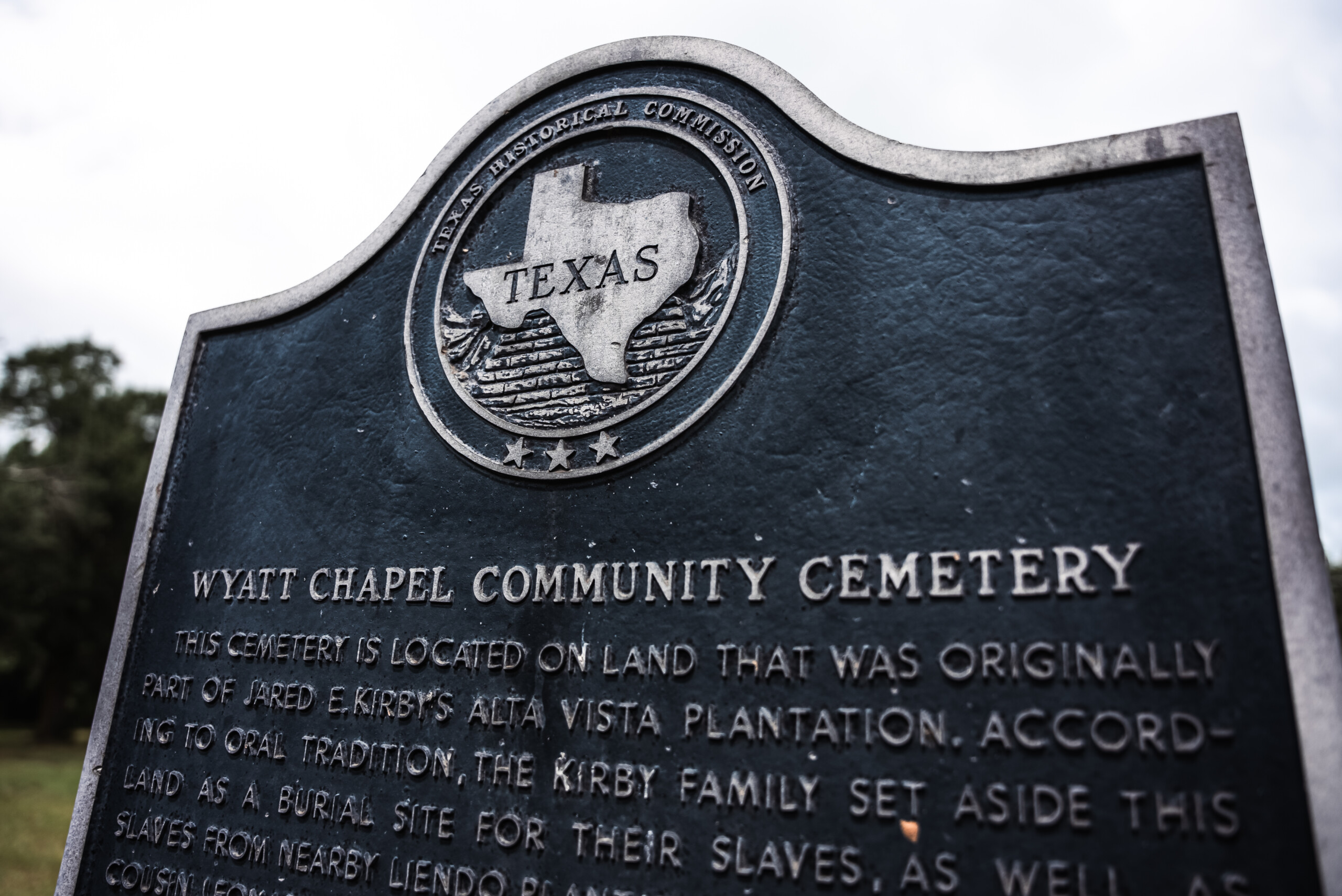
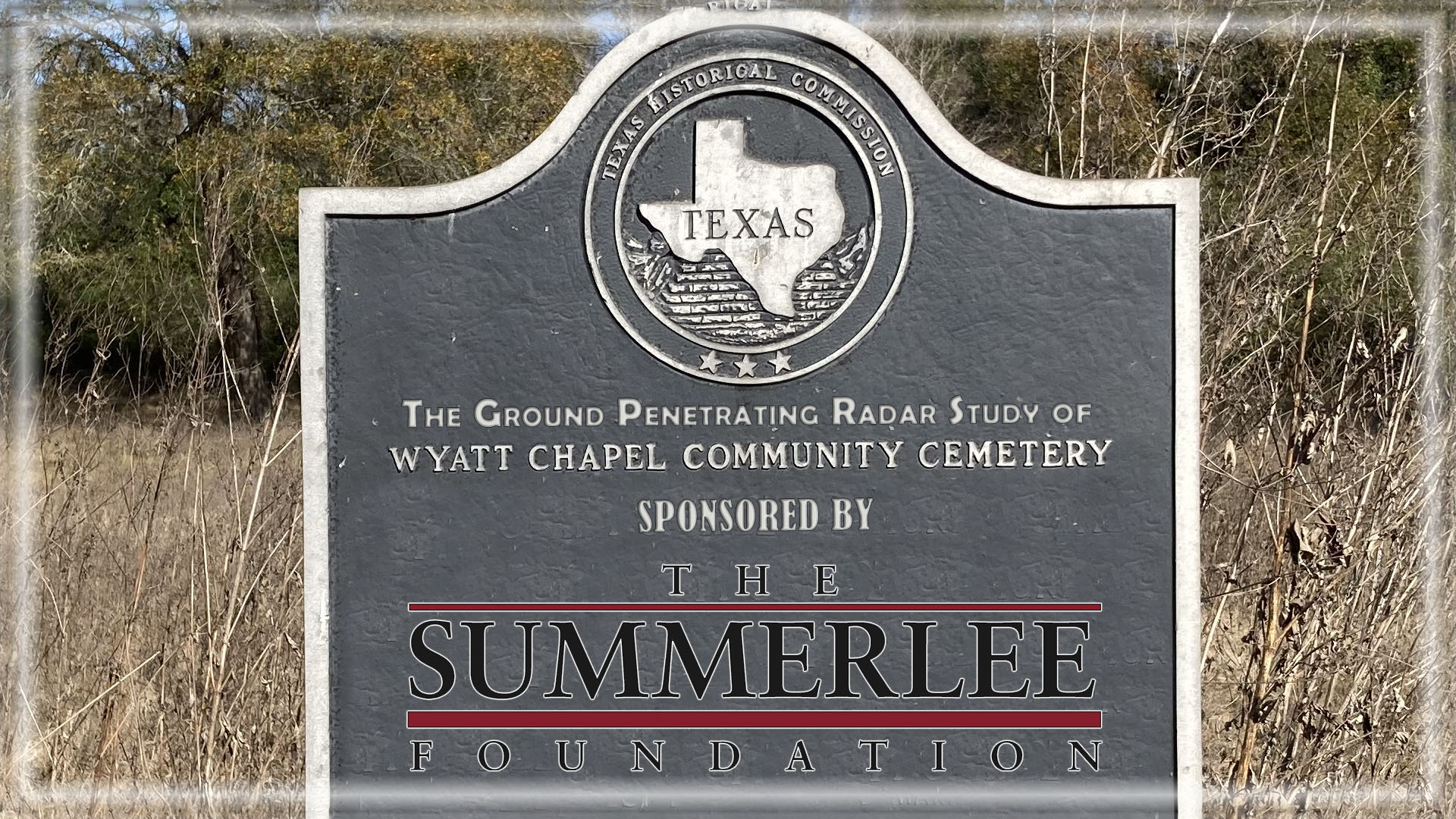
The Texas state historical marker for Wyatt Chapel Community Cemetery
The Alta Vista Plantation, owned by Colonel Jared E. Kirby, became property of the State of Texas in 1876. Kirby’s widow, Helen Marr Swearingen Kirby, deeded the land for the establishment of PVAMU.
Moore said history portrays Kirby as a “benevolent” slaveholder. But that all changed in the summer of 2021 when a June 24, 1936, interview with the only living person known to have been enslaved at Alta Vista surfaced.
According to Moore, Frank Edd White, a graduate student at the University of Texas, interviewed “several of the formerly enslaved in Waller County” near the Hempstead-Bellville highway. Among the interviewees was Elizabeth Burney, who had been enslaved at Alta Vista.
“She had ‘seen negro men beaten until blood ran down their legs,’” said Moore, recounting White’s record of the interview with Burney.
“’Marster Jack,’ as she referred to Kirby, ‘was sho’ mean to his slaves,’ and Burney went on to testify that ‘their food was bad…and sometimes the beef was spoiled and had worms in it, but they were glad to get it and did not complain,’” continued Moore, reading from the Burney interview. “’Their clothes were very scanty at times…Their living quarters were small and overcrowded…There was a great deal of sickness among the slaves, and when they died, a hole was dug, and they were rolled in it and covered up.’”
Moore said the Burney interview offers some of the only information recorded about the burial practices for the enslaved at Alta Vista.
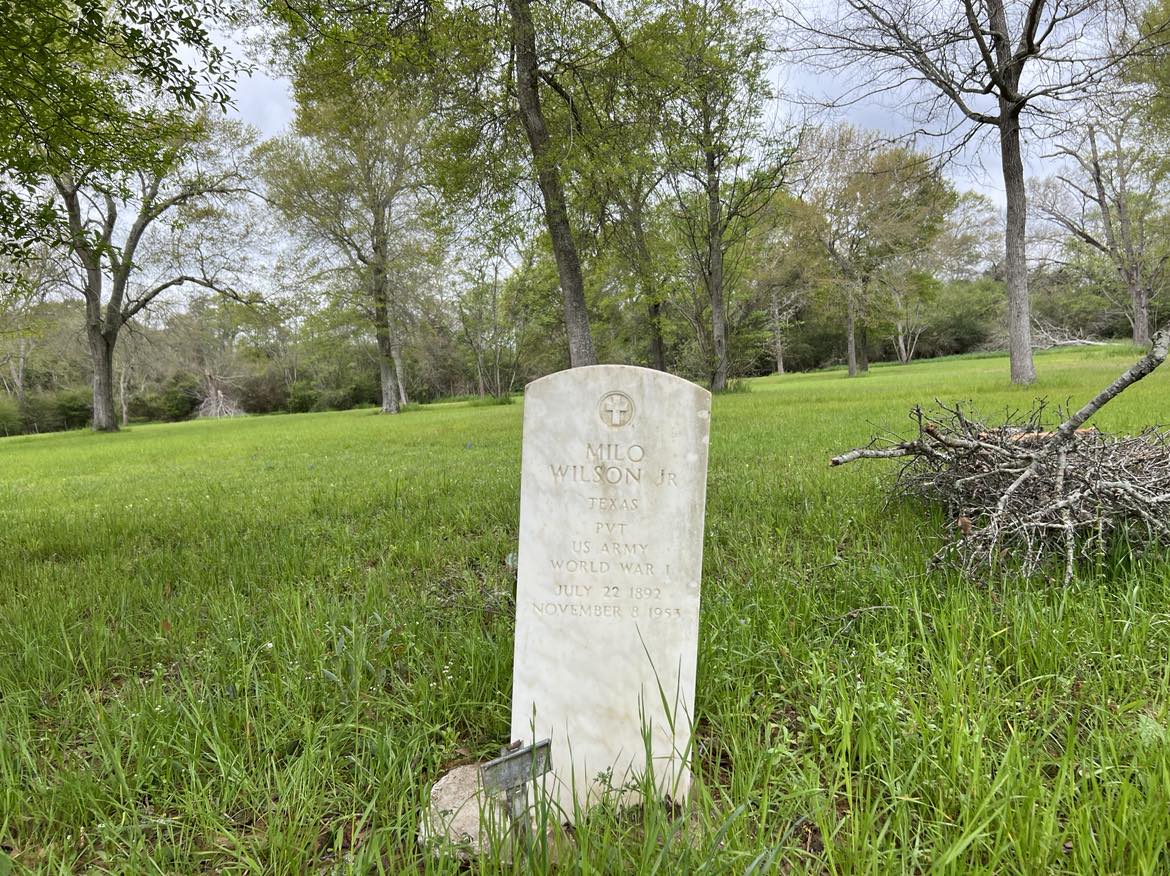
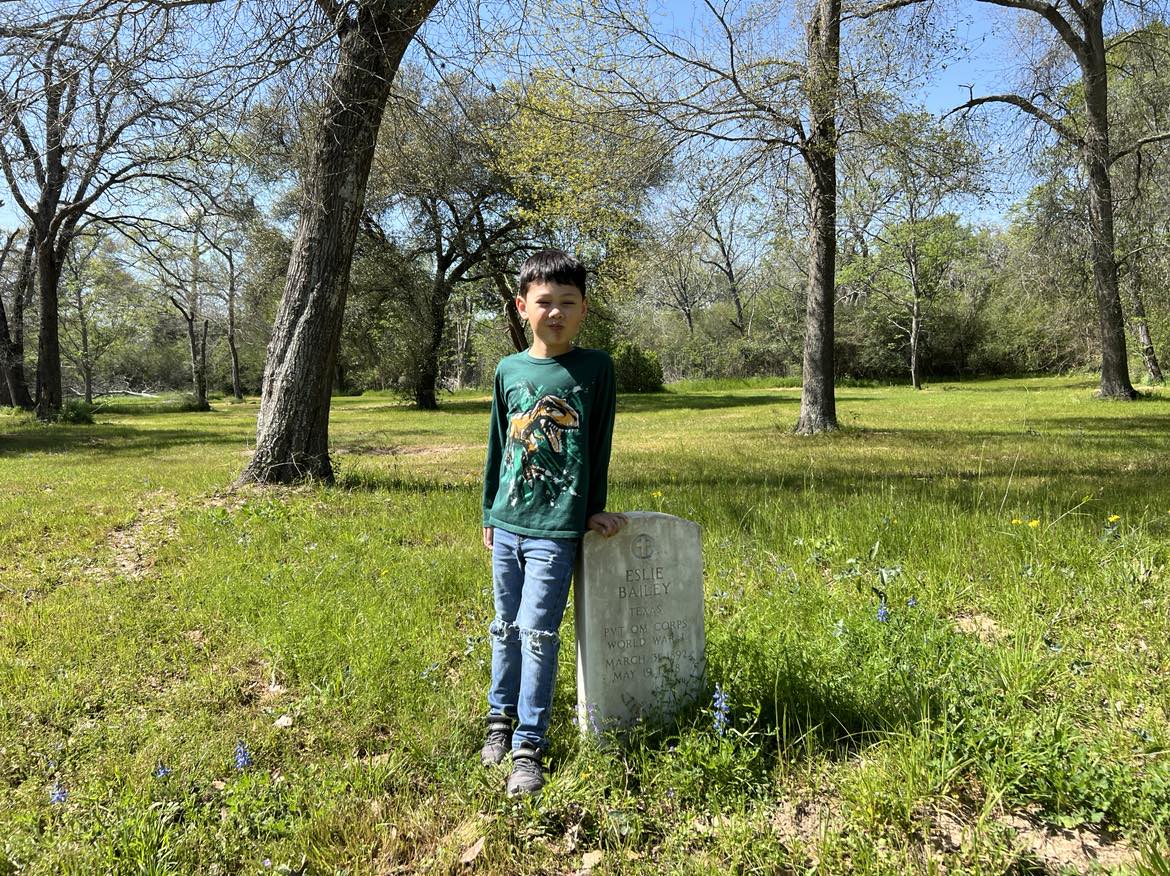
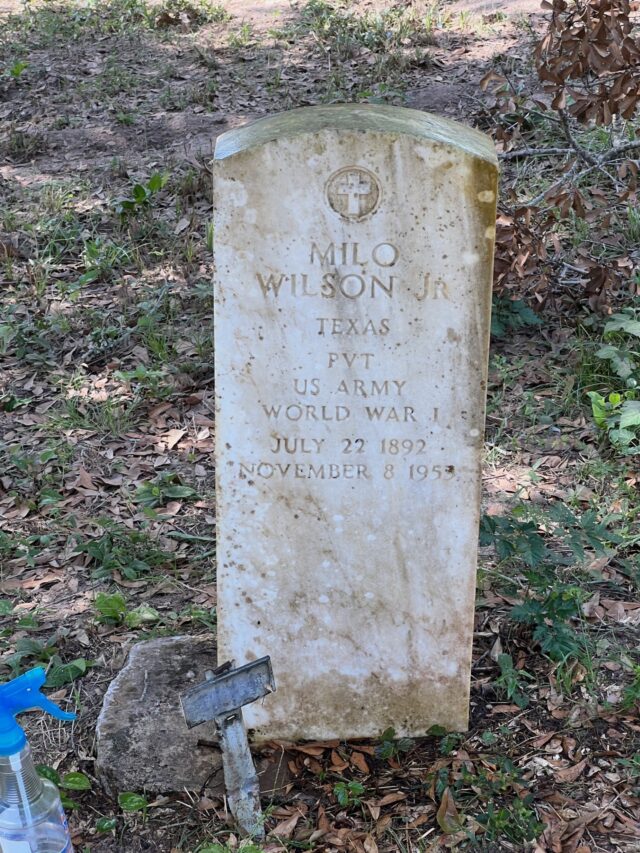
The military headstone of Luther Felder is one of the only marked grave in the cemetery.
Finding & Saying the Names
“The cemetery contains a few marked graves, but the names of the internments have proven as elusive as the names of the enslaved at Alta Vista,” he said.
Among those buried at Wyatt Chapel Community Cemetery is Mattie Wyatt Wells, daughter of George W. Wyatt, one of several African American politicians who hailed from Waller County during the Reconstruction era.
“This cemetery contains not only the remains of enslaved men and women who once lived on the enslaved labor farm of Jared E. Kirby, but also the graves of military veterans, the formerly enslaved, and their descendants,” said Moore. “Moreover, this is an important historical site to the descendants of those interred in the cemetery as well as the larger community of Wyatt Chapel and Prairie View. We have an opportunity to invite a host of stakeholders to campus to take part in the research and memorialization process, which can help people reach a consensus about the past and feel more confident about the future.”
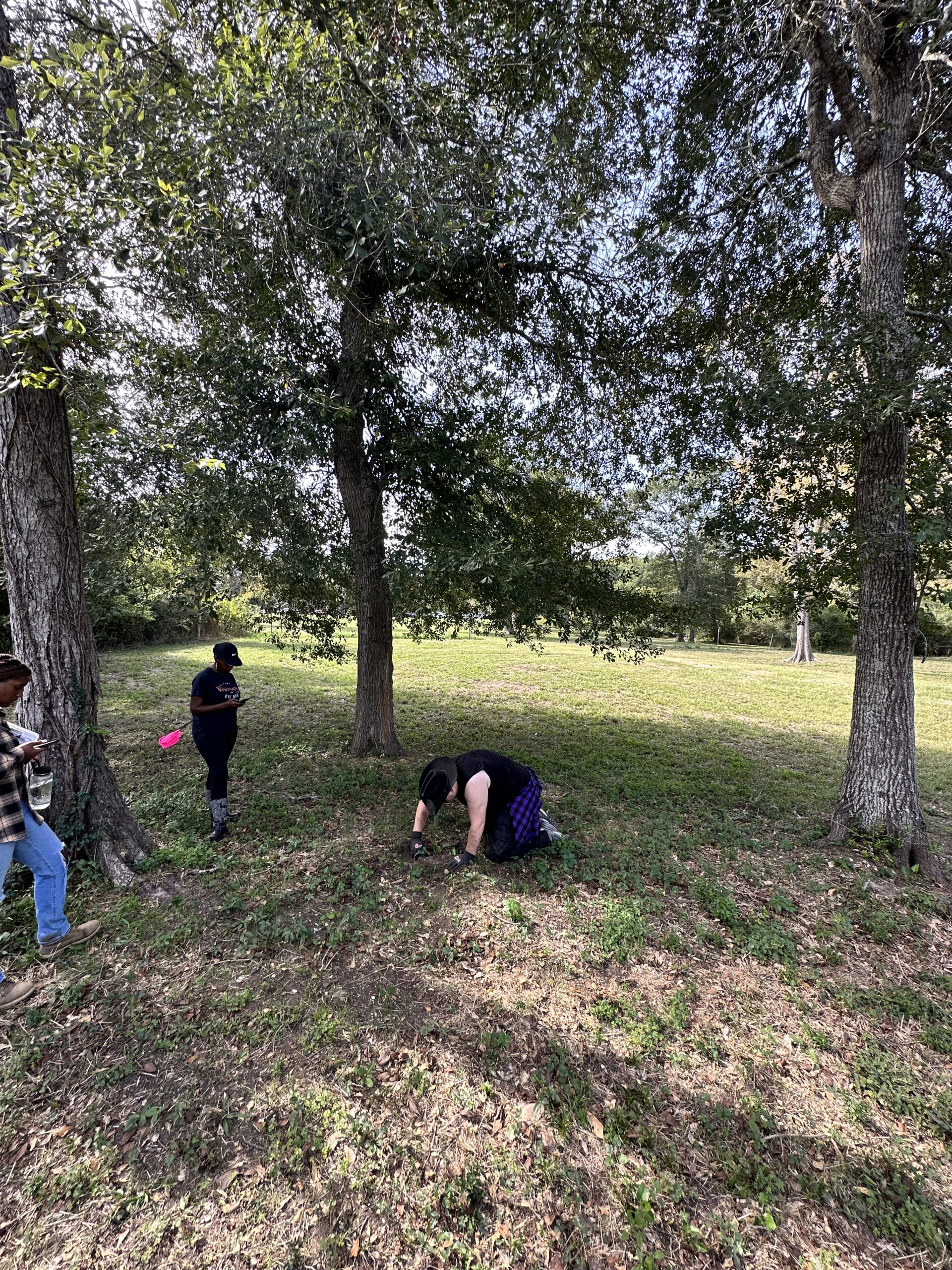
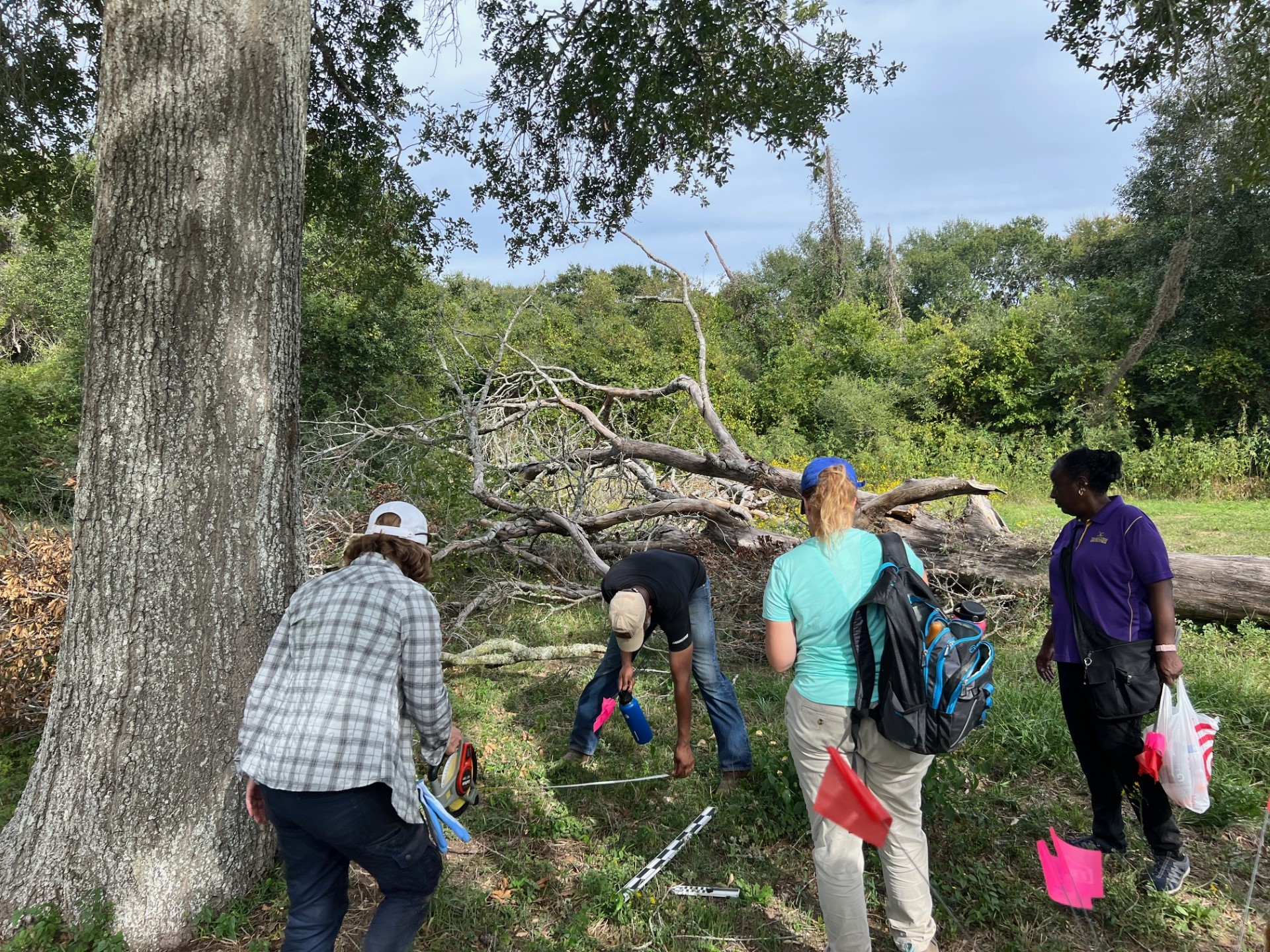
Students and alumni work on the pedestrian survey in fall 2023
Tradition with the Annual Slave Cemetery Trek
To connect students, faculty, and the community with the area’s history, an annual Slave Cemetery Trek was a traditional event at PVAMU that was started in the 1990s by Professor Howard Jones.
However, Moore says the Slave Cemetery Trek has been undertaken by visitors interested in the history of the institution and may become an annual tradition at PVAMU.
“In the past, professors in the Division of Social, Political, and Behavioral Sciences conducted the trek in the fall, including longtime history program director and chair of the Division of Social Sciences, Dr. Ronald Goodwin, whose blog at the Texas Institute for the Preservation of History and Culture is a must-read for anyone interested in connecting the past to the present at PVAMU.”
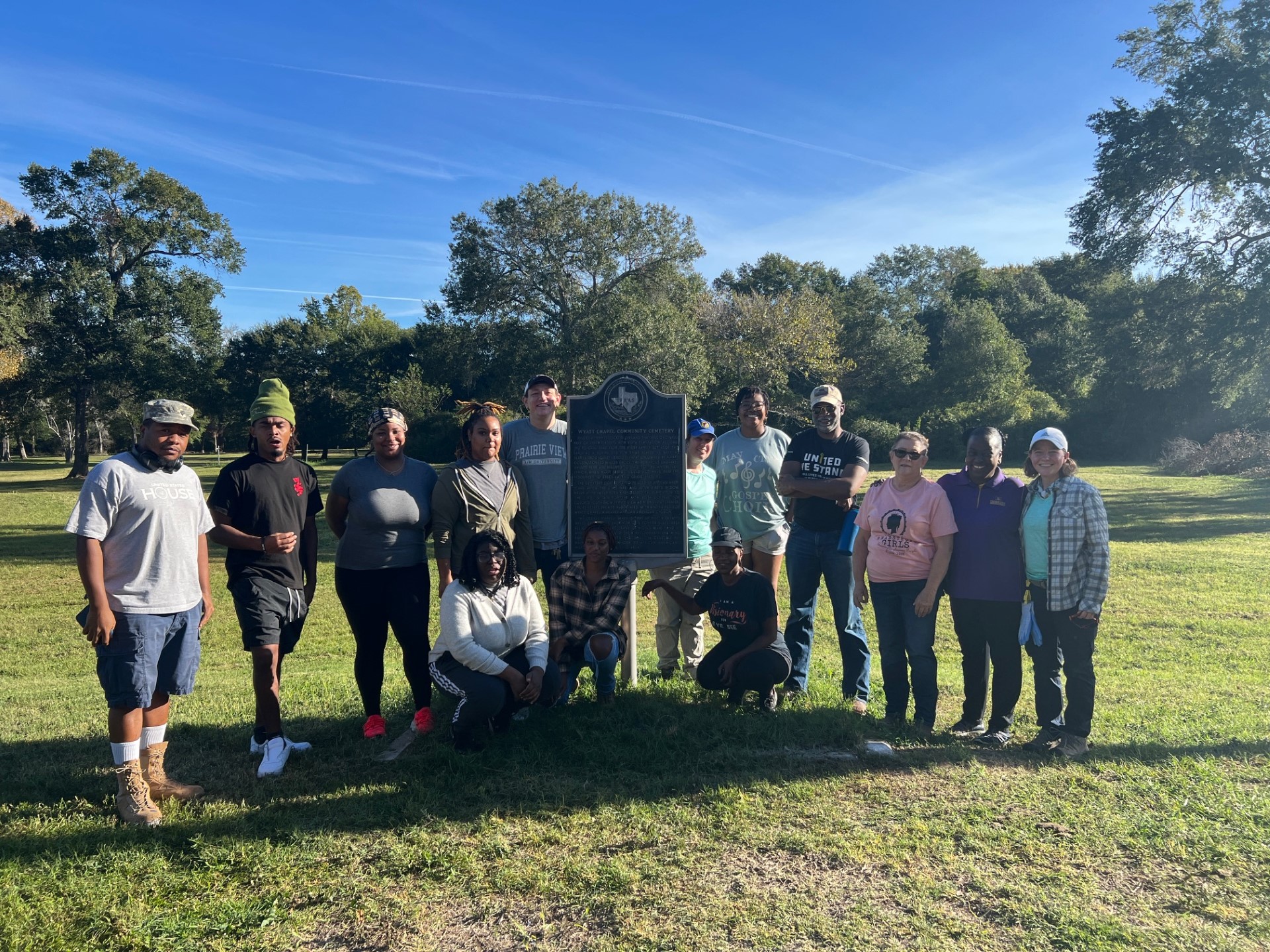
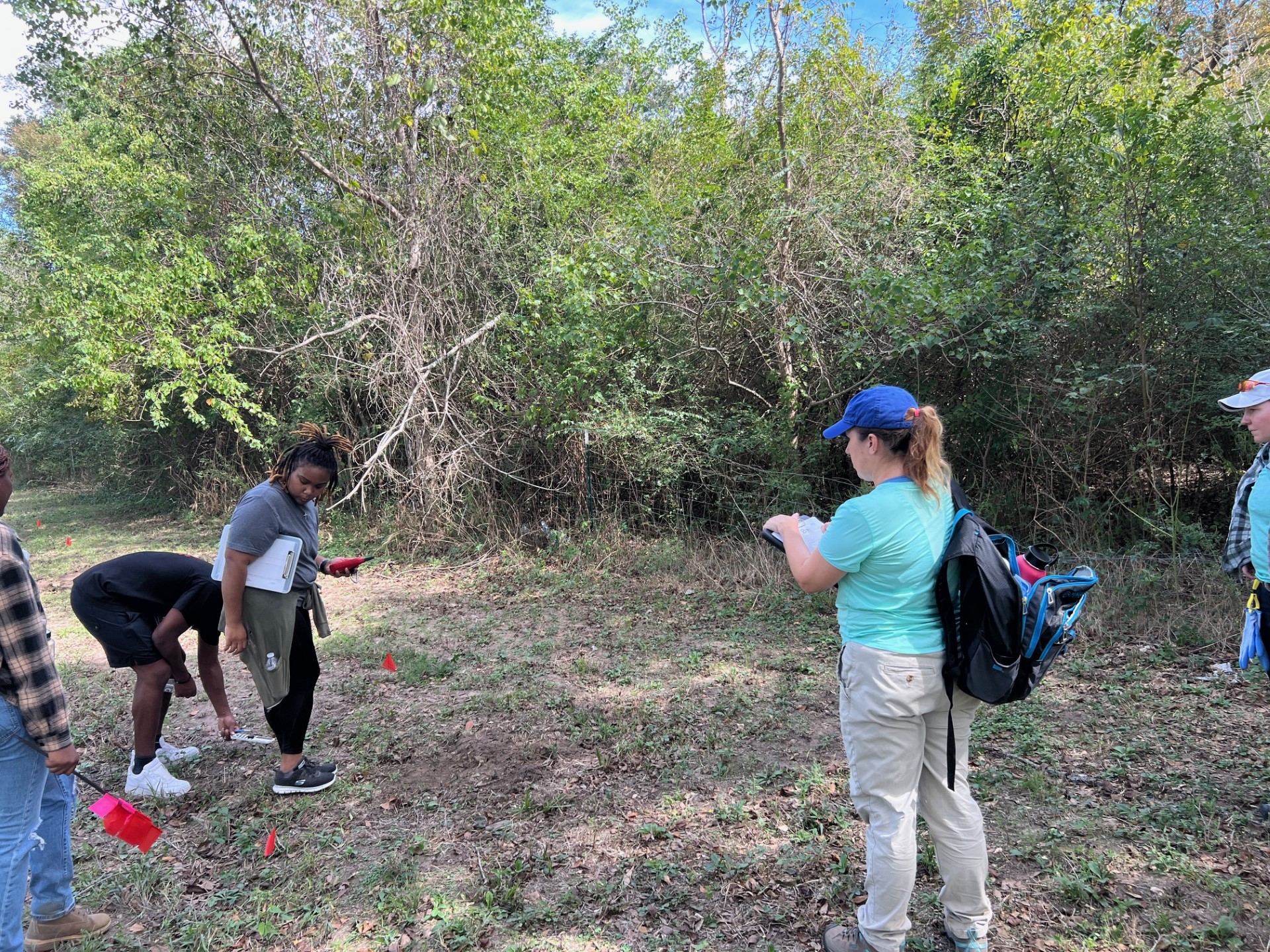
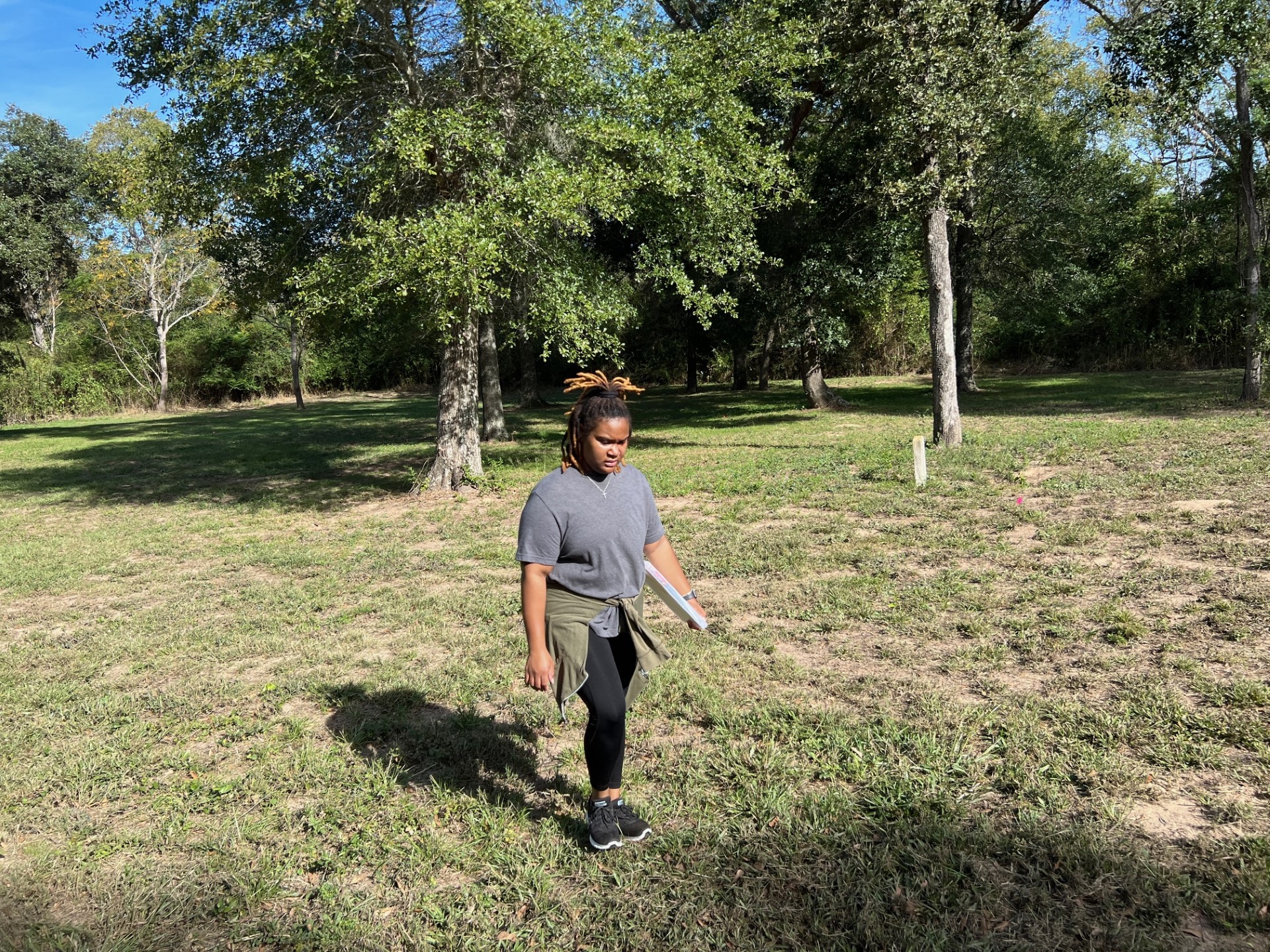
PVAMU students, professors, staff, community members, and descendants gather to conduct the pedestrian survey in late 2023
According to a web page dedicated to the history of Wyatt Chapel Community Cemetery and the ongoing project, the annual Slave Cemetery Trek has garnered strong, emotional reactions from past students who have made the walk.
Some “complained about the distance while others backed away because of fear,” with one student later writing, “There needs to be an understanding that while we are here doing what we are doing, there were others who came before us that worked diligently to produce the opportunities that we have at the present time.”
How to Keep
Track of the Project
and How to Help
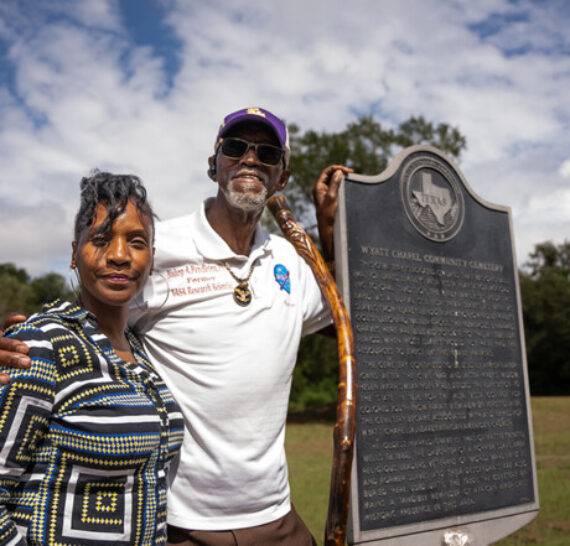
Pamela Morgan & Bishop Pendleton
Believed to cover approximately three to five acres, the Wyatt Chapel Community Cemetery may hold more than 2,000 graves, said Moore. In the fall of 2023, his team walked the burial ground to conduct a pedestrian survey and identified almost 200 potential grave markers, using remote sensing to determine the size of the burial ground. “Community stakeholders and PVAMU students worked with archaeologists Dr. Nesta Anderson and Melanie Nichols of Legacy Cultural Resources, LLC, to conduct the pedestrian survey of the cemetery,” said Moore.
This past spring, Chet Walker of Archeo-Geophysical Associates, LLC, conducted a ground-penetrating radar, magnetometer, and LIDAR survey of the cemetery. “His team is still waiting on the official report from the various studies,” Moore explained.
Donna D. Carter, FAIA, president of Austin, Texas-based architecture firm Carter Design Associates, is also involved in the project as a preservation architect. Her team has worked on multiple historical preservation projects, and they are excited to be part of this one.
In the meantime, Moore and his team built a project website, the Digital PV Panther Project. His students update the blog regularly so everyone on campus and within the community can stay abreast of the latest project news.
In addition to the website, people can also visit the Instagram, X, and Facebook accounts of the Digital PV Panther Project for up-to-date information.
Responsible Public History Practice
“One of the main goals of the project is to demonstrate the value of transparency and responsible practice to public history,” said Moore. “By regularly blogging about our work and posting updates on social media, we hope to inspire a more community-engaged, participatory approach to historic preservation in Texas.”
A review of historical evidence, Moore said, requires a critical eye and a breadth of knowledge sharpened by an investigative spirit willing to look beyond the painted prejudices of the past.
“Primary source materials reflect the perspectives and biases of their authors, and they reflect the systems of power and racist ideologies of the periods in which they were written,” said Moore. “They commodify Black experiences and rarely acknowledge the humanity of enslaved people. The data-driven methods of historical inquiry have often rendered enslaved people nameless; thus, we intend to use qualitative and archival data collections to recover the names and life stories of enslaved people and their descendants.
“We seek to identify as many enslaved people by name as possible, and we intend to represent individual and collective experiences in a self-conscious, responsible frame,” Moore continued. “We plan to compile as much data as possible and employ textual analysis to read against the grain of dehumanizing archival perspectives, and we stand in solidarity with and support descendant communities in telling their own histories.”
Interested parties should email graduate student Evelyn Todd at etodd@pvamu.edu.
On March 12 and 13, 2024, Legacy Cultural Resources, Inc. invited ground penetrating radar specialists Dr. Chet Walker and Aundrea Thompson to visit the campus of Prairie View A&M University (PVAMU) and conduct several geophysical examinations of the historic burial ground of Wyatt Chapel Community Cemetery.
This project is funded through the Summerlee Foundation.
Aundrea Thompson, Dr. Chet Walker, and Dr. DeWayne Moore
Aundrea Thompson & Dr. Chet Walker met with project director and PVAMU Assistant Professor of History DeWayne Moore to learn more about the grant from the Summerlee Foundation.
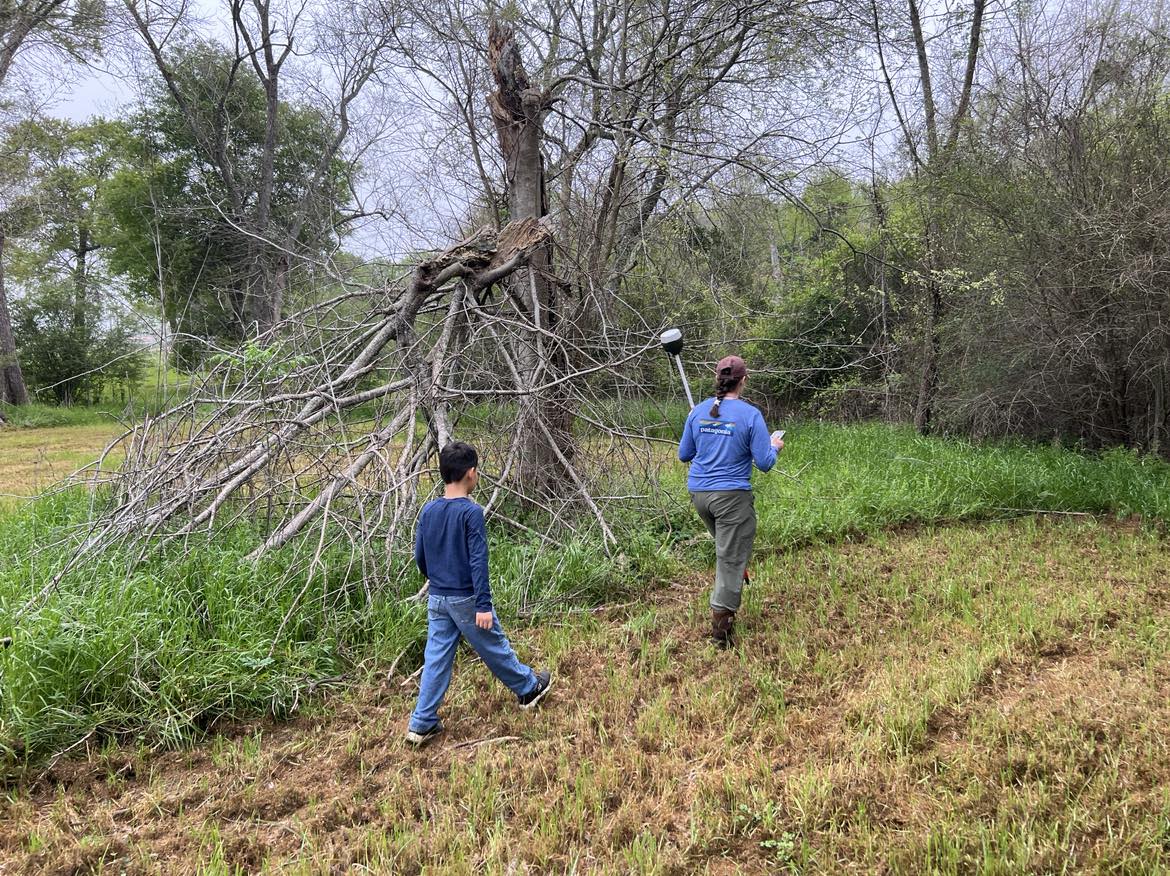
Dr. Moore’s son, Noah, surveys the cemetery with students workers on the Digital PV Panther Project–Noah Jackson, Zynitra Durham, and Jaylynn Brantley
The archaeologists
In the spring of 2006, Dr. Walker founded Archaeo-Geophysical Associates, LLC, an archaeological consulting firm specializing in geophysical prospection. Since that time, he has collected geophysical data on over 150 archaeological sites, now totaling much more than 1,539 Acres of Gradiometer, 115 Acres of Ground-Penetrating Radar, and 484 Acres of Electromagnetic Induction Meter.
Aundrea Thompson studied at the University of Wyoming, and she has worked as a forensic archaeologist on numerous projects in the past ten years. For more on one project, in which she located the remains of a World War II soldier and brought his remains back to the US for burial, please click HERE
Hauling their geophysical prospection equipment in a large pick-up truck from Palestine, Texas, where they had been working at another archaeological site, Aundrea and Chet planned to spend two days on campus before driving to Magnolia, Texas to collaborate with the Houston Archaeological Society on a dig site.
At PVAMU, Chet and Aundrea planned to run the ground-penetrating radar over the entire five acre field to determine the size of the burial ground. In addition, they intended to scan the field with an electromagnetic induction meter as well as LIDAR [or Light Detection and Ranging], which is attached to a large drone and scans an estimated 120 acre area.
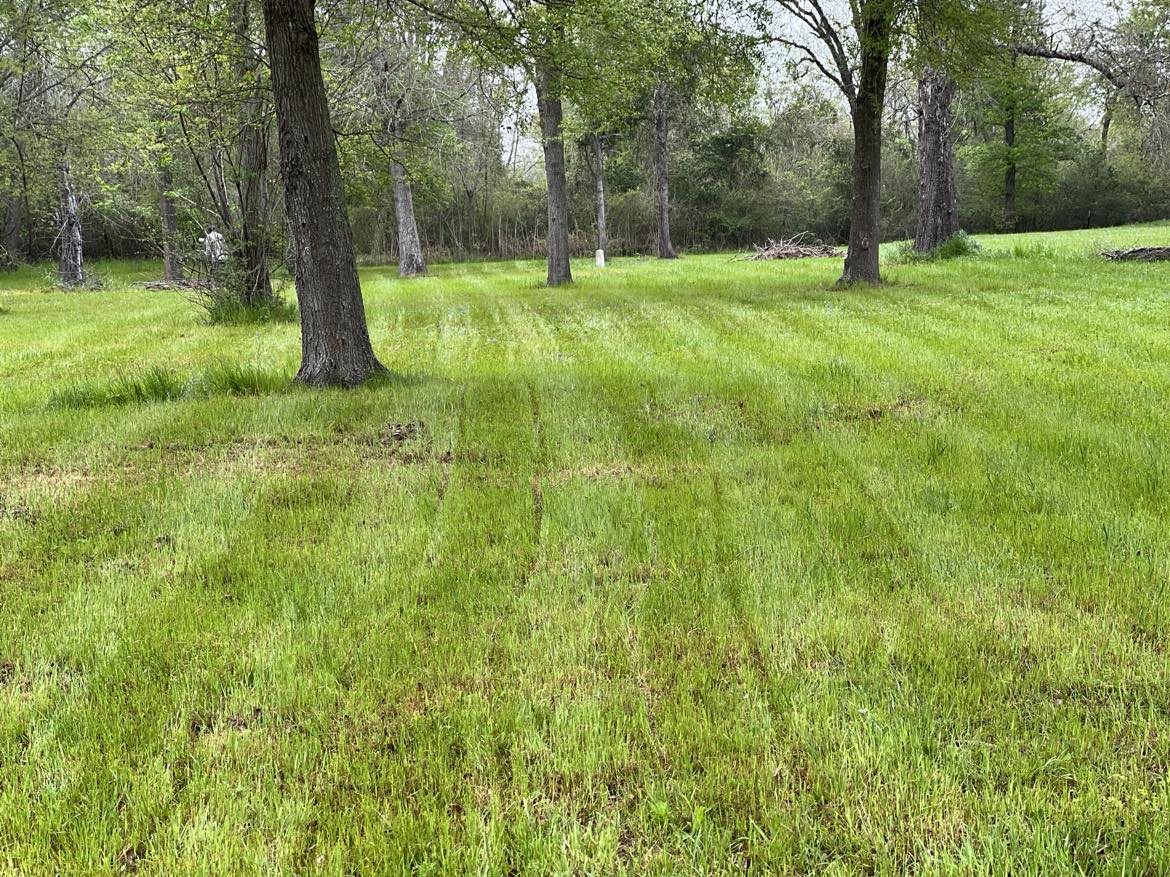
In this image, you can see how running the GPR looks on the grass. Making an imprint similar to that of a lawn mower, Chet and Aundrea covered the entire field, hoping to determine the size of the burial ground.
By scanning the entire field, the teams intends to use the data from GPR to corroborate data obtained during the pedestrian survey in October 2023. We hope to determine the locations of graves and the size of the burial ground.
The cemetery
The burial ground is associated with and named after an African American church founded in the 1890s by Reverend George W. Wyatt, a one-time school teacher and politician who represented Waller and Fort Bend Counties in the state legislature in the 1880s. Based on slave schedules, Wyatt Chapel Community Cemetery might contain hundreds of graves of enslaved people, formerly enslaved people, and their descendants. It sits on the former slave labor plantation of Jared E. Kirby, who, in 1860, owned more enslaved people (159) than any other planter in Austin County. No one made a formal record of these burials, however, and the historic burial ground, which is located behind University Village Phase III, was over time abandoned, especially after 1961, with the establishment of nearby Prairie View Memorial Gardens. Wyatt Chapel Community Cemetery contains only a handful of marked graves, but it holds forever close the remains of three United States military veterans.
LIDAR, which stands for Light Detection and Ranging, is a remote sensing method that uses light in the form of a pulsed laser to measure ranges (variable distances) to the Earth.
Drone with LIDAR
Chet and Aundrea have several drones that can carry up to 22 pounds of equipment.
Pre-Set Navigation
With pre-set navigational controls, the drone flies back and forth in straight lines, capturing data about the contours of the earth over a 120 square mile area.
Chet and Aundrea completed the data collection using ground penetrating radar for the entire five acre field, and they obtained LIDAR data using the drone, but they plan to return later in March 2024 to complete data collection with the magnetometer. Once all the data is collected, they will analyze their findings independently and objectively, and they will submit their findings to Dr. Nesta Anderson, of Legacy Cultural Resources, Inc., who will meet with Dr. Moore and Pamela Morgan, of the Wyatt Chapel Descendants Committee, to compare the results to the findings from the pedestrian survey.
Digital PV Panther Project John B. Coleman Library Room 111 Prairie View, Texas 77446
On October 21, we met with the Legacy Cultural Resources, Inc. team at the Wyatt Chapel Community Cemetery. We began the second phase of the cemetery study, where we conducted the Archaeological Pedestrian Survey.
The archaeologists led a team of student volunteers in an intensive pedestrian survey of the project area. We anticipated to cover 3-5 acres in size. Archaeologists worked with small groups of students, teaching them basic pedestrian survey techniques. After the pastor of the Wyatt Chapel Baptist Church prayed and blessed the team, the survey began.
As we marked and mapped out the gravesite, the archaeologists also worked with the students to record the Wyatt Chapel Community Cemetery as an archaeological site. This will provide it with a state-registered trinomial. Students worked with archaeologists to record the burial ground in the field on a TexSite form. We plan to submit and contact the Texas Archeological Research Laboratory (TARL) in Austin to obtain the trinomial.
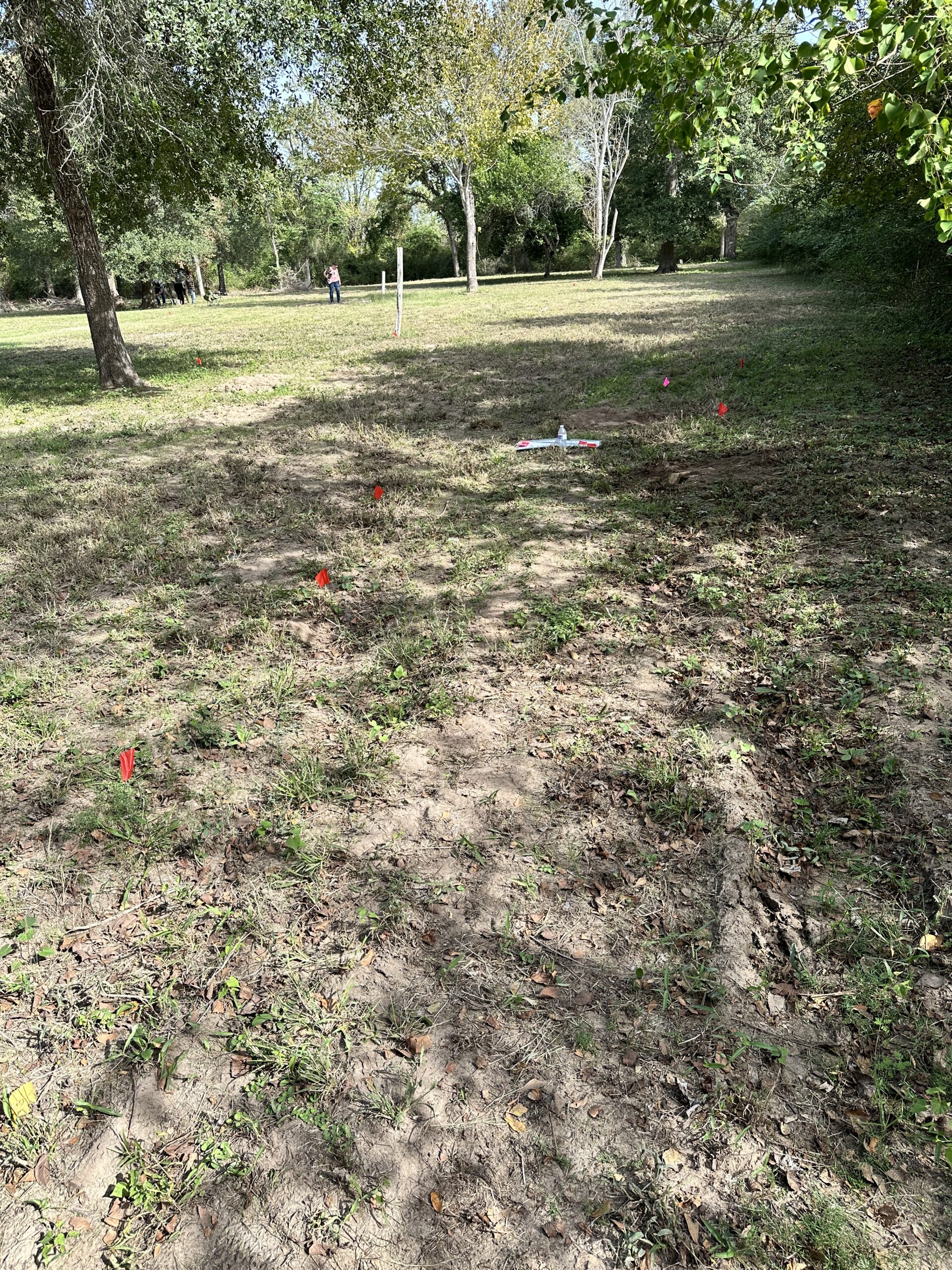
The small groups walked the project area in transects spaced 30 meters (m) apart, looking for evidence of grave markers, grave tending artifacts, depressions, or other potential indicators of the presence of burials. After we marked these features with pin flags, the archaeologists taught participants how to map the burial site with a handheld Trimble GPS unit. Since we hoped to disturb the burial ground as little as possible, we did not collect any artifacts as part of the pedestrian survey. Instead, we photographed grave marker and grave tending artifacts in the field.
There were a few surprising finds during the survey. We were shocked to realize how large the gravesite was compared to the estimations. Students marked off graves along most of the fence lines. We also found grave tending materials around a tree closer to the front of the walking path than expected.
We also learned a new technique for determining burial spots. Using the pin flags, we were told to push them into the ground in areas we believed marked a grave. If the pin flag was restricted from going too far into the ground, that was used as a point of interest to where someone may have been buried. Using this method, we found areas in the cemetery where there appeared to be parallel rows of burials. This method also helped us find possible burial sites near a group of 3 trees. At these trees, students also found a large cluster of grave tending materials and grave borders, which tends to signify a family was buried there.
Based on reports in the early 2000s, this gravesite was unknowingly being used as a dumping ground. Once this was found out, the powers that be had the trash moved. However, the trash was bulldozed further back and to the right onto that land and fenced in. As we worked on the Pedestrian Survey, we could get a whiff of the trash behind the fence as we got closer to the fence or if the wind blew. The pastor of Wyatt Chapel Baptist Church and others from the community believe that cemetery extends to where the trash now sits.
Towards the end of the survey, Nesta Anderson and Melanie Nichols–of Legacy Cultural Resources, Inc–went over the fence and performed an examination of the trash pile. We plan to report our findings to the Texas Historical Commission, which will offer guidance on the removal of the trash. In doing this, it will help us to get written authorization from the THC to remove the garbage and survey that land as well.
The Digital PV Panther Project looks forward to receiving feedback from both Legacy Cultural Resources and the Texas Historical Commission in 2024!
Our mission at the Digital PV Panther Project is to eliminate historical silences through digital storytelling and prevent the erasure of African American history through historic preservation at PVAMU.
When I first applied for the position of archival assistant on the Digital PV Panther Project, my goal was to generate an income stream while attending college. I had some available time in my schedule during the fall semester of 2022, and I wanted to fill it in a constructive manner. Prairie View A&M University sits in rural Waller County, Texas, and students do not have a multitude of work opportunities. Thus, I visited the website for student jobs, and I was excited about seeing a job that paid more than any other on campus.
Rewarding Experience
Little did I know the monumental impact the experience would have on my mindset moving forward. Indeed, I will always cherish my experience working on the Digital PV Panther Project.
So many students do not know about the rich history of Prairie View A&M University, and I was certainly one of them when I started working on the Digital PV Panther Project in August 2022. Over the course of six months working in the archives, I not only learned about the history of slavery at Alta Vista, the plantation once owned by Jared Ellison Kirby, but I had the opportunity to process and digitize manuscript collections that former professors and administrators had donated to the university.
Serious Impact
It is amazing that I had the opportunity to preserve important documents in the university archives. Indeed, the importance of the work being done through the Digital PV Panther Project is the preservation of our history. There are countless boxes full of photos, documents, and audiotapes that convey stories about Prairie View. The digitization of this media will not only allow scholars and students to gain a better understanding of our history, but it will also enhance access to long-unexamined resources. This makes my contributions to the project stand the test of time.
Caleb also helped document and map Prairie View Memorial Gardens, the cemetery to the north of campus that contains the graves of former PVAMU professors and administrators.
Even though I am a Psychology major, this public history project captured my sincere interest, which demonstrates the impact that historic preservation at PVAMU can have on other students in the future. Though I must take advantage of new opportunities, I am proud to have spent the fall 2022 semester preventing the erasure of our history, and I am eternally grateful and honored to have had the opportunity.
In 2020, PVAMU President Ruth Simmons and Simmons Center for Race & Justice Director Melanye Price asked PVAMU History Professor Dr. Marco Robinson to begin conducting research into the early history of Prairie View A&M University. He asked a group of scholars in the Division of Social Sciences to conduct their own personal investigations and incorporate research projects into their American History survey courses. With no funding at his disposal, Dr. Robinson also worked with a newly-hired public historian, Dr. T. DeWayne Moore, and the PVAMU archivists–Phyllis Earles and Lisa Stafford–to write a series of grant proposals.
One of the most startling discoveries in the initial months was the fact that we did not know the name of a single person who had been enslaved on the plantation that later became PVAMU. Thus, we had no way to track down the descendants of the formerly enslaved people who lived at Alta Vista.
This blog post reveals the first name we discovered in 2021.
What’s in a Name?
For African Americans, the genealogical research process is painful. It reflects the blunt historical truth about hereditary chattel slavery. Historical researchers do not look for evidence about the existence of people. Instead, we need to trace the way property changed hands. Consider the documents associated with buying a house or vehicle in 2023. Slaves were considered property in the nineteenth century, and we can find records associated with slaves. But those records are in the owner’s name.
The 1850 and 1860 censuses included “slave schedules,” and the census enumerators asked slaveowners to list the ages and genders of the enslaved people they held in bondage. The slave schedules, however, do not include their names. This fact has made it difficult to track down the descendants of the people enslaved at Alta Vista.
Jared Ellison Kirby
Slaveowner, Planter, and Confederate Soldier
One of the first steps in the research process was examining the life of Jared Ellison Kirby, the slaveowner and planter who owned the land on which the university sits before the Civil War. An excellent place to learn more about the lives of Americans in the nineteenth century is Ancestry.com, the world’s largest collection of online family history records and government documents.
The slave schedules in the 1860 United States Census reveal that J. E. Kirby owned 159 slaves–more than any other slave owner in Austin County at that time.
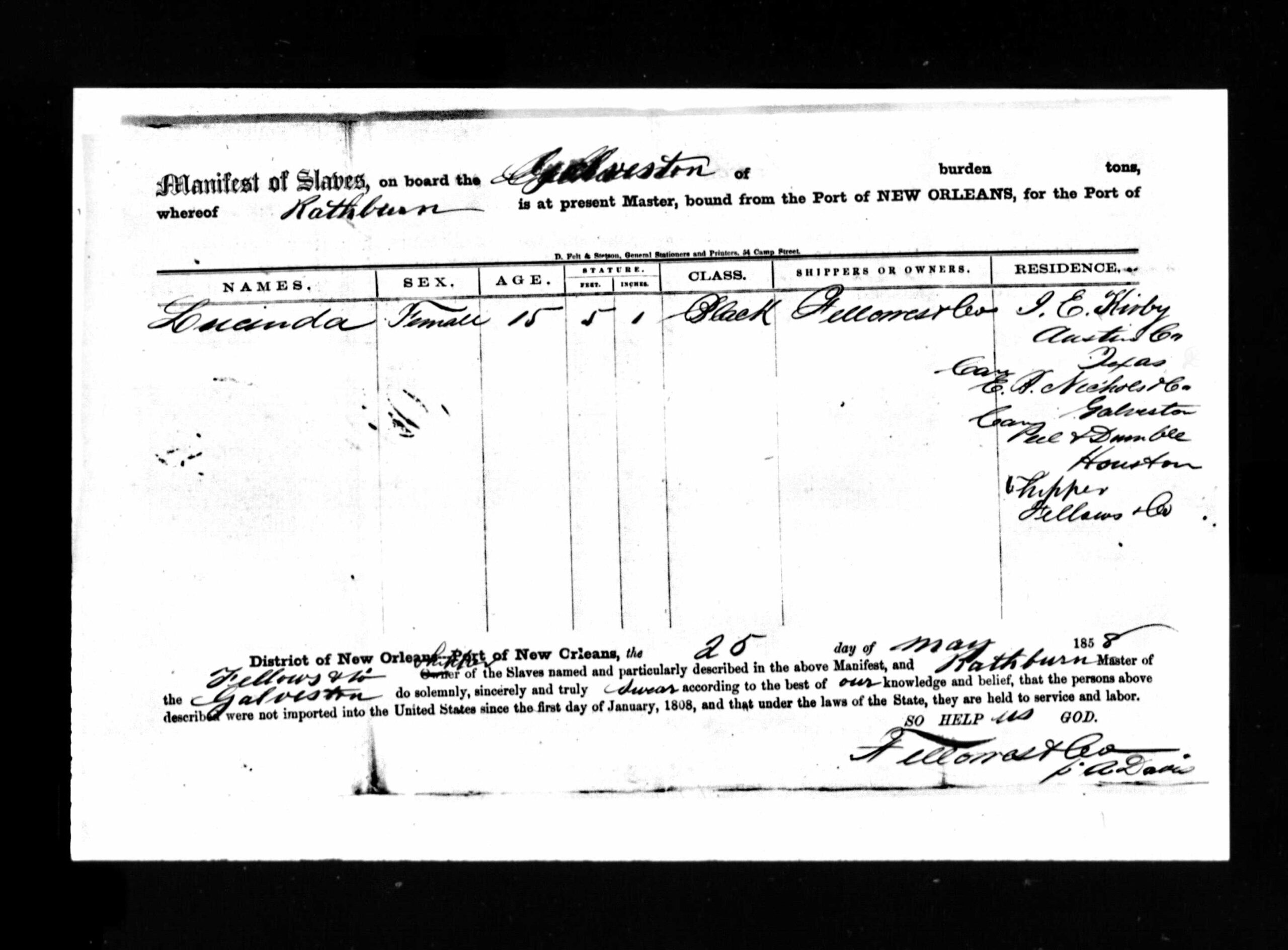
Besides census records and slave schedules, we located the manifest of the ship named Galveston, which transported slaves from New Orleans, Louisiana to Galveston, Texas in May 1858 for a domestic slave trading company, Fellows & Co.
Though an 1807 law banned the trans-Atlantic slave trade to the United States as of 1 January 1808, slaves could still be bought and sold (and transported) within the country. The same law that banned the foreign slave trade also regulated the internal transportation of slaves, requiring masters of vessels carrying slaves in coastal waters to provide a manifest detailing their slave cargo when leaving (“outward”) or entering (“inward”) a port.
The ship manifest contains the name of one person who likely lived at Kirby’s enslaved labor plantation, Alta Vista, in then-Austin County, Texas.
Source: The National Archives in Washington, DC; Washington, DC; Slave Manifests of Coastwise Vessels Filed at New Orleans, Louisiana, 1807-1860; Microfilm Serial: M1895; Microfilm Roll: 30.
Slave Ship Galveston
In May 1858, Captain Rathburn transported a fifteen year-old woman, who was five feet, one inch tall, on the Galveston.
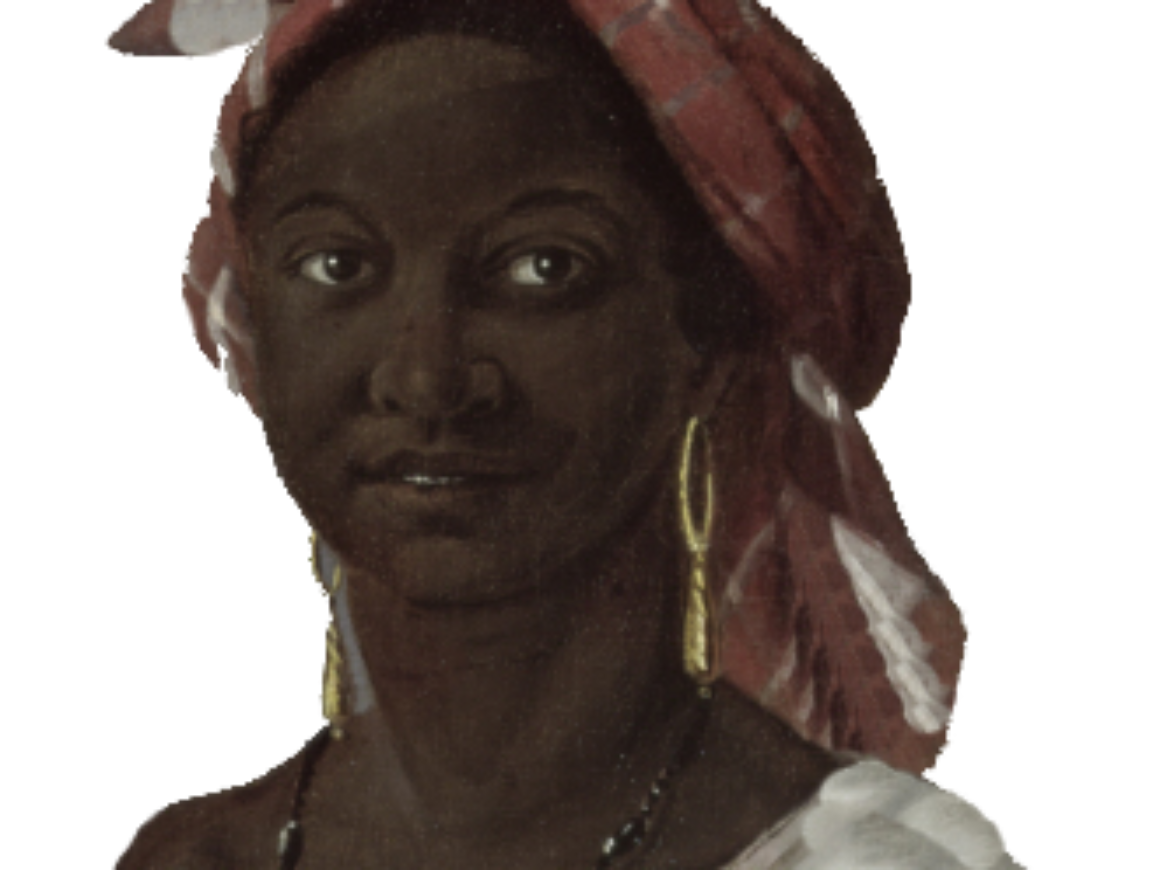
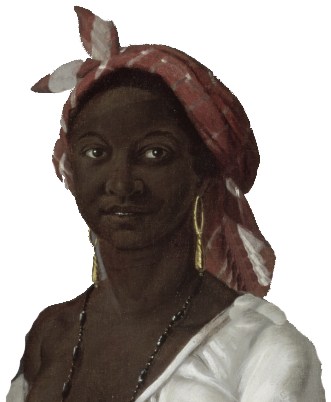
Her name was Lucinda.
No consolidated database of slave ship manifests exists, but Ancestry.com is an important online resource that brings some of these records together in searchable database. Other primary sources–such as wills, estate inventories, deeds, and probates–can also reveal how human property changed hands in the antebellum period, but these records are often difficult to read, and most of them are not digitized or indexed for easy searching. Yet, a couple of genealogists who work with the Waller County Historical Commission have been working hard to digitize the records in the basement of the Waller County courthouse in Hempstead. Since Waller County did not exist until 1873, however, this effort will not provide much insight into antebellum slavery.
Indeed, it will be very difficult to track down the descendants of people enslaved at Alta Vista, but the increased interest in university history and digital preservation has positively changed the prospects for institutional historians at PVAMU. If we try harder to make the archival collections at PVAMU available—and visible and searchable—online, and if white researchers who find evidence of slaveholding in their families will make family documents public, for Black researchers to access and use, we can discover the names of more enslaved people in Waller County.
Our mission at the Digital PV Panther Project is to eliminate historical silences through digital storytelling and prevent the erasure of African American history through historic preservation at PVAMU.
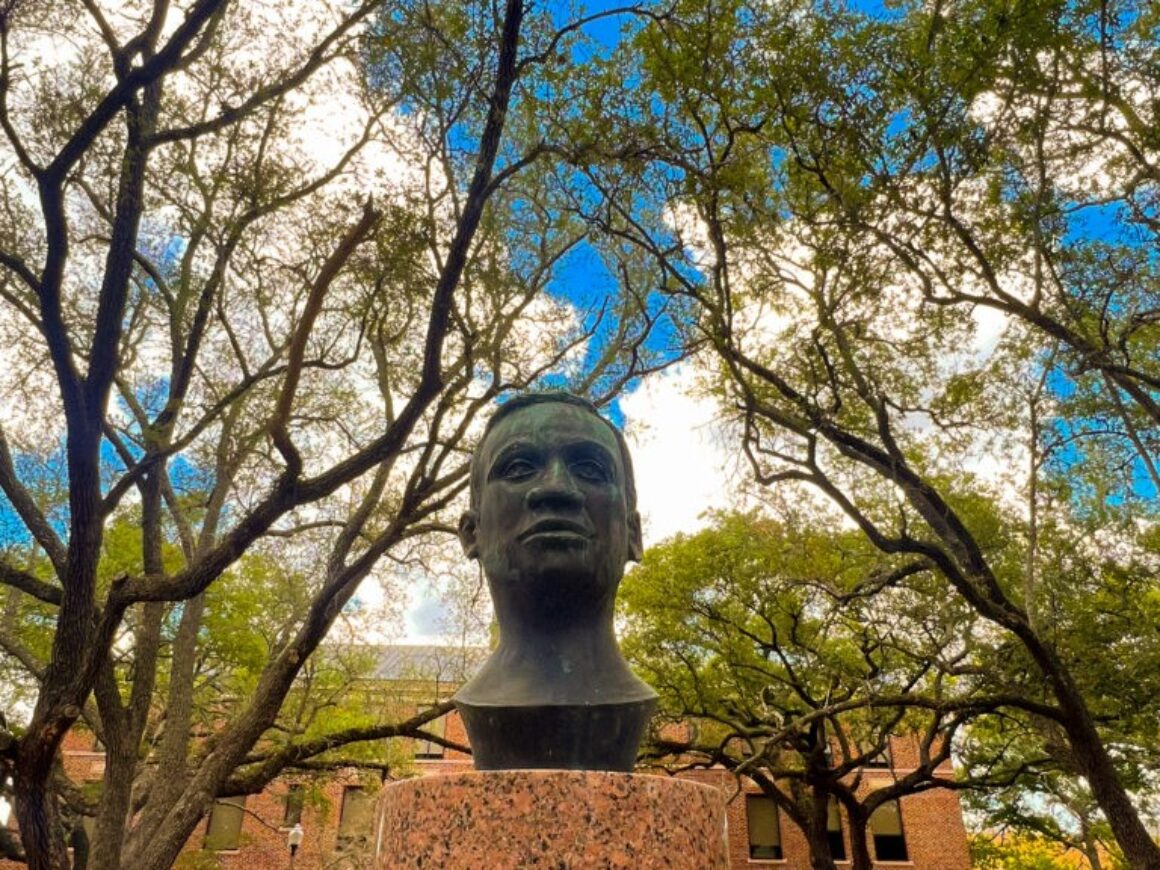
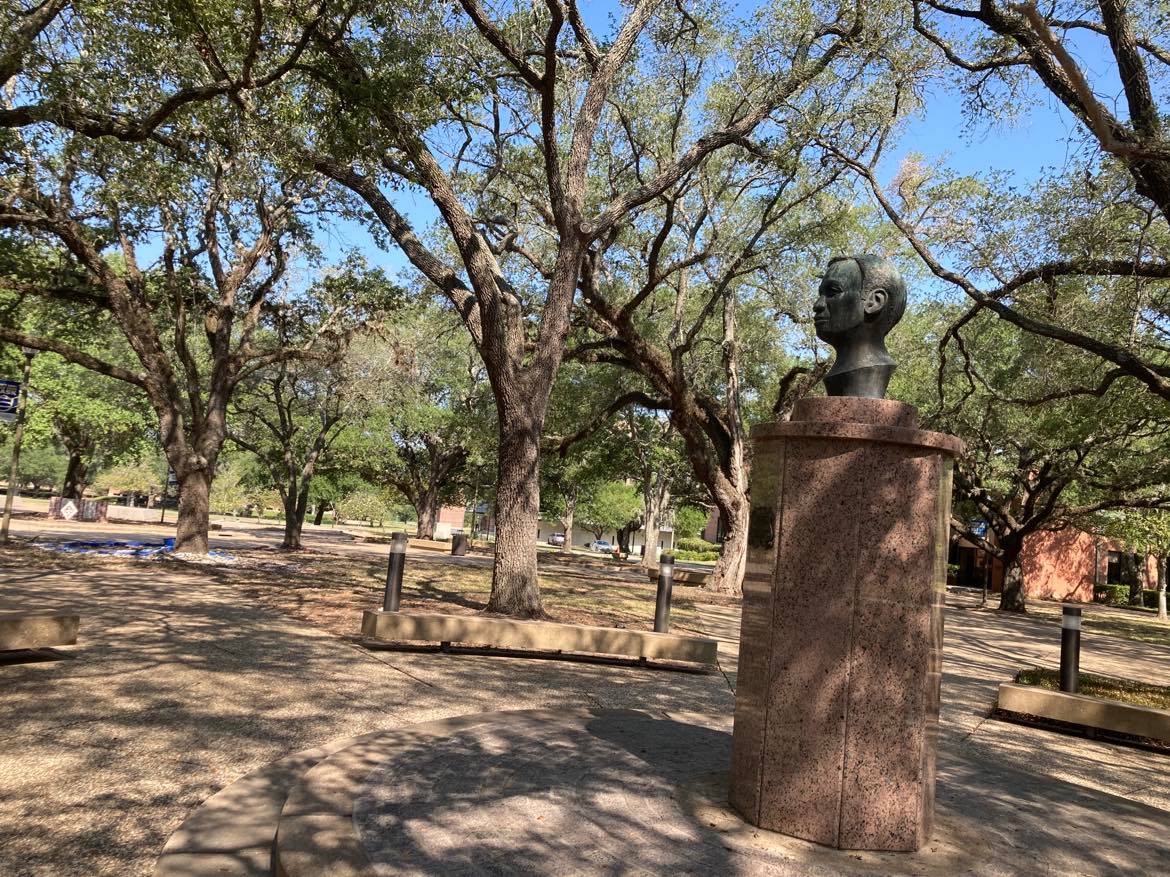
The Abner A. Davis Memorial has existed in one form or another on “The Hill” in front of the George Ruble Woolfolk Building at Prairie View A&M University since his death in December 1927. As a student at PVAMU, I have taken many walks across campus to get from my room in University Village Phase 3 to my morning classes. Since I lived at the back of campus, I had to pass Mr. Davis and the fountain quite often. Though I passed his memorial on numerous occasions, I never really took the time to learn about the history of the memorial or the man. This blog post intends to shine a light on a “gentleman, clean sport, athlete and ideal student,” as one former teammate referred to him, as well as the history of historic preservation and memorialization at PVAMU.
The Abner A. Davis Memorial on “The Hill” at PVAMU (Photo: T. DeWayne Moore, 2022)
Abner A. Davis was a member of the varsity football team at Prairie View A&M University in 1927. The Panthers were especially good that year. In an October 15, 1927 issue of the student newspaper, one writer exclaimed: “Never before in all footballdom at the college did the Prairie View Panthers show better form and finer spirits than have been shown this season. Vigorous, springy, and full of grit and fighting determination, the Panthers will be greatly disappointing to everybody if they do not smash and stop every gridiron machine that confronts them.” To view the entire article, please click HERE
In a game against Texas College the following month, Davis went to make a tackle on the opposing team and was severely injured during the play. He was hit in his neck by the offensive player’s knee, leaving him paralyzed from the neck down. Since his injury came in the middle of an away game, the Panthers finished playing the game and carried Davis back to campus. It’s unclear whether or not the team was victorious.
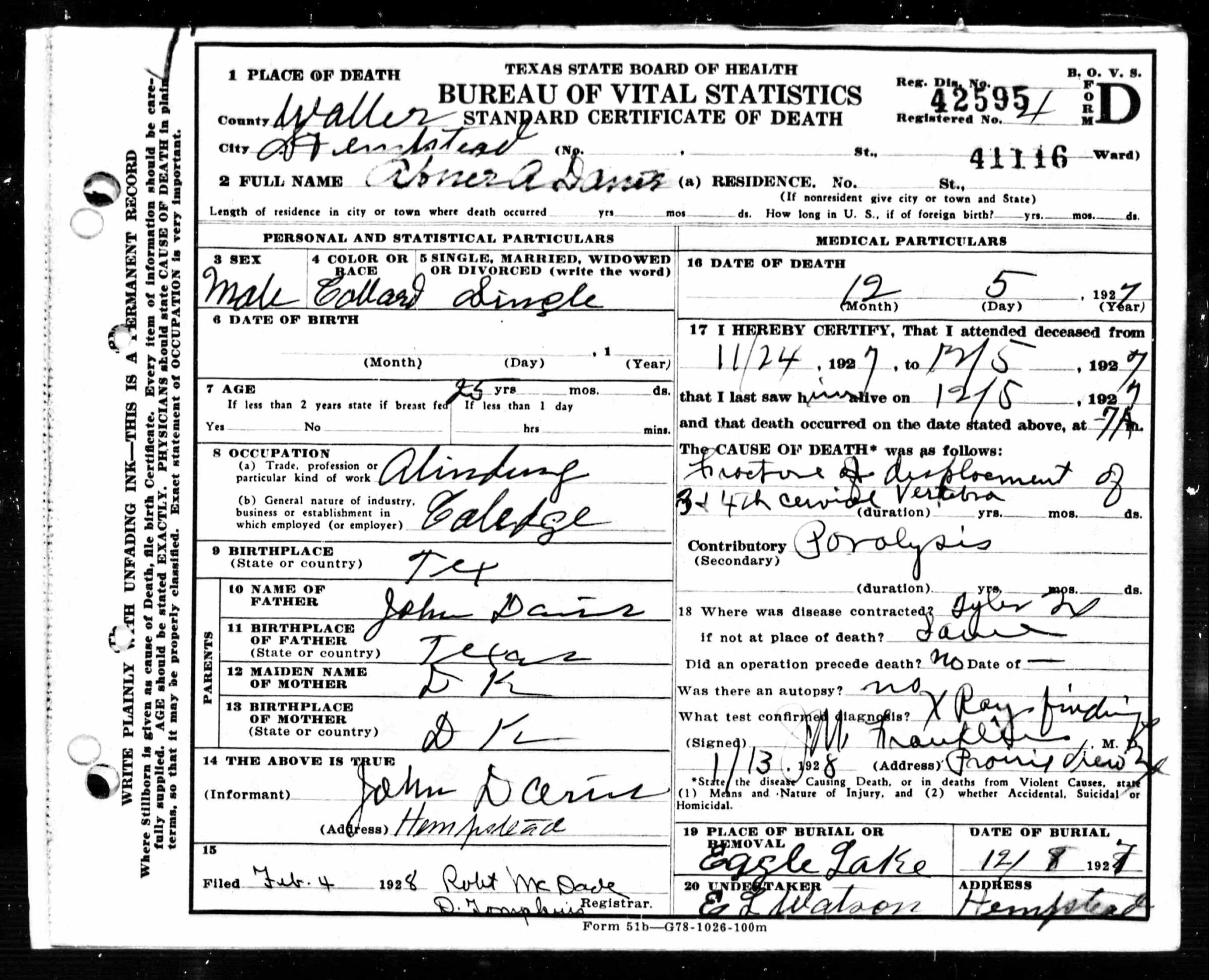
The doctor who treated Davis from November 24 through December 5 stated that he suffered from “paralysis” stemming from the “fracture or displacement of the 3[rd] & 4th cervical vertebrae.” While the doctor confirmed his diagnosis with an X-ray, Davis underwent no surgery prior to his demise on December 5. According to his death certificate, Hempstead undertaker E.L. Watson removed his remains for burial to the city of Eagle Lake, Texas on December 8.
The death certificate of Abner A. Davis (Texas Department of State Health Services; Austin Texas, USA)
In his memoir, Down Memory Lane: The Story of Edward Bertram Evans, Sr. and the Early History of Prairie View A & M University, former university president and professor of veterinary science and medicine Edward Bertram Evans claims that the final remains of Abner Davis were laid to rest in his hometown of Spanish Camp, a small hamlet that sits an estimated ten miles outside of Wharton, Texas. Spanish Camp is located about 22 miles southeast of Eagle Rock. Indeed, the exact location of his grave remains the subject of debate. In a March 12, 2012 article in the Beaumont Times titled, “Where’s Abner?,” David Lisenby reported that the librarian at the Alma M. Carpenter Public Library in Sour Lake, Texas, who was on a mission to find the descendants of Davis, believed that he was buried somewhere in the town of Sour Lake near the city of Beaumont, Texas. Lisenby does not reveal the source of this information, and it directly contradicts the information on his death certificate.
Even though no one has ever found Abner Davis’s headstone, his classmates at PVAMU have memorialized his legacy in numerous ways over the years. In a 1933 issue of the Prairie View Panther, one author wrote a poem about the gridiron hero. To view the original poem, please click HERE
IN MEMORY OF ABNER DAVIS (P. U. Hero)
Sleep, 0 brave one, in glory’s field, Time to your name shall honor yield; The summer shall their blooms impart. To fade above each mold’ring heart And fading, mix their lustrous charms With dust that bore heroic arms.
In a January 1934 issue of the Prairie View Standard, one of his teammates L.C. Mosley penned a memoriam to Abner Davis, and he reveals that the first physical memorial to Davis came in the form of light. “The light in the center of the campus proper,” he explained, “is more than just a light to illuminate the path to the library. It represents the life of a gentleman, clean sport, athlete, and ideal student, Abner Davis, who was fatally injured in a Thanksgiving Day football game against Texas College in Tyler, 1927. The classes of ’29 and ’30 made it possible for this light to shine in its way as the living light of this football warrior had shone. The entire Alumni mourn with Henry Staton, A. J. Banks, M. C. Bates, S. Prince, L. C. Mosley, O. Mason, Jap Turner, G. Turner, J. J. Mark and Pop Singleton who started and finished the game that Abner started and could not finish.”
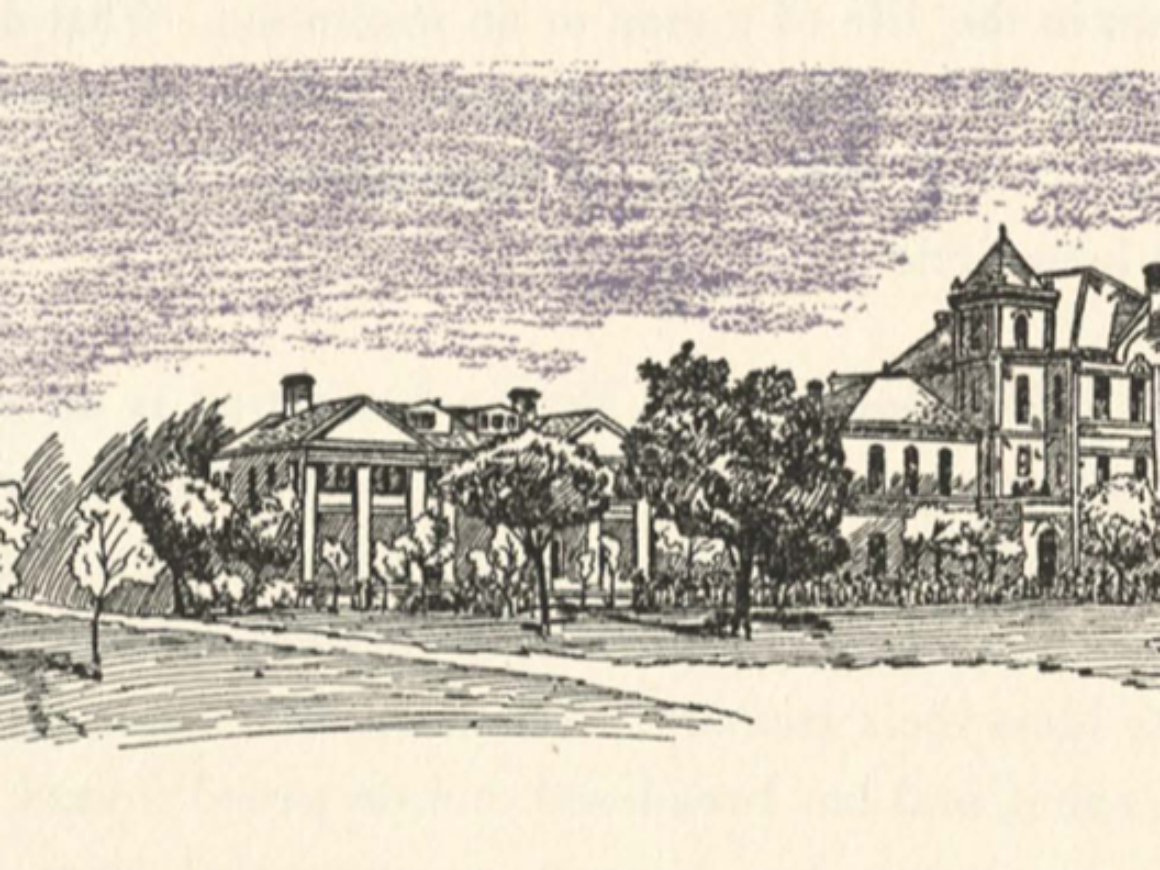
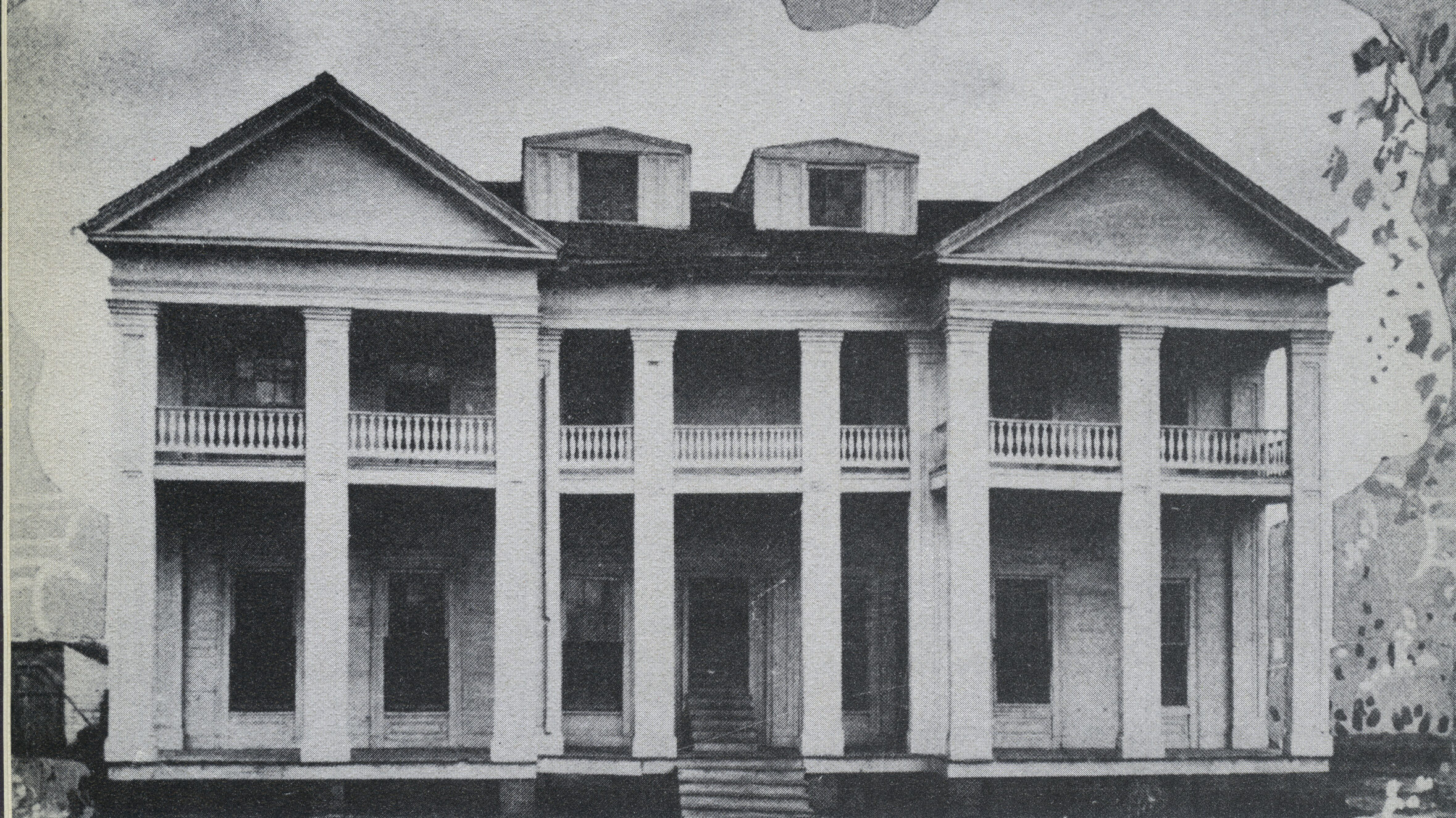
The demolition of Kirby Hall as well as “all wooden structures in the immediate campus area” in April 1934 (news about the razing of the slave mansion can be found in a newsletter HERE) provided an opportunity to install a new monument on “The Hill.” The teammates and classmates of Davis decided to replace the monument to slavery with a new symbol in the late 1930s.
A drinking fountain and memorial in honor of Abner A. Davis soon adorned the top of “The Hill,” and student organizations used the fountain as the site of many activities for the next four decades. In 1957, the Student Welfare Committee affirmed the need to beautify campus and spearheaded a “College Clean-Up Campaign involving both faculty and students in an effort to make Pantherland ideal.” Making the first step in this direction, the committee polished the Abner Davis Fountain and “put signs on the lawn asking students to use the sidewalks, thus avoiding making trails through the campus.” [For the entire article, please click HERE]
In 1961, PVAMU student Lois Moore noted that the center of the “campus is designated with a water fountain known as the Abner Davis water fountain. Many clubs and organizations meet periodically around this fountain…but many students on the campus do not know why these clubs meet here.” Moore also noted, “Although the fountain no longer exists as a water fountain, it is still the cultural center of the campus.” [For the entire article, please click HERE]
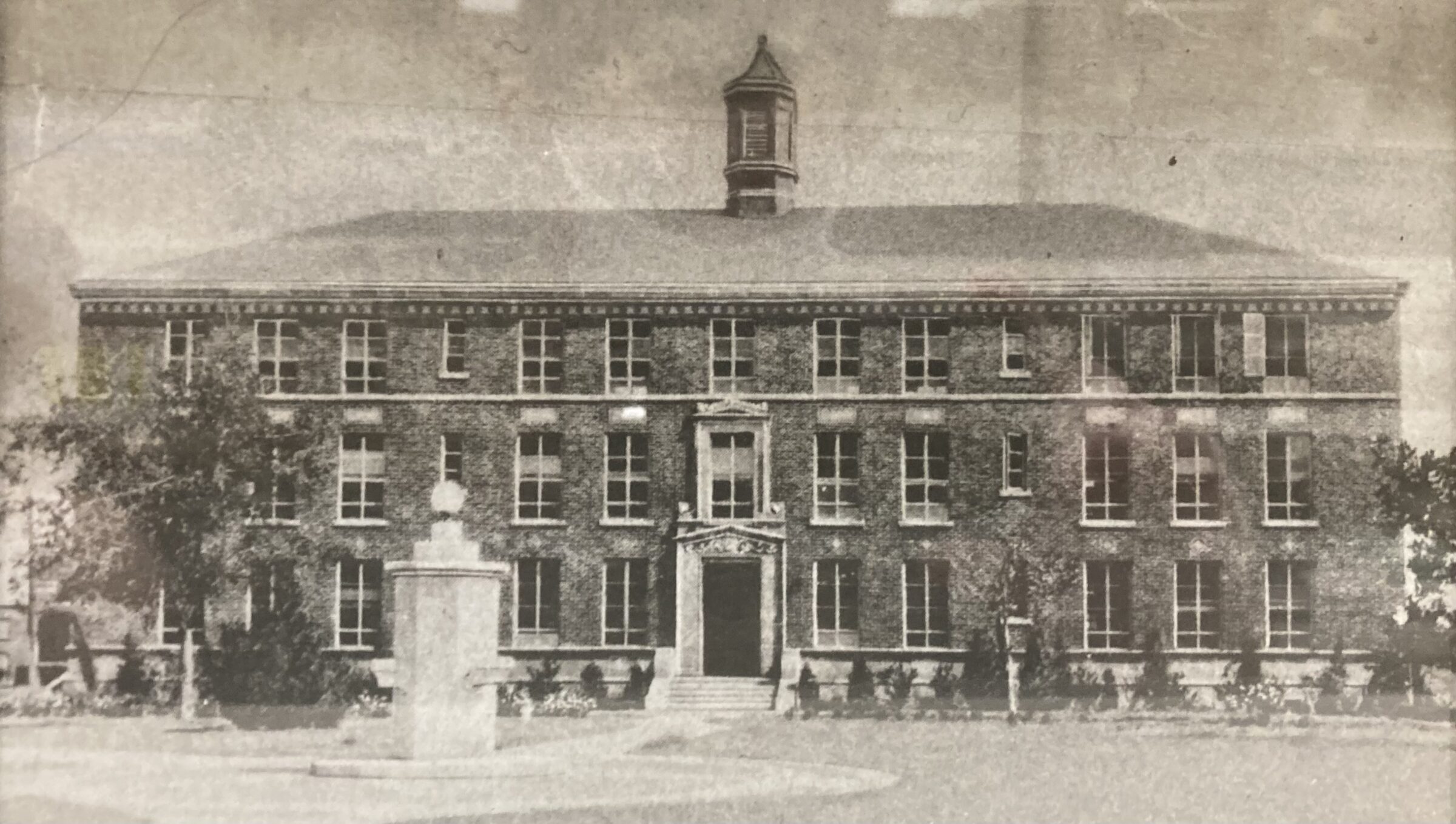
The light and drinking fountain that once stood on “The Hill” in honor of Abner Davis can be seen clearly in this 1940s photograph of the Woolfolk Building, (Photo: George Ruble Woolfolk Collection, John B. Coleman Library, PVAMU)
In March 1963, the LES BEAUX ARTS Cultural Club renovated the Abner Davis Memorial. The fountain, once stained and weather-worn, has now been refreshed for a new year. “This improvement has certainly played a great role in making the ‘center’ of the campus, all the more attractive, for our yearly high school visitors.” For more information, click HERE
On January 16, 1984, PVAMU observed the birthday of Martin Luther King, Jr. and organized a special program in the quadrangle area of the campus at the Abner Davis Fountain. For more information, click HERE
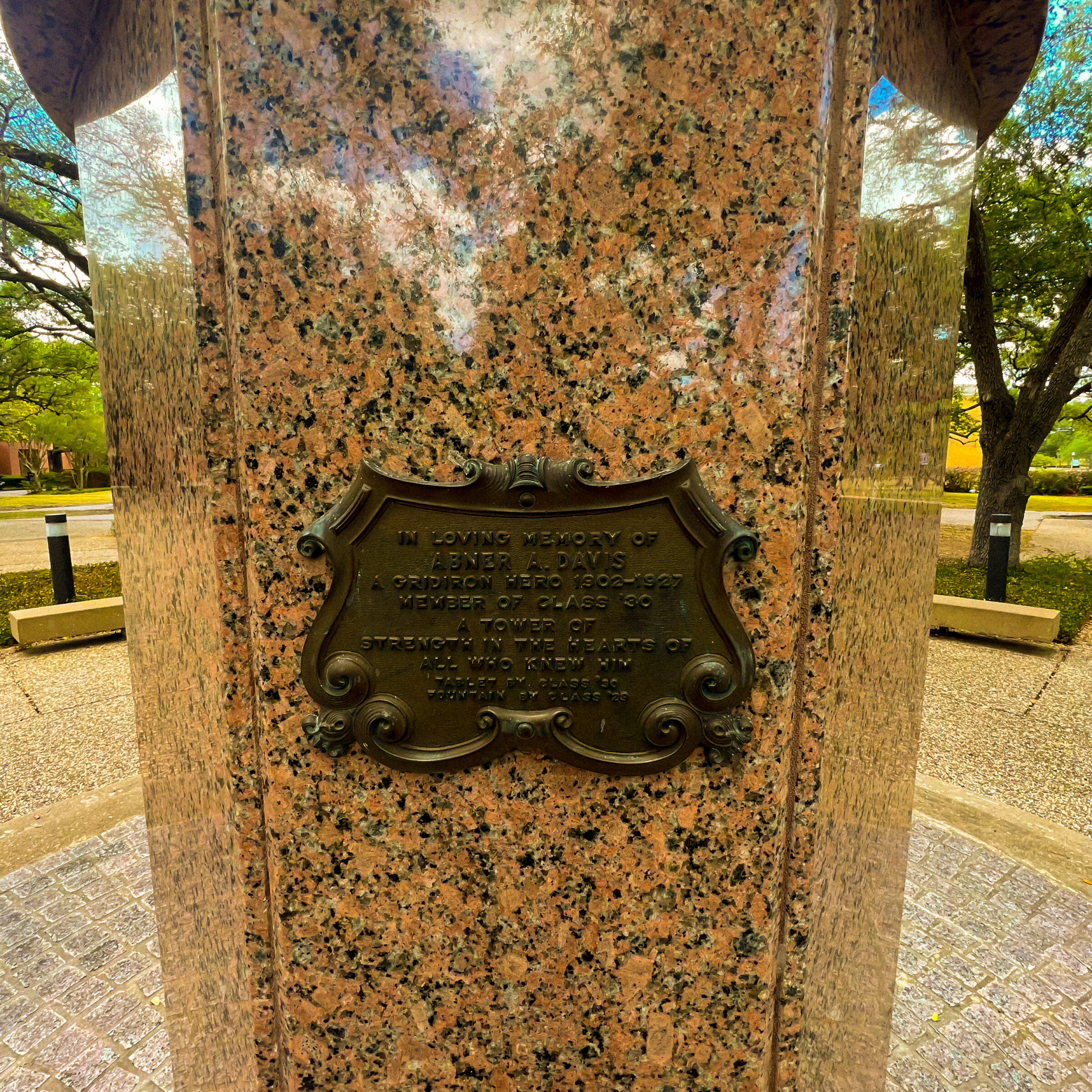
In July 1984, the Class of 1930 renovated the Abner A. Davis Monument and added the Texas Sunset Granite. For more information, click HERE
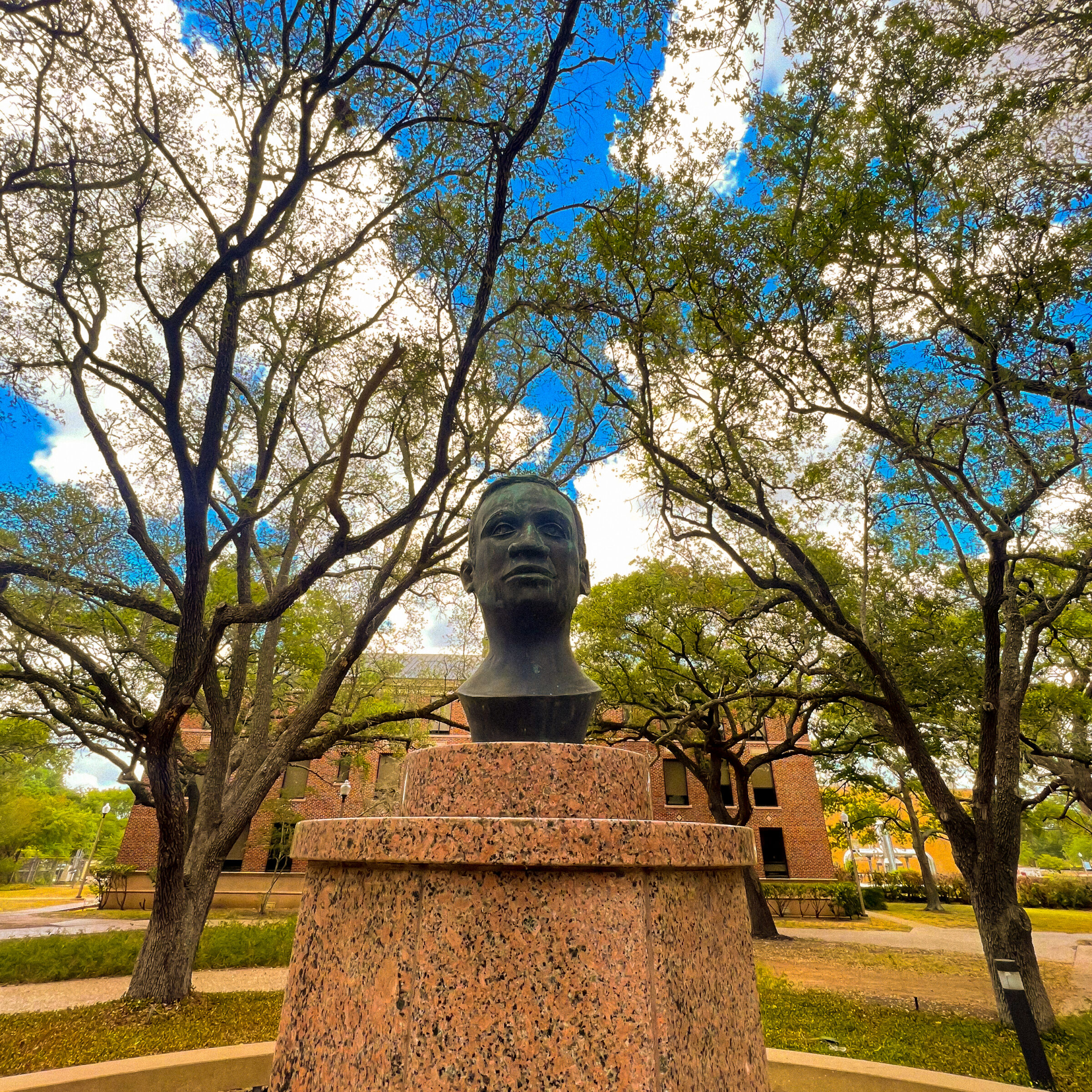
The Abner A. Davis Memorial on “The Hill” at PVAMU (Photo: Malachi McMahon, 2022)
The mystery about the location of Davis’ remains gives rise to many questions about the impact of racial segregation on his life and legacy. Being that his death occurred in the Jim Crow South, he would not have had access to quality medical care, and his death might very well have been prevented.
One day while walking across campus, I watched as landscapers blew freshly cut grass off the concrete walkway. It created a clean path for students. It was at this moment that I noticed the bust atop the Abner A. Davis Memorial was covered in spiderwebs, leaves, and dirt, and I started to wonder why no one on campus had taken the time to clean the statue. The grass is always freshly mowed and looks pristine. Indeed, the lawn on campus is cut and trimmed almost daily, and I rarely see any trash accumulation on the ground.
So I asked myself, “Why is the Davis memorial not well kept?”
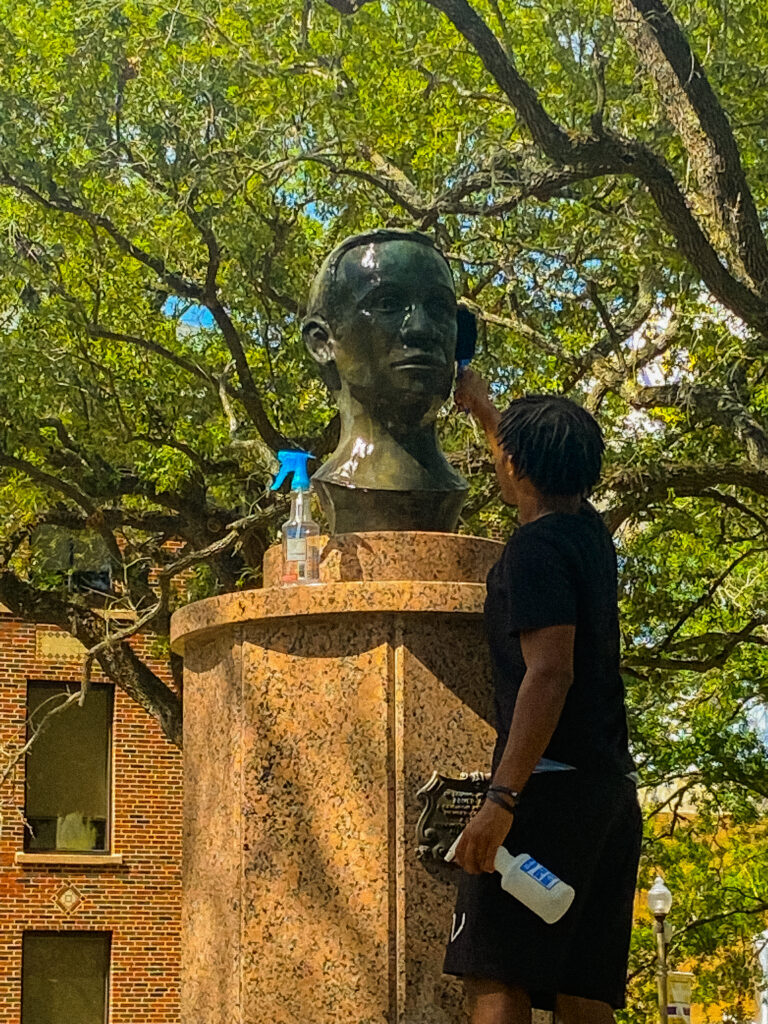
The unsightly appearance of the Abner Davis Memorial was on my mind when I walked into work the next day for the Digital PV Panther Project, and I shared my concerns with Dr. Moore. I let him know about the condition of the memorial and that it wasn’t well-kept, and we agreed to take matters into our own hands and clean it up.
Polishing The Abner A. Davis Memorial on “The Hill” at PVAMU (Photo: Kalayah Jammer, 2022)
At the time, we did not know that we were following in the footsteps of many other students and faculty at PVAMU, who had been dissatisfied with existing preservation practices and made it a point to beautify the campus. Thus, we gathered some cleaning materials and headed for the memorial. We began by dusting off the spider webs, which had certainly built up for several years. Once we removed the spider webs, we sprayed the bust clean with water, and we cleaned it with D2 biological solution, an organic cleaning solution that removes fungi and provides a protective coating for the memorial. We also wiped the memorial clean from top to bottom with a soft-bristle brush. When we finished cleaning, I felt very accomplished and proud to have played a role in keeping the campus beautiful.
This job has given me a new perspective on what studying at PVAMU means. Many students, faculty, staff, and administrators have paved the way for us, and I believe other students should recognize that. If we are not careful, we will discount the sacrifices of the past. We must appreciate our history as an HBCU, and I will make strenuous efforts to share insights with my peers so that our heroes, such as Abner Davis, will never be forgotten.
Sincerely,
Malachi McMahon
This plaque was commissioned in the early 1980s. The classes of 1929 and 1930 added the Texas red granite to “The Hill,” which remained an important meeting site for decades. In 1992, students organized “PV 19 Day” at the Abner Davis memorial site to protest the indictment and arrest of students for attempting to vote in county elections. The memorial site proved an important site of remembrance during the tenure of PVAMU President Percy Pierre in the 1980s. (Photo: Malachi McMahon, 2022)
The day would come when Mrs. Kirby would refer to the years of trouble after the war as a “Monument of Sorrow”…Then came the storms of murder and death; and more insidious, but no less voracious, the debt that systematically ate up the plantations and farms. Freedom was to take away the capital labor of slaves….
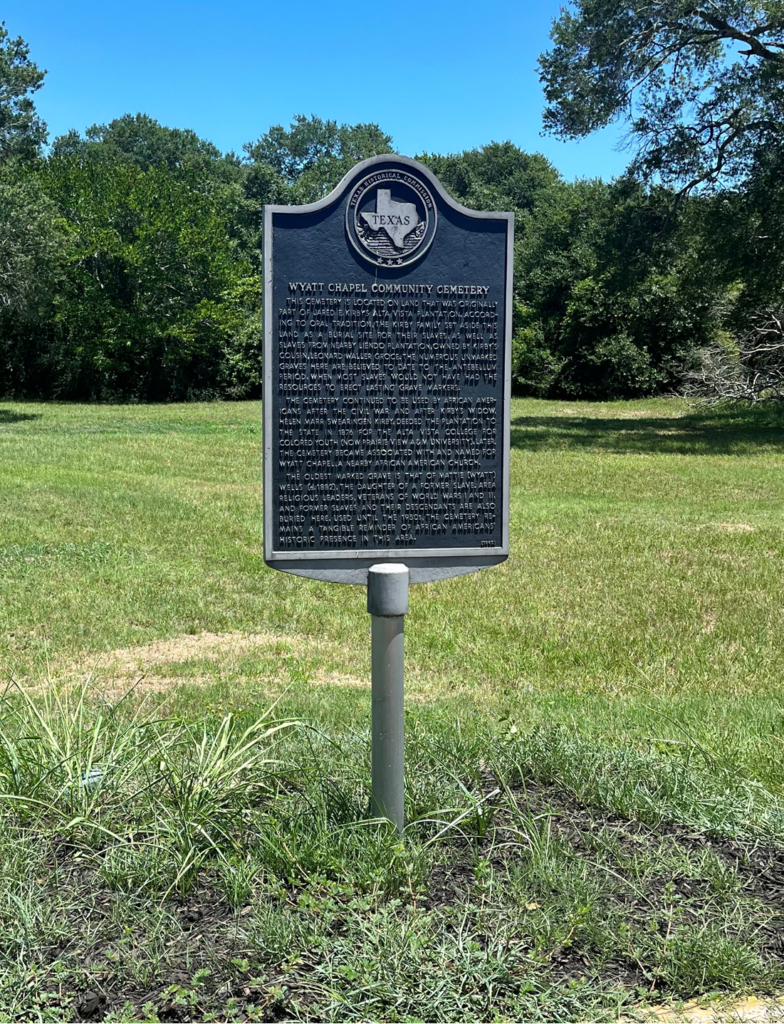
The Historical Marker for Wyatt Chapel Community Cemetery (Photo: Lindsay Boknight, 2022)
Within my first week as an archival assistant working on the Digital PV Panther Project, I learned a great deal about the rich history of Prairie View A&M University (PVAMU). My first task was to sort out tape recordings from different events that took place on and around campus. Many of the events took place around the early 1960s to the late 1980s. Events included, summer and spring convocations, dance recitals, ministry conventions, homecoming parades, sports banquets, and athletic games just to name a few. Each tape recording contained the speeches of Former PVAMU President Dr. A.I. Thomas, PVAMU professors, and special guests and speakers, such as Jesse Jackson and Rosa Parks. If you’re wondering, yes the tapes are still in good condition and are playable.
My journey into the archival collections at PVAMU continued at Wyatt Chapel Community Cemetery on the back side of campus. For those who may not know, PVAMU was built on top of Jared Ellison Kirby’s former enslaved labor camp, Alta Vista, and he set aside a small plot of land for a burial site for the enslaved. The cemetery behind dormitories “Phase 3 & 6.” The burial ground contains six headstones of the deceased, while the rest of the cemetery holds the unmarked graves of our ancestors. In the upcoming fall 2022 semester, PVAMU Assistant Professor of History Dr. DeWayne Moore and Special Collections Librarian Lisa Stafford will hire an archaeological firm to conduct a ground penetrating radar study of the cemetery. You can read more about the study HERE. The ground penetrating radar will scan the burial ground to determine the location of grave shafts. Using this technology, we will finally be able to determine the burial locations of our ancestors and other internments in the cemetery.
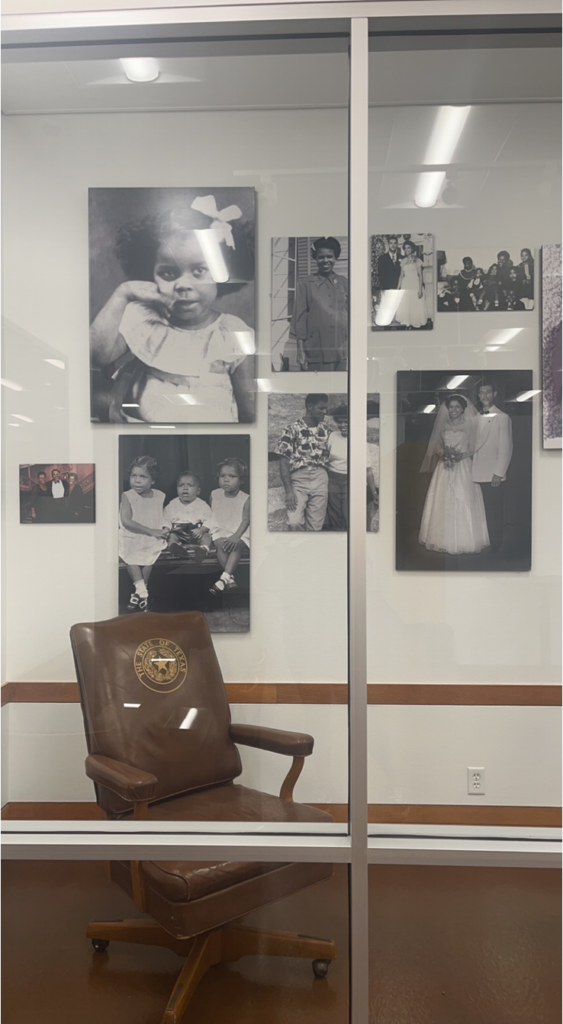
Family portraits and chair of Wilhelmina R. Delco (Photo: Lindsay Boknight, 2022)
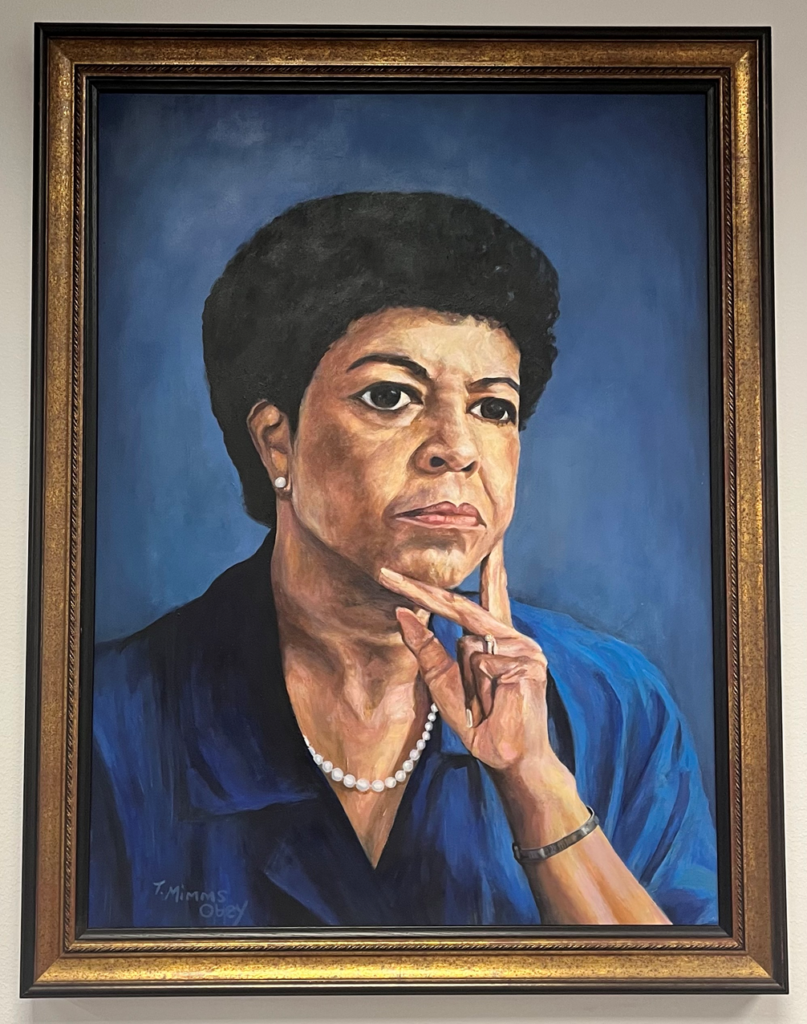
After exploring Wyatt Chapel Community Cemetery, I visited the fourth floor of the library and learned more about the history of Wilhelmina R. Delco. Born in Chicago, Illinois on July 1, 1929, Ms. Delco was an active student. She served as student body president and member of the National Honor Society. She obtained her Bachelors of Art degree from Fisk University in Nashville, Tennessee. She majored in Sociology and minored in Economics and Business Administration. Moreover, Ms. Delco served in the Texas House of Representatives. She began her career in 1974, when she was elected the first black, female, African American official from Travis County. She was sworn into office January 1975 and she began serving her very first term during the 64th legislative session.
Painting of Wilhelmina R. Delco, located 4th floor John B. Coleman Library (Photo: Lindsay Boknight, 2022)
She worked with the community and state on numerous social, educational, and political issues. Her most notable work was done in the area of Education. In 1979, Ms. Delco was appointed Chair of the House Higher Education Committee, on which she served until her next appointment as Speaker Pro Tempore in 1991. In January 1995, she retired from her tenth term and twentieth year in the Texas House of Representatives.
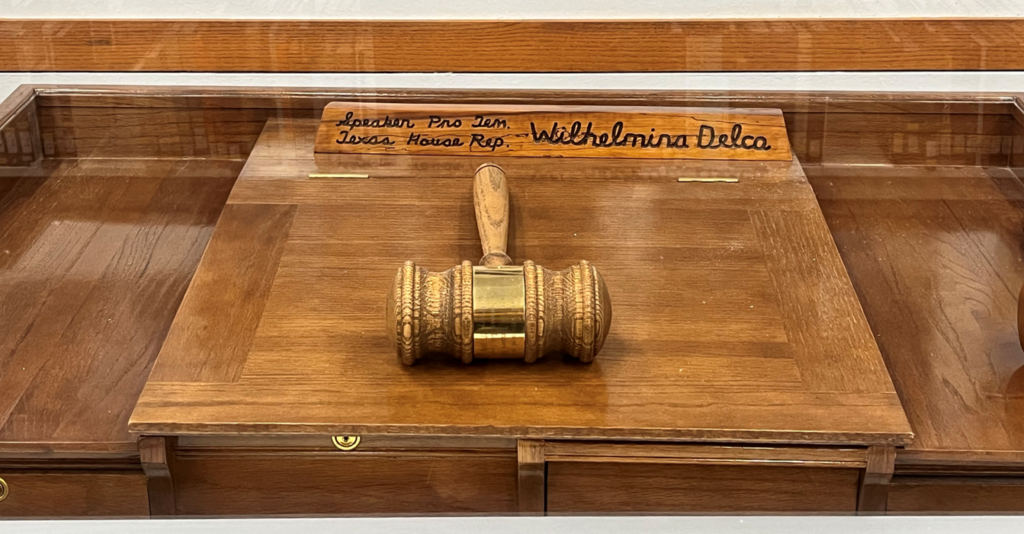
Ms. Delco received many awards, honors, and recognitions throughout her career–two of them being here at PVAMU. The Wilhelmina R. Delco building is home to the Whitlowe R. Green College of Education. Along with an unprocessed manuscript collection of papers, which sits in the PVAMU Archives, the John B. Coleman Library curated an exhibit about her life and career on the 4th floor. It contains an enclosed display of personal pictures, letters, documents, and other media that Ms. Delco used during her time as a representative. These items are up for display, open to staff, students, and the public.
Desk and gavel of Wilhelmina Delco (Photo: Lindsay Boknight, 2022)
Between the work of Wilhelmina Delco and the acknowledgment of the Wyatt Chapel Community Cemetery, I have became deeply involved in historic preservation at my HBCU. There is a lot of history that has yet to be uncovered. I cannot wait to see what the rest of the year has in store for the Digital PV Panther Project. And remember, PVAMU is the place to be!