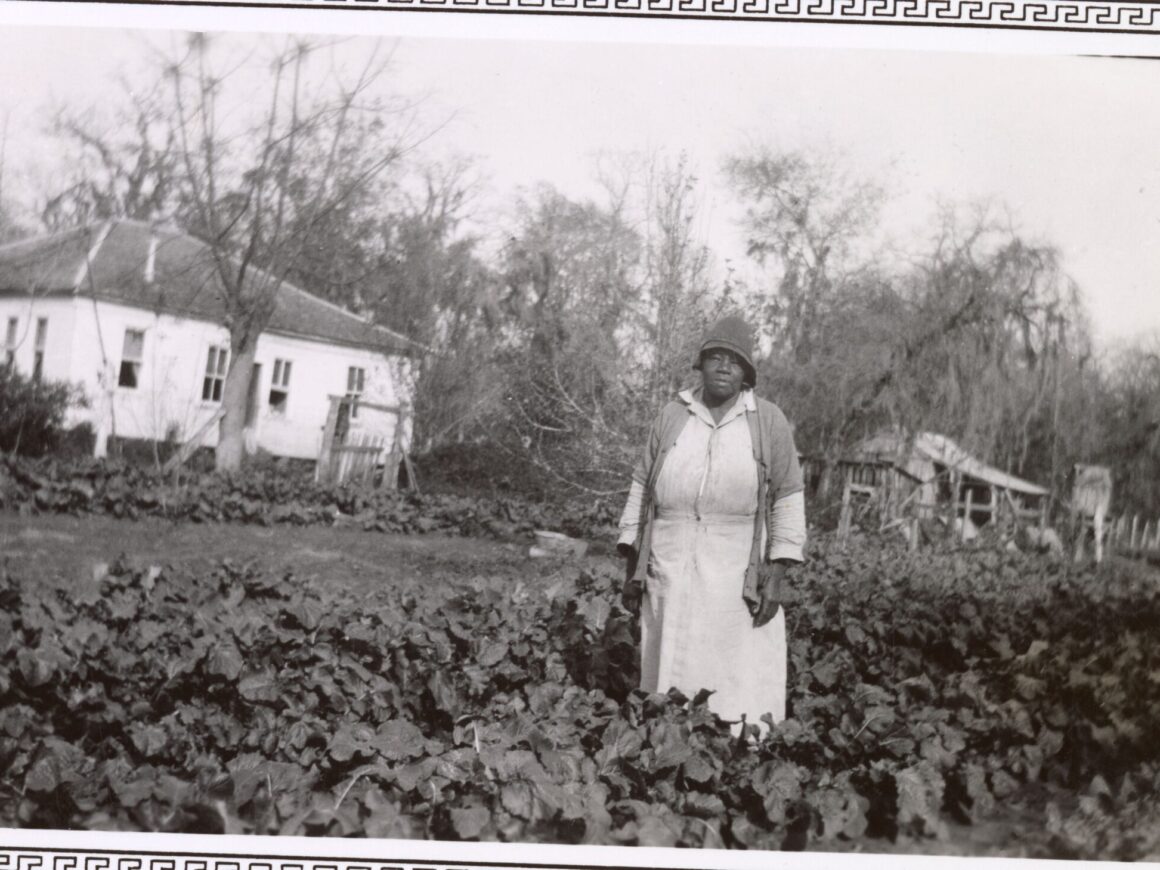
Counter-Archive of Survival: A Timeline of the Texas Black Cooperative Extension & Home Demonstration Collection (1923-1963)
Counter-Archive of Survival:
A Timeline of the Texas Black Cooperative Extension & Home Demonstration Collection (1923-1963)
By Evelyn Todd & T. DeWayne Moore
The Geography of Black Land Loss in Texas
From 1910 to the 1990s, African American farmers nationwide lost over 90% of their land, a collapse driven by discriminatory credit systems, tax delinquency seizures, heirs’ property vulnerability, and USDA county committee decision-making. In Texas, counties such as Waller, Washington, Gregg, and McLennan were among those where Black-owned agricultural land declined most sharply.
The Texas Black Cooperative Extension & Home Demonstration Collection functions as counter-archives of survival, documenting Black farmers’ attempts to maintain land against structural pressures. Each archival footprint of the 63 counties in the collection reflects not only Extension activity but also the shifting landscape of rural Black land tenure.


1922-23 — The Paper Trail Begins
Black Extension Work in Lee County, 1922–1923
The report begins with narrative notes describing early administrative steps to organize Black Extension work in Lee County. PVAMU instructor and CES District Agent Henry Estelle met with county commissioners and community leaders who approved the hiring of a Black CES agent. A. J. Mason was appointed the first Black farm demonstration agent for Lee County.
In the early 1920s, Black Texans controlled meaningful acreage in counties like Dallas, Lee, and Harris. However, foreclosure rates rose as discriminatory lending, inflated land values, and exploitative tenancy contracts increased. These early reports reveal what Black agents understood: farm visits and demonstration plots were direct interventions against looming land loss.
1923 — The Paper Trail Begins
The formalization of reporting became a tool for protecting Black farmers’ land interests. Demonstrations in budgeting, crop rotation, and soil fertility weren’t just agricultural—they were anti-dispossession strategies. Counties with systematic reports often show slower early rates of land loss, suggesting Extension networks helped stabilize ownership.
The earliest surviving reports in the collection come from Dallas and Harris Counties in 1923. Black County Extension Agents filed formal annual and monthly reports that documented farm visits, demonstration plots, and meetings with farmers and homemakers. These reports show that, even under Jim Crow, Black agents were already integral to state agricultural programs.
The 1923 Annual Narrative Report of L. G. Luper, the Black County Agent for Harris County, demonstates that the Extension Service coordinated community demonstration plots of cotton, Irish potatoes, corn, and sweet potatoes in communities such Addicks, Katy, Brays Bayou, Crosby, Spring, Almeda, and the proceeds were explicitly used to fund school improvements, including “the purchase of school land in their vicinity.” It shows institutional self-determination in a segregated educational system designed to underfund Black schools. This practice connects directly to the tradition that scholars such as Vanessa Siddle Walker and Heather Williams document—Black southerners’ long-standing strategies for building educational infrastructure through church networks, mutual aid, and community labor. In this sense, Luper’s agricultural extension work functioned as an educational reform project, enabling rural Black Texans to subsidize their own public goods when the state refused to do so.


1936 — Extension, Depression, and Accelerated Black Land Loss
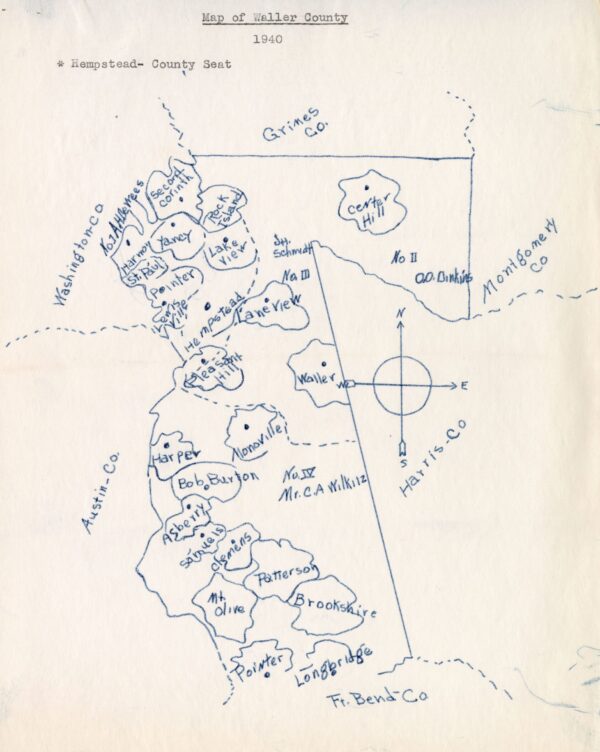
The Great Depression devastated Black land ownership nationwide. In Texas, tax delinquency seizures accelerated in rural counties like McLennan and Waller. Monthly reports from 1936 reveal agents teaching record-keeping, cooperative buying, and farm credit management, practical strategies to keep land from slipping into white ownership.
In 1936, multiple counties—including McLennan, Waller, and Dallas—produced clusters of monthly reports. These Depression-era documents show Black agents helping farmers navigate credit crises, boll weevil infestations, and the new world of federal farm programs. Extension work became a vital bridge between Washington, D.C., and rural Black communities.
1937 — Coordinating Extension Service in High-Loss Counties
Gregg County’s surge in Combined Annual Reports occurs as Black farmers faced rising pressure from oil-linked land speculation and discriminatory credit practices. The Extension Service offered technical aid amid an emerging wave of forced sales, helping rural families retain small parcels when possible.


1938–1939 — 4-H as a Land Retension Strategy
As Black land loss intensified in the late 1930s, youth programs offered a way to anchor families to the land. 4-H competitions in poultry, livestock, and canning increased the productive value of farms, strengthening households’ ability to meet taxes and loan obligations. Oral histories often link these youth programs to families’ ability to hold onto acreage for another generation.
1941–1942 — Winning the War at Home
WWII created new markets but also allowed local officials to pressure Black farmers into selling land needed for industrial expansion and military facilities. Extension reports from this period show agents helping families boost productivity to avoid foreclosure, even as federal wartime land seizures disproportionately targeted Black rural communities.
Reports from Harris, McLennan, Waller, and Dallas in 1941–1942 show the Extension Service shifting toward wartime priorities: food preservation, victory gardens, canning campaigns, and nutrition education. Black agents and home demonstrators were critical to federal food security efforts, yet their contributions rarely appear in official wartime histories.


1943–1944 — Home Demonstration & Economic Survival
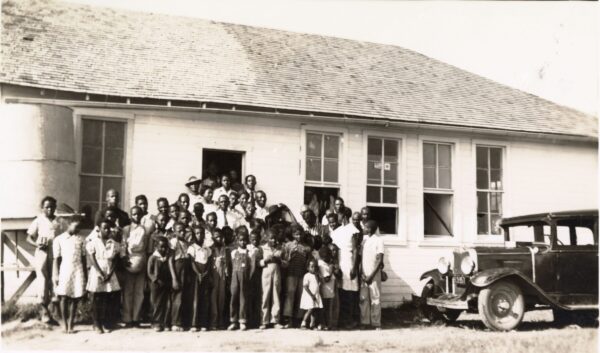
Home Demonstration Agents were crucial for land retention. By improving household efficiency—canning, sewing, food preservation—they reduced cash outlay, enabling families to meet tax deadlines. In counties with high levels of Home Demonstration documentation, Black landholders sometimes show slower dispossession trajectories.
Monthly and narrative reports for 1943–1944 emphasize home management under rationing—sewing, clothing repair, substitute foods, and home sanitation. Black Home Demonstration Agents in counties like Gregg and Waller served as crisis managers, teaching techniques that kept families fed and clothed when store shelves were bare.
1945–1946 — Post-War Transition & Land Loss Acceleration
Returning Black veterans attempted to buy land with GI Bill benefits but faced county-level discrimination. Extension reports document increased demand for farm management training because banks routinely denied Black veterans operating loans. These documents show early signs of post-WWII land concentration into white agribusiness.
As World War II ended, reports and plans of work from McLennan, Harris, and Waller Counties highlight rural housing improvements, electrification, health campaigns, and veteran reintegration. Black Extension professionals helped transform wartime skills into long-term community development projects.


1947 — The Best Documented Year & High Dispossession Rates
1947 stands out not just in your archive but also in Texas’s land history. The late 1940s saw one of the sharpest declines in Black-owned farmland statewide. The explosion of reports suggests Extension agents were actively responding to crises in credit, tenancy, and land market volatility.
Every county in this collection—Dallas, Gregg, Harris, McLennan, Waller, and Washington—has multiple reports from 1947. Combined annuals, narrative reports, enrollment lists, and plans of work make 1947 the single best-documented year for Black Extension activities in Texas, capturing the program at peak reach and complexity.
1948–1949 — Black Women’s Clubs & Land-Based Community Wealth
Home Demonstration clubs helped women generate income from gardens, sewing, and food production. This supplemental household revenue was critical to keeping land taxes current. Washington County’s strong Home Demonstration footprint correlates with slightly higher Black land retention into the 1950s compared to neighboring counties.
In Washington, Gregg, and Dallas Counties, 1948–1949 saw a surge in Home Demonstration enrollment lists, yearbooks, and auditor’s reports. These materials document Black women’s clubs organizing around nutrition, clothing, home improvement, and civic work—evidence of a powerful, gendered infrastructure of rural leadership.


1950 — Modern Tools, Old Inequalities
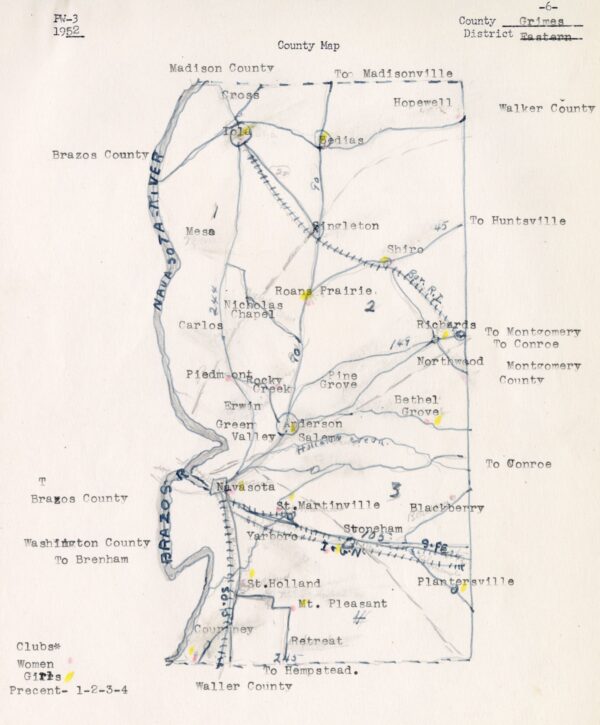
Around 1950, new plans of work and narrative reports describe electric appliances, pressure cookers, water systems, and soil conservation practices. Black farmers and homemakers adopted modern technologies through Extension demonstrations, even as segregation and discriminatory credit practices limited their access to land and capital.
While these counties show strong Extension programming, Black farmers often lacked access to USDA purchase loans for tractors and irrigation. This created a technological divide that later contributed to forced land sales and consolidation. Extension records show the desire for modernization but also the barriers imposed by discriminatory county committees.
1951–1952 — Bureaucratization and the Shifting Land Economy
These years mark the shift from smallholder farming to a more industrialized agricultural economy. Black farmers lacking capital to scale often lost acreage during this transition. Extension reports from Harris County reveal efforts to help small farmers remain competitive through training, record-keeping, and cooperative marketing.
Harris, McLennan, Waller, Washington, and Dallas all show dense clusters of reports in 1951–1952. Combined annuals and narrative reports reveal a mature, bureaucratically sophisticated Black Extension system with clear goals, evaluation forms, and elaborate statistics on meetings, farm families served, and youth reached.


1953 — A Snapshot Before Accelerated Decline
1953 is heavily documented across all counties. But this is also the last stable moment before Black land ownership in Texas began collapsing at unprecedented rates. The archive preserves the final robust generation of Black-operated farms before the 1960s–1970s collapse linked to mechanization, heirs’ property, and USDA discrimination.
Almost every county holds multiple 1953 documents: annual reports, plans of work, 4-H yearbooks, and enrollment lists. Taken together, these records form a composite snapshot of the Black Cooperative Extension Service at mid-century—its staffing, programs, and the everyday concerns
1957–1958 — Urbanization & Pressures on Rural Black Land
ty
Urban expansion—especially in Dallas and Houston—drove forced sales and rezoning that displaced rural Black communities. Youth programs grew as rural-to-urban migration increased. Meanwhile, land retention became harder as farm consolidation intensified.
Dallas, Gregg, and other counties generated numerous reports in 1957–1958. Yearbooks and plans of work show more emphasis on improved livestock breeds, mechanization, and expanded youth programs, including urban 4-H clubs linked to migration into cities like Dallas and Houston.


1960–1963 — From Segregated to Integrated Extension
By the early 1960s, the segregated Black Extension Service was ending. But this period also saw the most rapid decline in Black-owned land. Reports show agents traveling farther to reach fewer remaining Black farms—a quiet indicator of widespread dispossession.
These documents are some of the last archival traces of communities whose land bases would soon be eroded by systemic pressures.
From Archival Fragments to Digital Futures
The reports and photographs from each of the counties in this timeline represent only part of a larger, statewide network of 63 counties documented from 1923-1963 in the Texas Black Cooperative Extension & Home Demonstration Collection. By processing and creating finding aids for these materials through the Digital PV Panther Project, PVAMU students are transforming bureaucratic reports into tools for land-loss research, family history, and a new history of Black rural Texas.
For more information on the Digital PV Panther Project and the processing of the collection, please click HERE.
