Ground Penetrating Radar
Magnetometer Study of Wyatt Chapel
Magnetometer Study of Historic Wyatt Chapel
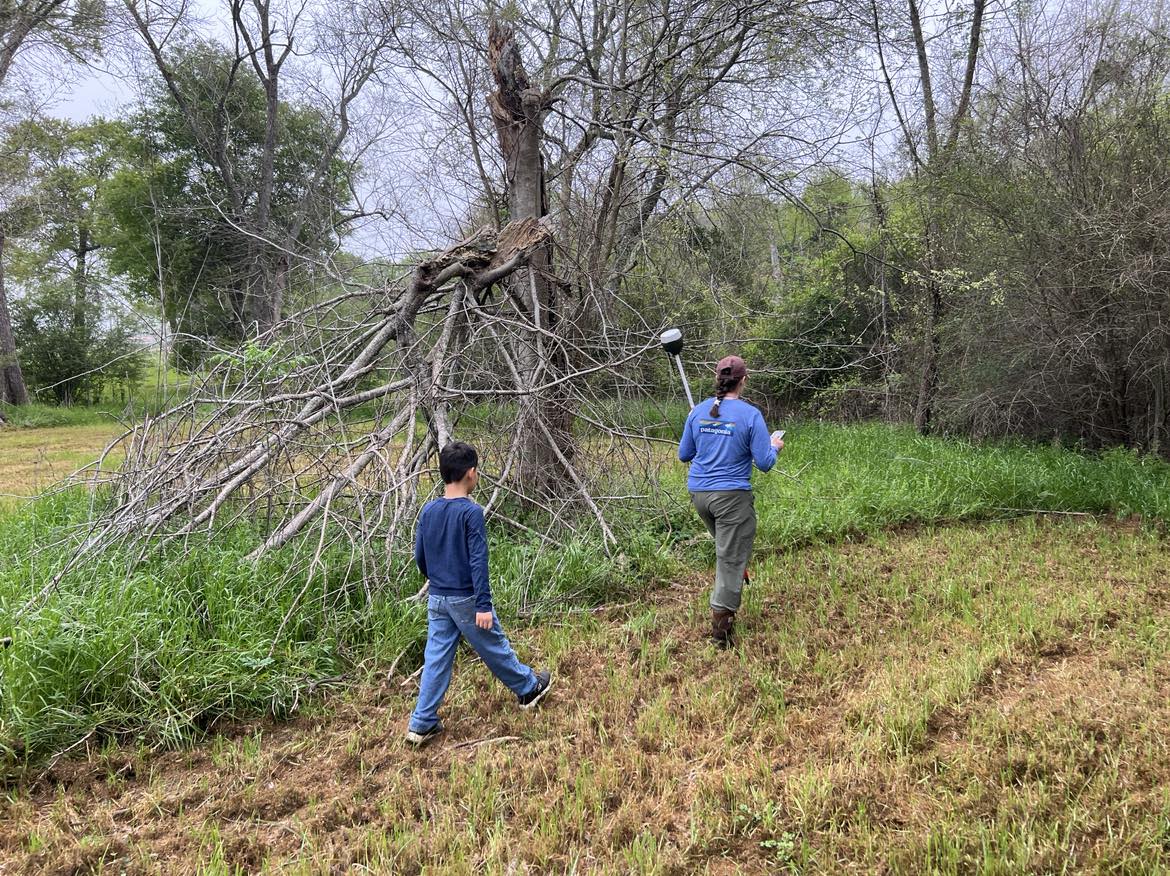
On March 31, 2024, archaeologists Dr. Chet Walker and Aundrea Thompson returned to the campus of Prairie View A&M University (PVAMU) to complete their geophysical examinations of the historic burial ground of Wyatt Chapel Community Cemetery.
This project is funded through the Summerlee Foundation.
Broken Trees in the Cemetery
The Bottom of the Tree
Storm Damage
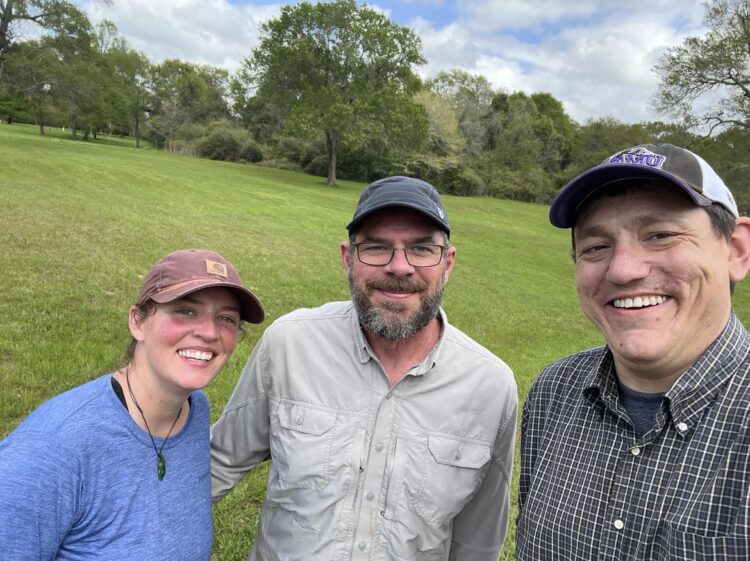
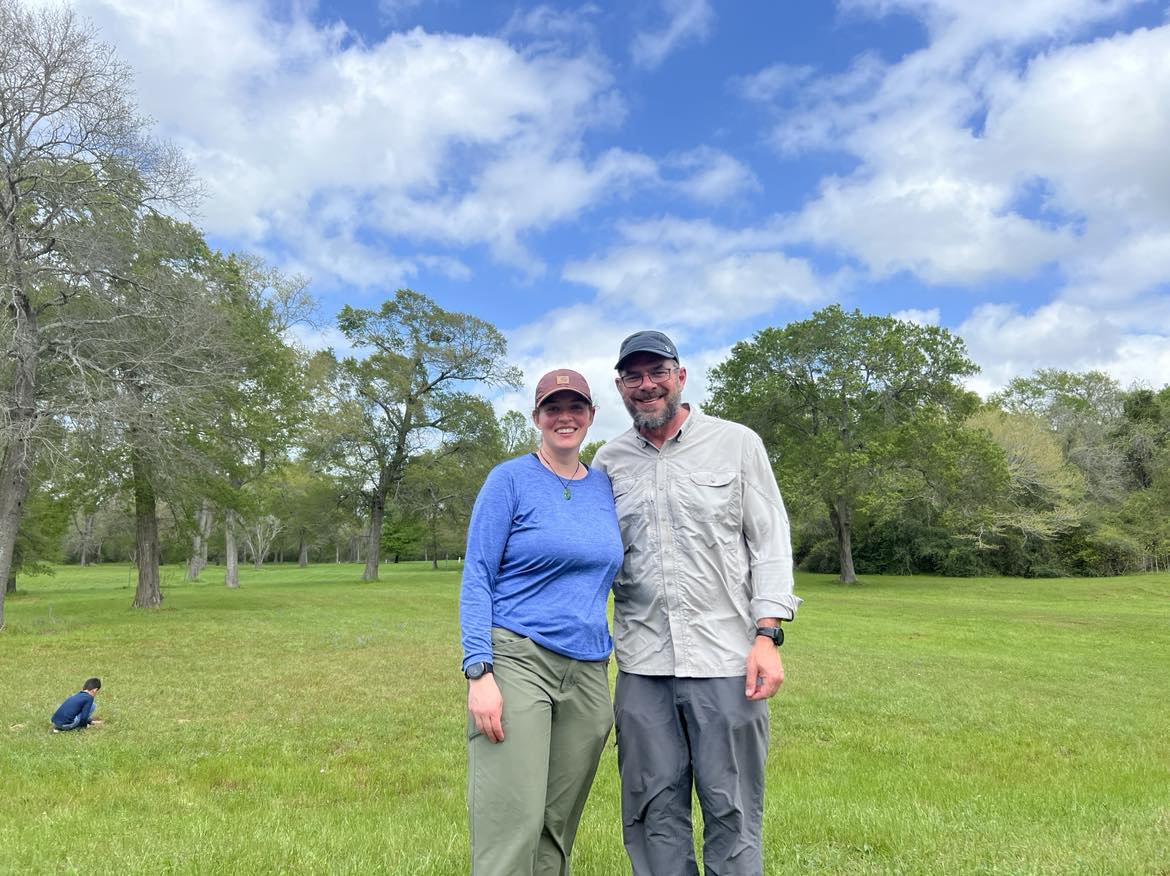
The archaeologists
In the spring of 2006, Dr. Walker founded Archaeo-Geophysical Associates, LLC, an archaeological consulting firm specializing in geophysical prospection. Since that time, he has collected geophysical data on over 150 archaeological sites, now totaling much more than 1,539 Acres of Gradiometer, 115 Acres of Ground-Penetrating Radar, and 484 Acres of Electromagnetic Induction Meter.
Aundrea Thompson studied at the University of Wyoming, and she has worked as a forensic archaeologist on numerous projects in the past ten years. For more on one project, in which she located the remains of a World War II soldier and brought his remains back to the US for burial, please click HERE
Hauling their geophysical prospection equipment in a large pick-up truck around the country, Aundrea and Chet spent almost a week on campus conducting the cemetery surveys.
Not only did they push the ground-penetrating radar over the entire five acre field to determine the size of the burial ground, but they also used a drone to scan a 120 square mile area with LIDAR. Moreover, they pulled a magnetometer across the five-acre field to compile additional data.
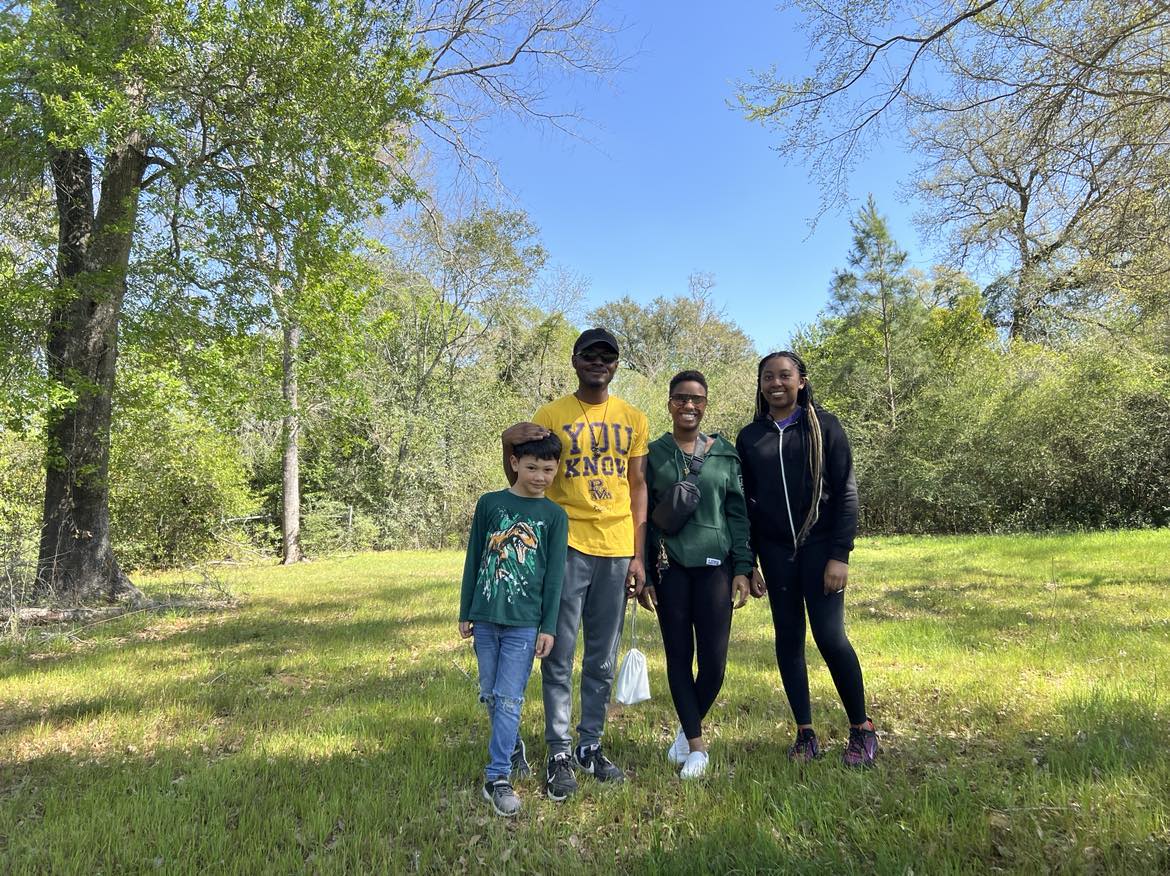
Descendant Communities
Bishop Walter Pendleton
The cemetery
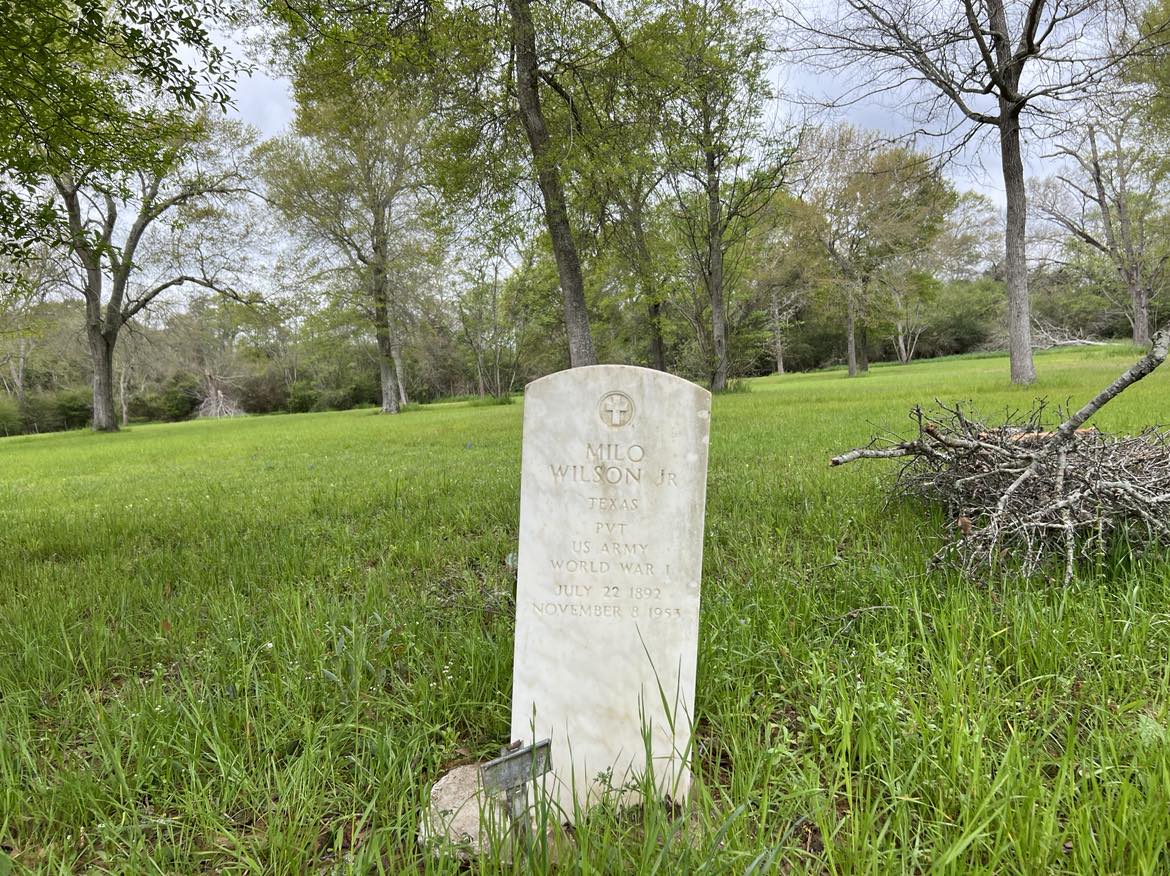
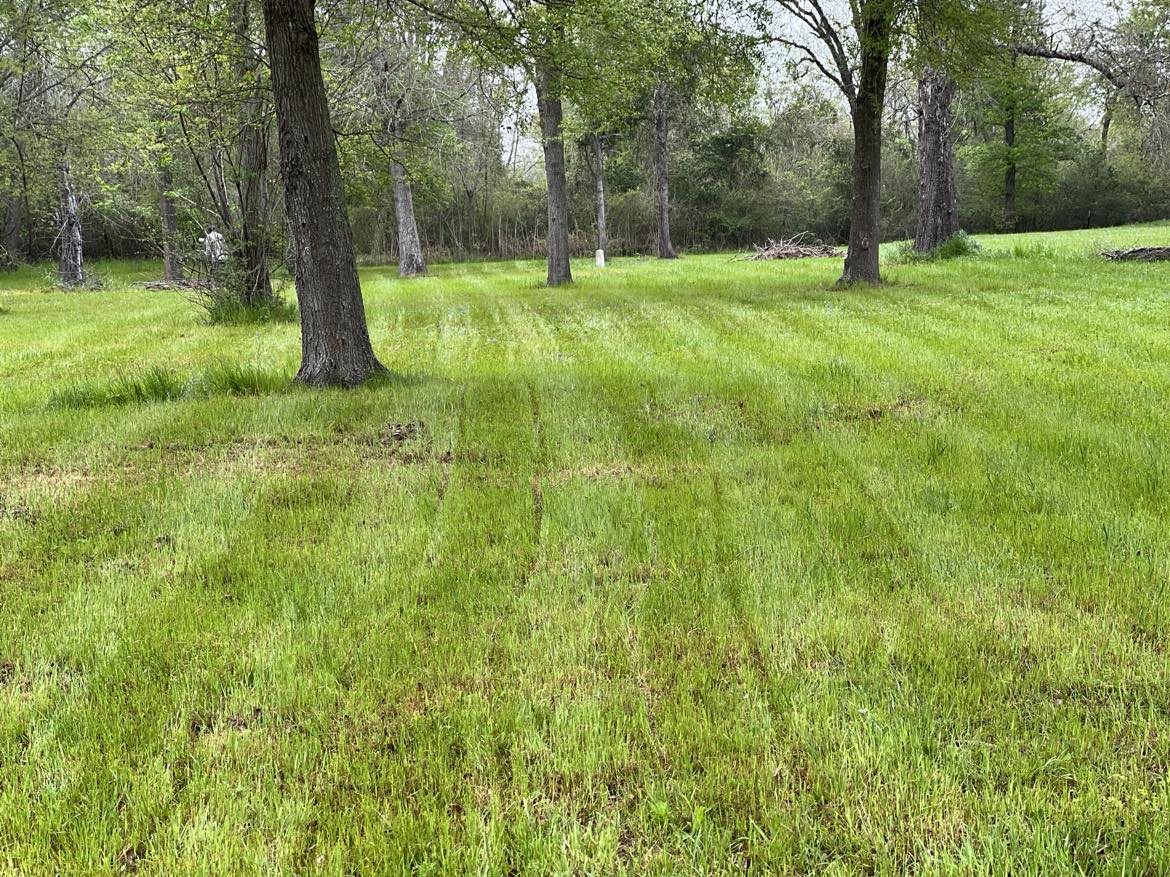
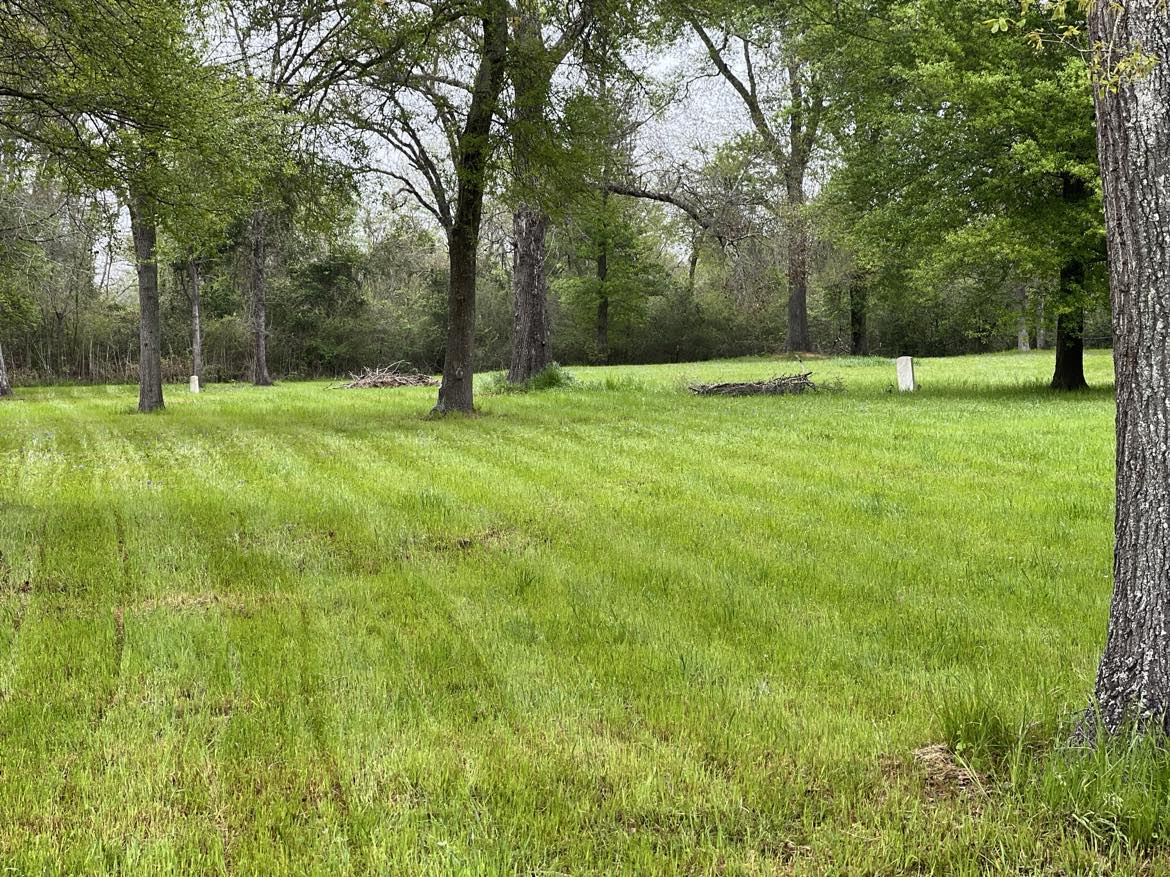
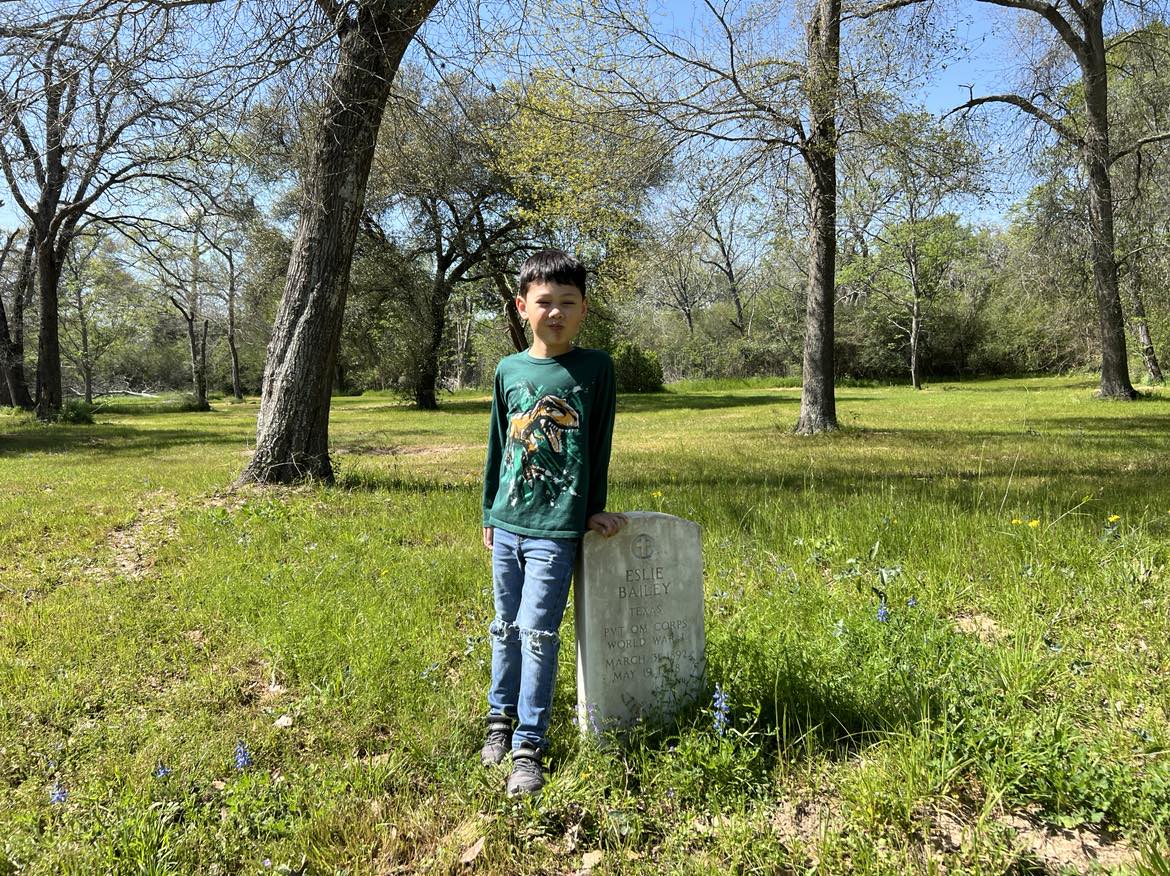
The burial ground is associated with and named after an African American church founded in the 1890s by Reverend George W. Wyatt, a one-time school teacher and politician who represented Waller and Fort Bend Counties in the state legislature in the 1880s. Based on slave schedules, Wyatt Chapel Community Cemetery might contain hundreds of graves of enslaved people, formerly enslaved people, and their descendants. It sits on the former slave labor plantation of Jared E. Kirby, who, in 1860, owned more enslaved people (159) than any other planter in Austin County. No one made a formal record of these burials, however, and the historic burial ground, which is located behind University Village Phase III, was over time abandoned, especially after 1961, with the establishment of nearby Prairie View Memorial Gardens. Wyatt Chapel Community Cemetery contains only a handful of marked graves, but it holds forever close the remains of three United States military veterans.
Magnetic Gradiometer
Chet and Aundrea completed the data collection with the magnetometer. Now that all the data is collected, they will analyze the data from the GPR, LIDAR, and magnetometer and submit their findings to Dr. Nesta Anderson, of Legacy Cultural Resources, Inc., who will meet with Dr. Moore and Pamela Morgan, of the Wyatt Chapel Descendants Committee, to compare the results to the findings from the pedestrian survey.
Digital PV Panther Project
John B. Coleman Library
Room 111
Prairie View, Texas 77446
Email: digitalpvpantherproject@gmail.com
Phone: 936-261-3512
The Headstone of Milo Wilson
Stay tuned for the next installment!
Finding Unmarked Graves at PVAMU
On March 12 and 13, 2024, Legacy Cultural Resources, Inc. invited ground penetrating radar specialists Dr. Chet Walker and Aundrea Thompson to visit the campus of Prairie View A&M University (PVAMU) and conduct several geophysical examinations of the historic burial ground of Wyatt Chapel Community Cemetery.
This project is funded through the Summerlee Foundation.
Aundrea Thompson, Dr. Chet Walker, and Dr. DeWayne Moore
The archeologists
Student Engagement
The archaeologists
In the spring of 2006, Dr. Walker founded Archaeo-Geophysical Associates, LLC, an archaeological consulting firm specializing in geophysical prospection. Since that time, he has collected geophysical data on over 150 archaeological sites, now totaling much more than 1,539 Acres of Gradiometer, 115 Acres of Ground-Penetrating Radar, and 484 Acres of Electromagnetic Induction Meter.
Aundrea Thompson studied at the University of Wyoming, and she has worked as a forensic archaeologist on numerous projects in the past ten years. For more on one project, in which she located the remains of a World War II soldier and brought his remains back to the US for burial, please click HERE
Hauling their geophysical prospection equipment in a large pick-up truck from Palestine, Texas, where they had been working at another archaeological site, Aundrea and Chet planned to spend two days on campus before driving to Magnolia, Texas to collaborate with the Houston Archaeological Society on a dig site.
At PVAMU, Chet and Aundrea planned to run the ground-penetrating radar over the entire five acre field to determine the size of the burial ground. In addition, they intended to scan the field with an electromagnetic induction meter as well as LIDAR [or Light Detection and Ranging], which is attached to a large drone and scans an estimated 120 acre area.
Ground Penetrating Radar
Scanning the Entire Field
The cemetery
The burial ground is associated with and named after an African American church founded in the 1890s by Reverend George W. Wyatt, a one-time school teacher and politician who represented Waller and Fort Bend Counties in the state legislature in the 1880s. Based on slave schedules, Wyatt Chapel Community Cemetery might contain hundreds of graves of enslaved people, formerly enslaved people, and their descendants. It sits on the former slave labor plantation of Jared E. Kirby, who, in 1860, owned more enslaved people (159) than any other planter in Austin County. No one made a formal record of these burials, however, and the historic burial ground, which is located behind University Village Phase III, was over time abandoned, especially after 1961, with the establishment of nearby Prairie View Memorial Gardens. Wyatt Chapel Community Cemetery contains only a handful of marked graves, but it holds forever close the remains of three United States military veterans.
Light Detection and Ranging (LIDAR)
Drone with LIDAR
Pre-Set Navigation
Chet and Aundrea completed the data collection using ground penetrating radar for the entire five acre field, and they obtained LIDAR data using the drone, but they plan to return later in March 2024 to complete data collection with the magnetometer. Once all the data is collected, they will analyze their findings independently and objectively, and they will submit their findings to Dr. Nesta Anderson, of Legacy Cultural Resources, Inc., who will meet with Dr. Moore and Pamela Morgan, of the Wyatt Chapel Descendants Committee, to compare the results to the findings from the pedestrian survey.
Digital PV Panther Project
John B. Coleman Library
Room 111
Prairie View, Texas 77446
Email: digitalpvpantherproject@gmail.com
Phone: 936-261-3512
The Headstone of Milo Wilson
Stay tuned for the next installment!
Caleb Brookins: A Rewarding Experience
Lucrative Work
When I first applied for the position of archival assistant on the Digital PV Panther Project, my goal was to generate an income stream while attending college. I had some available time in my schedule during the fall semester of 2022, and I wanted to fill it in a constructive manner. Prairie View A&M University sits in rural Waller County, Texas, and students do not have a multitude of work opportunities. Thus, I visited the website for student jobs, and I was excited about seeing a job that paid more than any other on campus.
Rewarding Experience
Little did I know the monumental impact the experience would have on my mindset moving forward. Indeed, I will always cherish my experience working on the Digital PV Panther Project.
Learning Experience
So many students do not know about the rich history of Prairie View A&M University, and I was certainly one of them when I started working on the Digital PV Panther Project in August 2022. Over the course of six months working in the archives, I not only learned about the history of slavery at Alta Vista, the plantation once owned by Jared Ellison Kirby, but I had the opportunity to process and digitize manuscript collections that former professors and administrators had donated to the university.
Serious Impact
It is amazing that I had the opportunity to preserve important documents in the university archives. Indeed, the importance of the work being done through the Digital PV Panther Project is the preservation of our history. There are countless boxes full of photos, documents, and audiotapes that convey stories about Prairie View. The digitization of this media will not only allow scholars and students to gain a better understanding of our history, but it will also enhance access to long-unexamined resources. This makes my contributions to the project stand the test of time.
Ground Penetrating Radar
Caleb also helped document and map Prairie View Memorial Gardens, the cemetery to the north of campus that contains the graves of former PVAMU professors and administrators.
Forward Movement
Even though I am a Psychology major, this public history project captured my sincere interest, which demonstrates the impact that historic preservation at PVAMU can have on other students in the future. Though I must take advantage of new opportunities, I am proud to have spent the fall 2022 semester preventing the erasure of our history, and I am eternally grateful and honored to have had the opportunity.