Stewardship & Legacy on “The Hill”
Stewardship and Legacy on “The Hill”
By T. DeWayne Moore, Ronald Lorenzo, Jacob Boisrond, Evelyn Todd, & Kennedy Frank

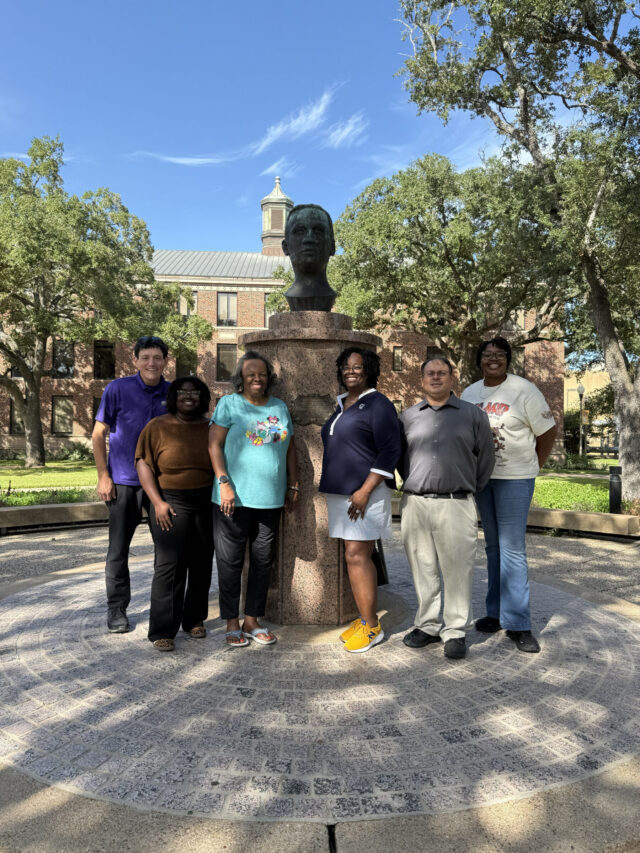
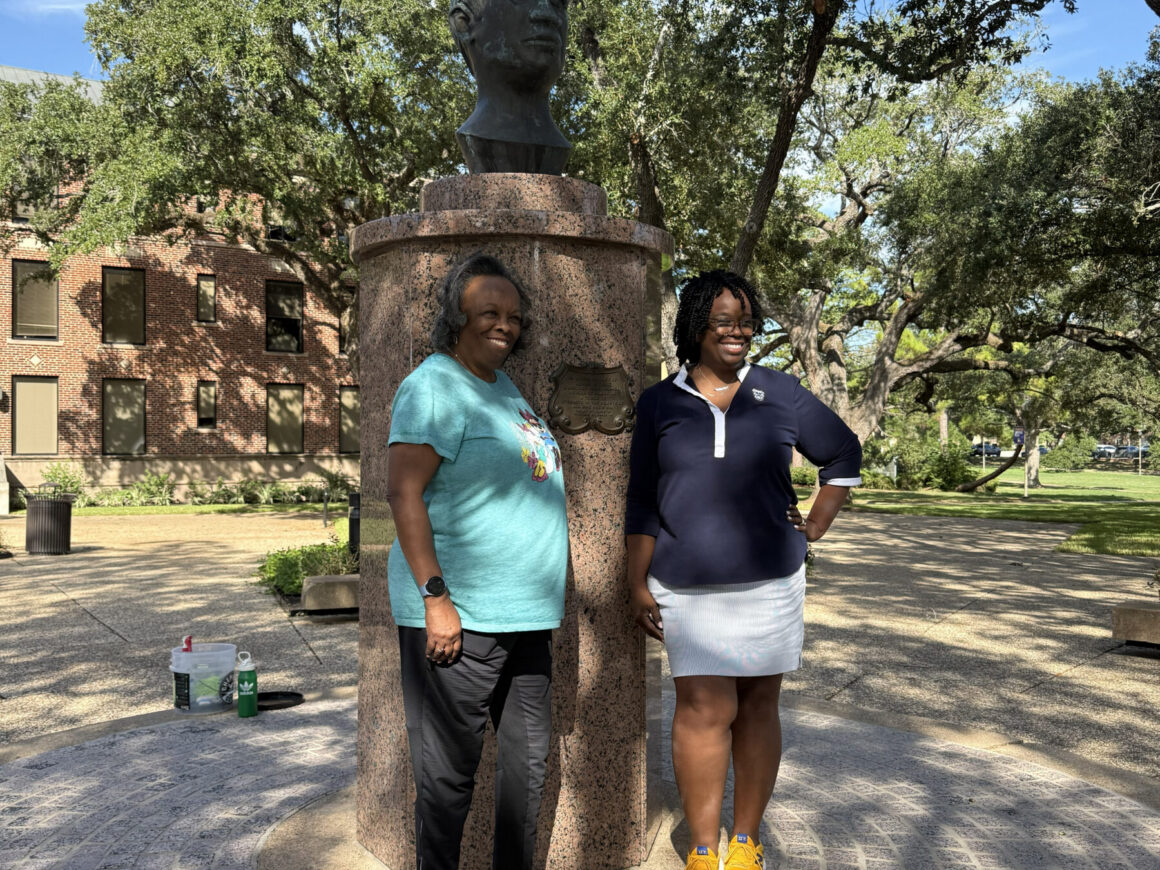
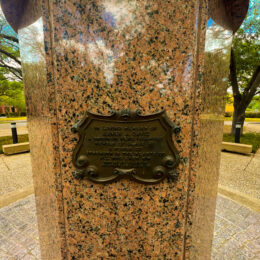
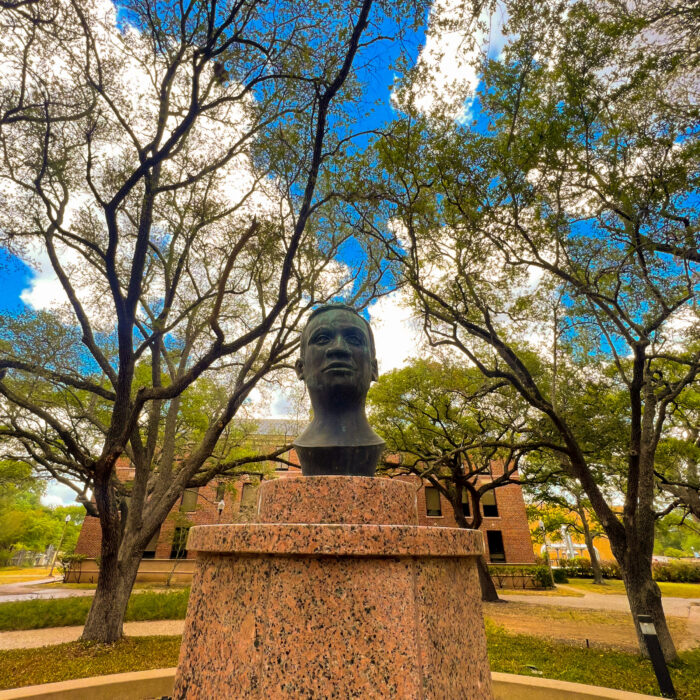
On October 16, 2026, the descendants of Abner Davis drove to Prairie View A&M University to meet with students, staff, and faculty working with the Woolfolk Digital Preservation Lab to discuss how their ancestor’s memory can help shape the university’s future. The visit included cleaning the Davis memorial as well as a long conversation about a financial gift to the WDPL and the establishment of an annual Abner Davis Stewardship Day in late October. Each part of the day addressed a shared responsibility: helping students understand the history they inherit and giving them meaningful opportunities to care for it.
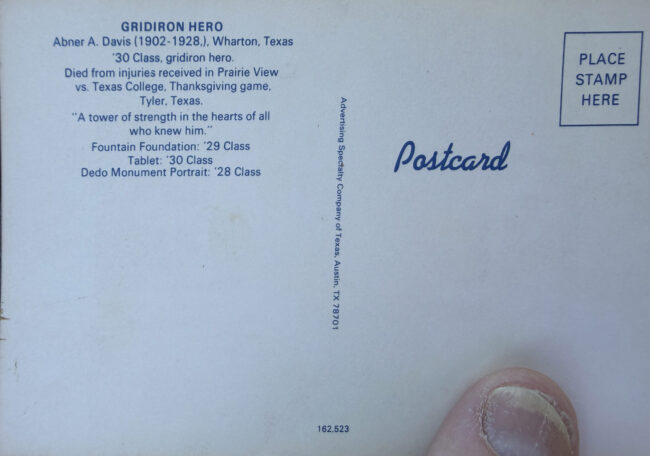
Abner Davis was a Prairie View football player who suffered a devastating injury during a Thanksgiving Day game against Texas College in 1927. He died on December 5. His classmates and teammates worked to keep his memory present on campus, and successive generations added their own acts of remembrance. The memorial on “The Hill,” near the George Ruble Woolfolk Building, belongs to that history of collective care.
That history gives the memorial significance beyond its physical form. It preserves evidence of how Black students understood friendship, loss, and their obligations to one another. Students who remembered Davis insisted that his life should remain part of Prairie View’s story. Their actions created an inheritance that today’s students encounter whenever they pass through this historic part of campus.
Meeting his descendants made the responsibilities attached to that inheritance especially clear. A name on a memorial connects to a family whose relationship to the past extends beyond university records. Their presence brought family memory into conversation with institutional history. For the WDPL, such relationships are essential to responsible public history. Families deserve opportunities to help shape how their histories are researched, interpreted, and carried forward.
The cleaning of the Davis memorial gave that responsibility a practical expression. In 2022, student researcher Malachi McMahon described noticing its neglected condition and learning how to clean and maintain it. His published account connected that effort to earlier generations of Prairie View students who cared for the site. Returning to the memorial continues a tradition in which students learn that preservation requires attention and action.
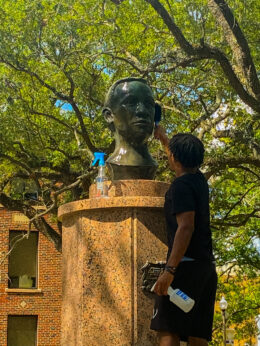
Cleaning also prompts questions that belong in the classroom. Who created this memorial? Why did they choose this location? What records explain its changing appearance and meaning? Who will care for it next year? Those questions connect physical stewardship to historical inquiry. A student who understands the people behind a monument has a stronger basis for recognizing its value and explaining that value to others.
At the WDPL, we describe this relationship through a simple principle: Research is Respect. Respect becomes visible in the time devoted to identifying a person in a photograph, preserving a fragile document, or listening carefully to a family’s account. It also becomes visible when someone recognizes that a familiar campus landmark needs care. Yesterday’s visit brought these responsibilities into the same conversation.
Our discussion of a potential financial gift to the WDPL grew from this concern for lasting stewardship. The opportunity is to connect the preservation of Davis’s memory with the education of students who will become responsible for protecting other histories. Philanthropic support could help provide the training, materials, and student opportunities necessary to sustain that work.
A gift could support paid student research, archival processing, digitization, and public interpretation. It could help students investigate the memorial’s history, locate additional records, and share their findings with the Davis family and the wider university community. These possibilities remain part of a developing conversation about support. The purpose is to build a durable relationship between family remembrance, historical preservation, and student learning.
Paid opportunities matter because preservation takes time. Students need supervision and practice to learn how to describe records accurately, handle materials responsibly, and distinguish documented evidence from assumptions. Supporting that work makes historical stewardship a serious educational undertaking. It also recognizes the value of student labor and helps prepare participants for future work in archives, museums, education, and community organizations.
The annual Abner Davis Stewardship Day will give this commitment a recurring place in campus life. It will encourage students to become better stewards of Prairie View’s legacy and historical resources. Davis’s memorial will provide a focal point for a broader invitation to learn about the university, recognize the significance of its surviving historical evidence, and participate in its care.
The vision combines remembrance with supervised service and historical learning. Activities could include appropriate care for memorial spaces, research presentations, archival demonstrations, and conversations with descendants and alumni. Students could document the condition of historical resources, investigate the origins of campus traditions, or develop interpretive materials. Each activity should connect a practical task to an understanding of why the resource matters.
An annual observance also creates continuity as students graduate and new students arrive. Participants can leave research notes, documentation, and clear records of completed work for those who follow. Over time, Stewardship Day can help make preservation an expected part of belonging to Prairie View. The aim is to cultivate habits that students carry into their organizations, professions, and home communities.
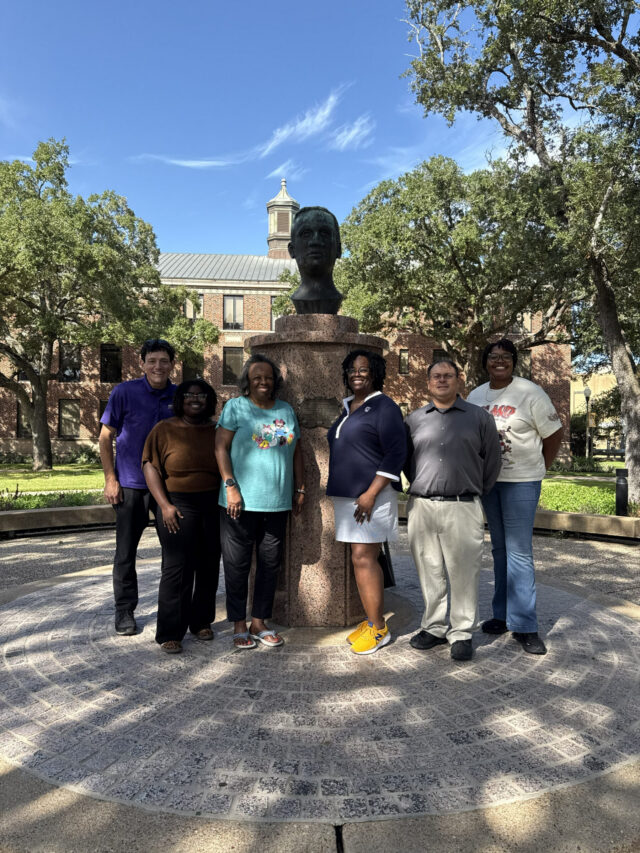
An idea originally proposed by Human Resources specialist Ali Afzal, Abner Davis Memorial & Stewardship Day should also connect student participation with consistent institutional support. Reliable coordination and follow-up will help ensure that the care begun during an annual gathering continues throughout the rest of the year.
The Davis family’s involvement gives this work a vital human connection. Their interest in the memorial and the WDPL demonstrates how descendants can help universities strengthen relationships between historical research and public responsibility. Sustaining that relationship will require continued conversation, careful planning, and opportunities for the family to participate as the initiative develops.