“Stranger Stop and Cast an Eye”
Digital Exhibitions from the Association for Gravestone Studies (AGS) Archive
The Frank Calidonna Collection
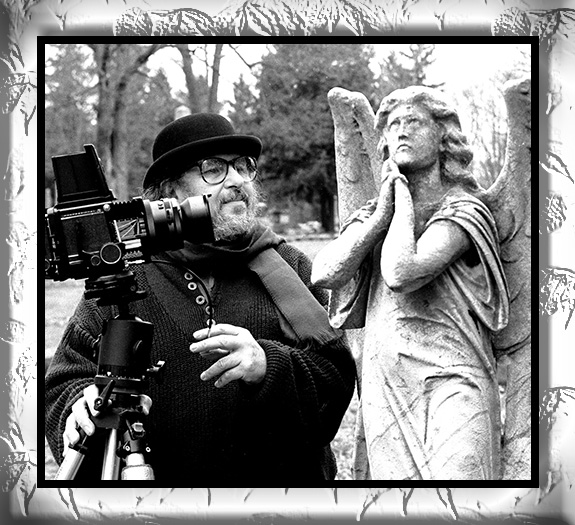
This exhibition features the work of Utica, NY native, professional photographer, teacher, longtime AGS member, and former AGS president Frank Calidonna. He began his teaching career at the Crotched Mountain School for the Deaf in New Hampshire in 1961.[1] He moved to Rome, NY in the mid-1960s and began teaching at the New York State School for the Deaf.[2] He soon became the director of the instructional media center and started working as a professional photographer. Calidonna also developed a passion for the artwork in Victorian era cemeteries, and he became a member of the Association for Gravestone Studies (AGS) in 1991.[3] In the 1990s, he founded Diversified Photographic Services in Rome, and he taught photography classes at the University of Massachusetts, Mohawk Valley Community College, and the University of Tennessee. [4] In addition, Calidonna organized exhibitions of his cemetery photographs at numerous art galleries to promote the work of the AGS. This digital exhibition is inspired by one of Calidonna’s physical displays entitled, “Stranger Stop and Cast an Eye.”
Stranger stop and cast an eye
As you are now, so once was I
As I am now, so you will be
Prepare for death and to follow me [5]
– From many old gravestone epitaphs
“Death is the mother of Beauty.”
– From Wallace Stevens’ Harmonium (1923)
I am a photographer. As a photographer in most instances I don’t create anything. My main skill is seeing. My secondary skill is recording and interpreting what I see with a camera. I record in order to show you, my viewer, what I see. This is what photographers do. For that in which I am interested I wish to inspire an interest in you. I want you to see what I see, to enjoy and possibly to be moved by my vision too.
My passion is funerary art. I study and photograph the artwork produced to honor the dead and decorate their graves. My love for this work is not a macabre fascination. The art associated with disposition of the dead ranges from crude, untutored work to the carvings of Bernini and Michelangelo. The emotions associated with losing loved ones have prompted many to place major works of art on the final resting places of the dead. Unlike most museum quality work, funerary art is left out in the open where it is exposed to the forces of wind, weather, acid rain, pollution, and the attention of vandals and thieves.
Death and grief are universal human experiences. The sculptors of memorial art fashion stone and metal into the emotions and beliefs of our world. Often this is done with world class artistic skill.

It is art with a capital A.
I find the entire iconography of funerary art moving and appealing. My love and fascination for cemeteries has been a part of my life as long as I can remember. As a child I spent most summers in Utica, NY. Across the street from my Aunt’s house was St. Agnes Cemetery, and I spent many hours running, hiding, and pretending in my special playground. What more could a kid ask for? I had stones for a fort and a sarcophagus for a truck. I even visited the awe inspiring monument to John B. O’Hanlon, a fire fighter who lost his life in the 1897 Utica fire. [6]

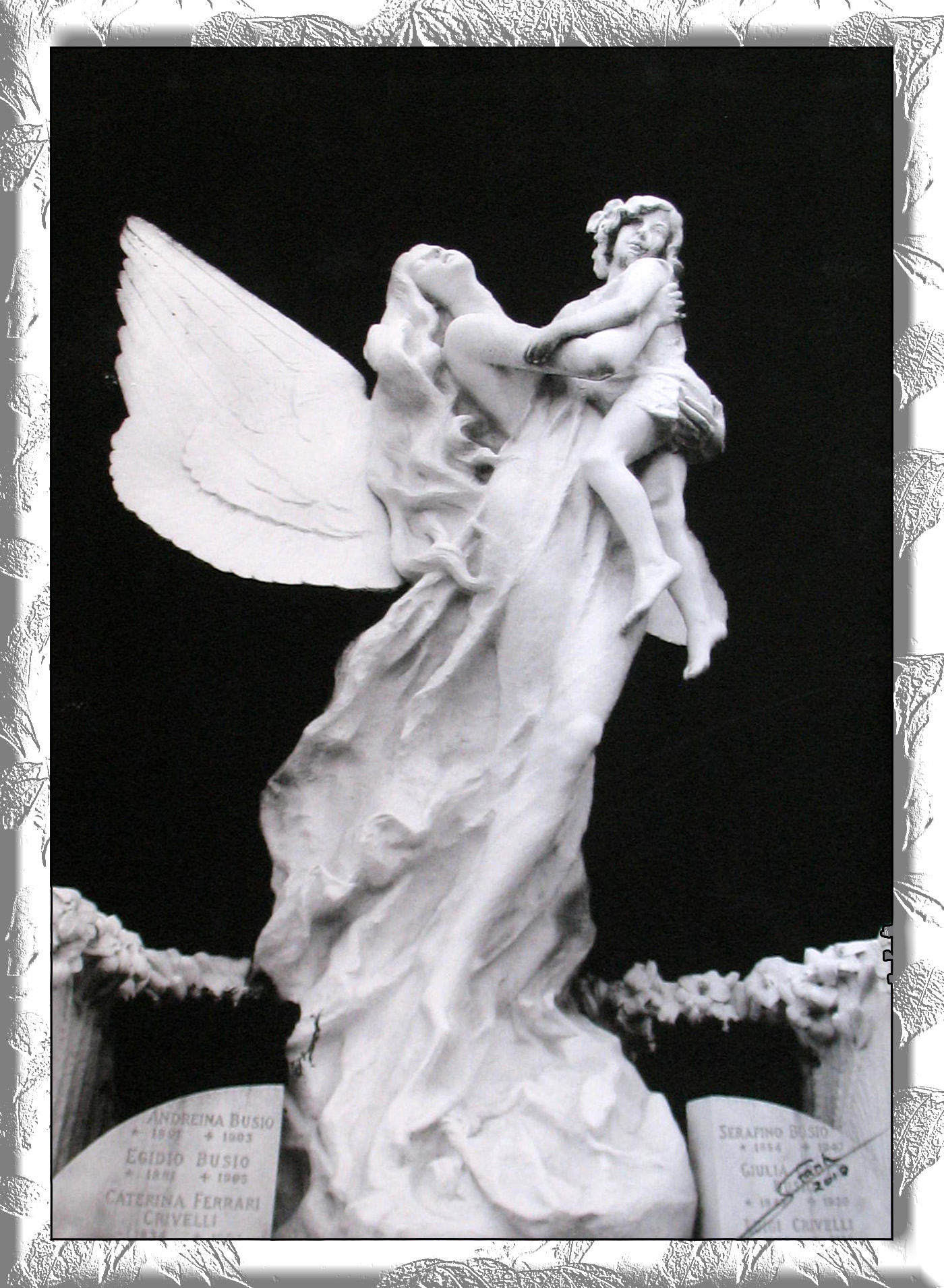
Later, I learned of death and loss. I learned about death from the good nuns and the teachings of the Catholic Church. Death was to be feared because if you weren’t good then all of the punishments of hell awaited you. Pretty impressive stuff to a kid.
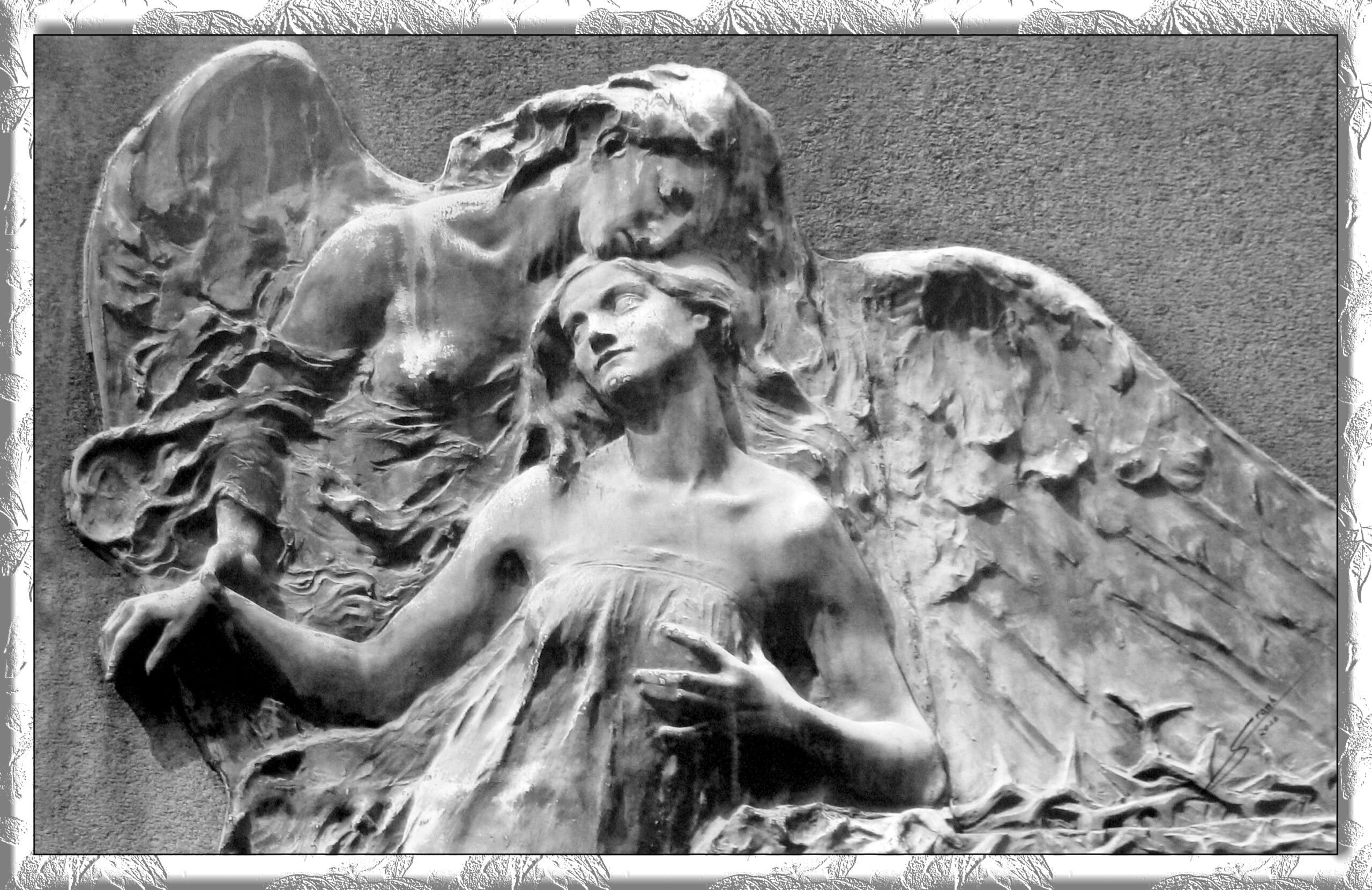
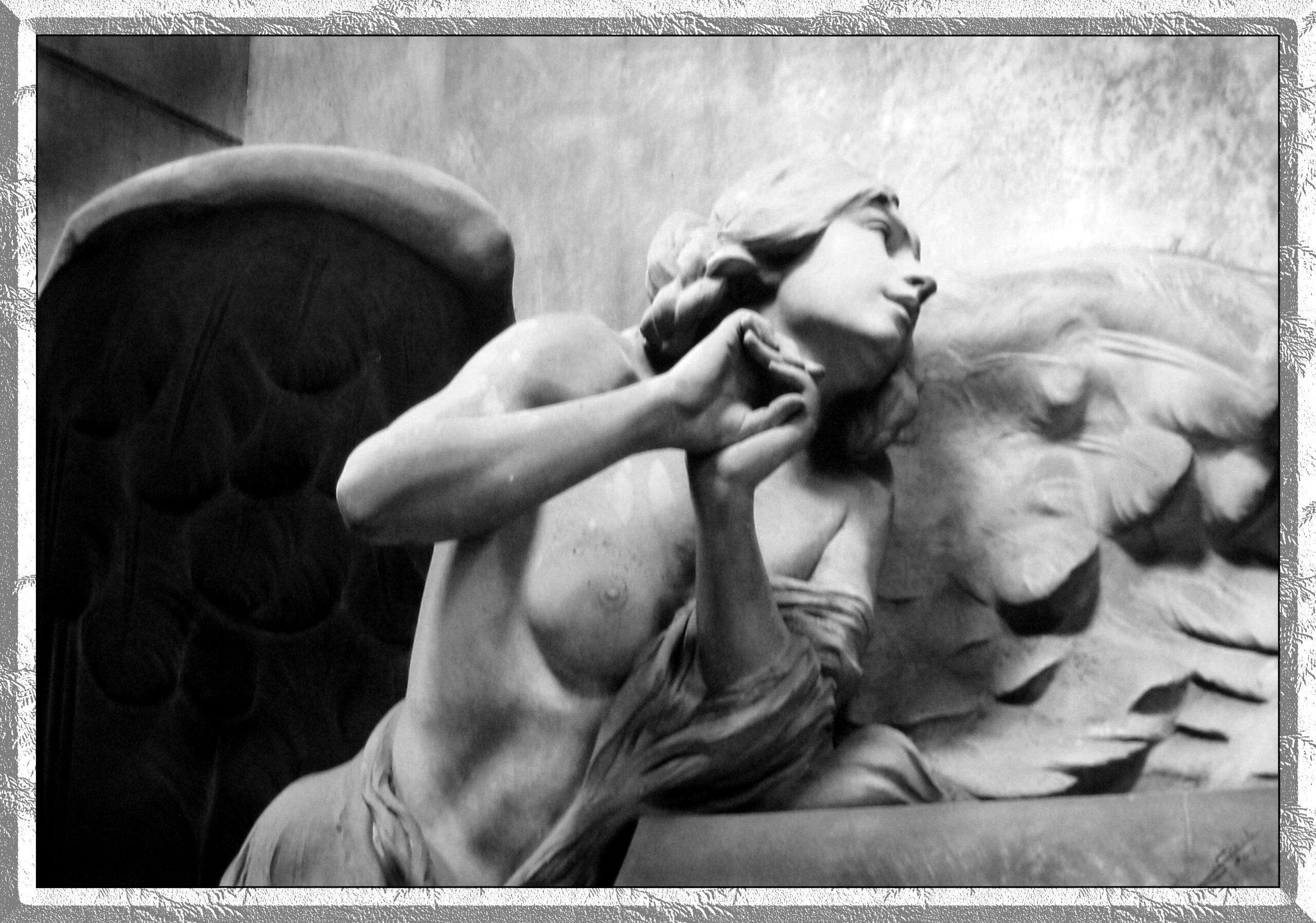
I learned about grief and loss from my family. I grew up in an Italian-American family and culture. I was taken to many wakes and funerals when I was little. The sadness and loss demonstrated by the noisy wailing and shrieking associated with an Italian funeral were burned into my brain. The ritualized mourning and gross sentimentalizing of the dead was part of our culture–even though most of it was strictly for show.
But what did I know as a kid?
The end of the funeral took place in the cemetery. Thus, for me, cemeteries were not only playgrounds, but also a source of some emotional freight, too. In spite of this, I still find the atmosphere of cemeteries, especially Victorian cemeteries, as intriguing as ever. The emotional, mortuary excess, the celebration of death, which turns many people off, is their precise appeal for me. Funerary art is fraught with expressed feeling.
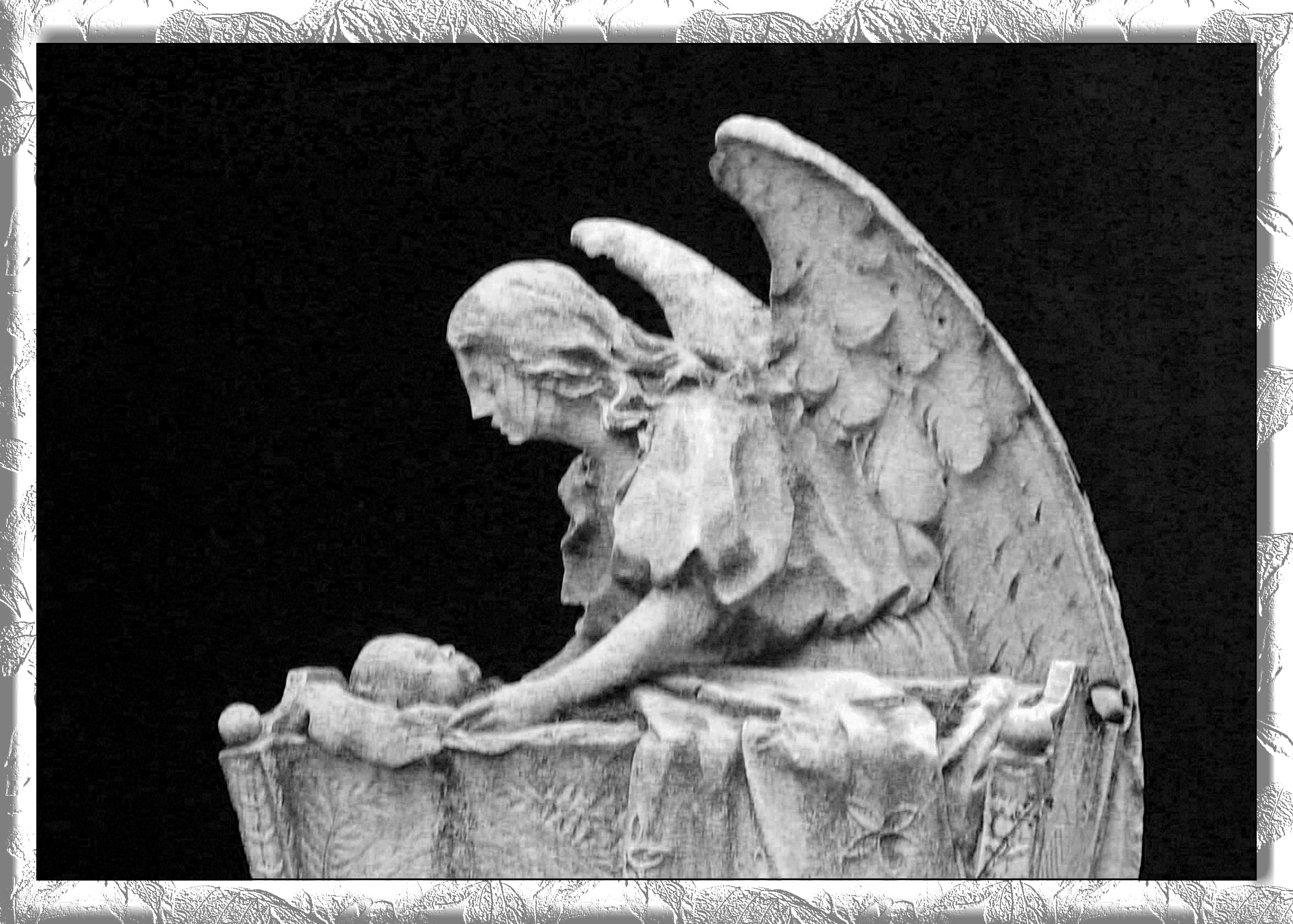

How do I feel when being stared down by an angel? What emotion is the angel expressing? What beliefs are being declared? You feel many things when being stared down by a winged spirit. They remind you of the fact and the promise of death. You undergo a visceral experience of your feelings and beliefs about mortality and beyond.
How successful do I feel the sculptor is in expressing all of this? How do I feel in response? I also bring to this encounter all of my own sentiments and philosophies of mortality and beyond. The sculptor presents me with a tableau and I react to it. How successful can I be in translating my feelings and beliefs to you, the viewer, through a photograph?
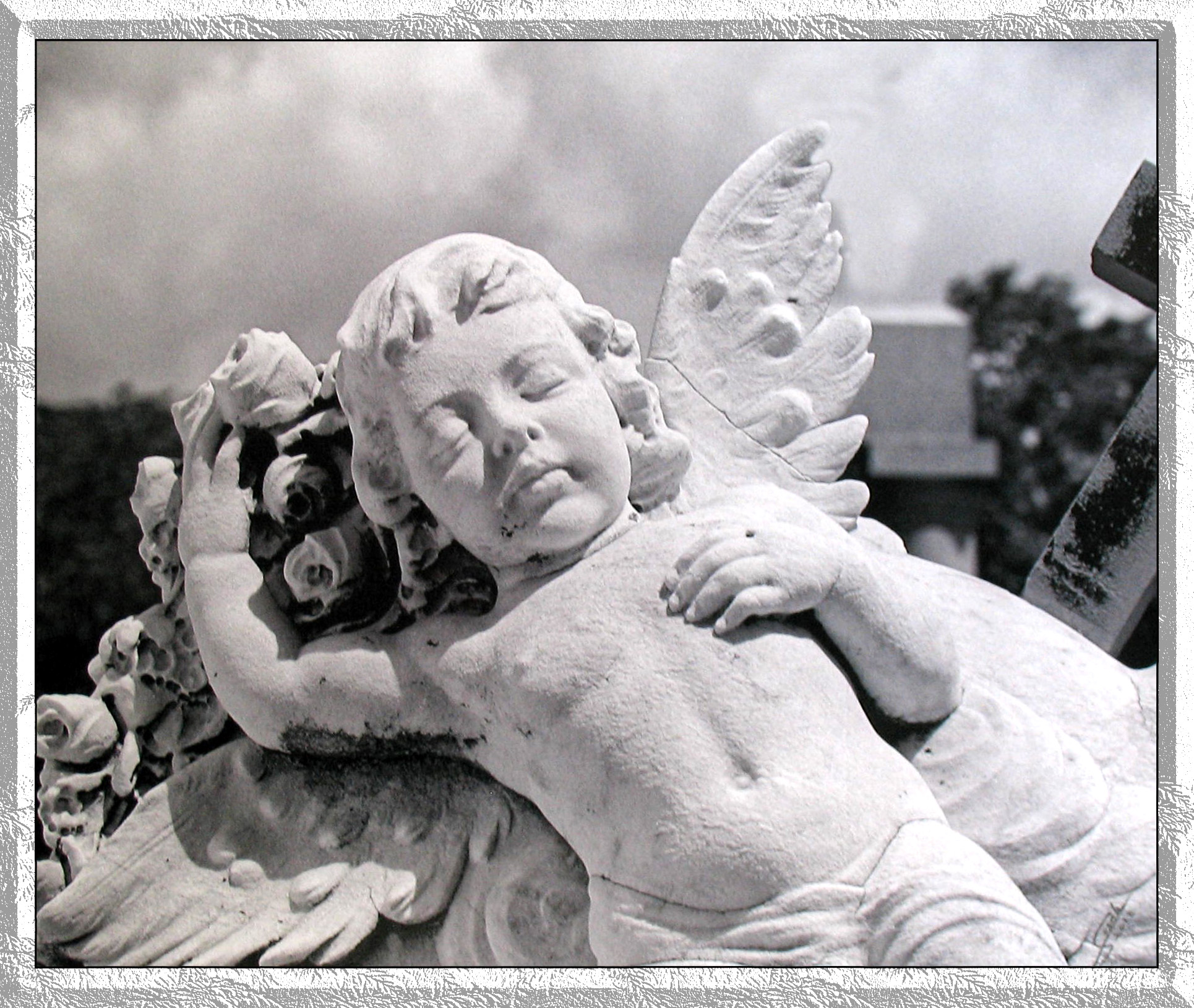
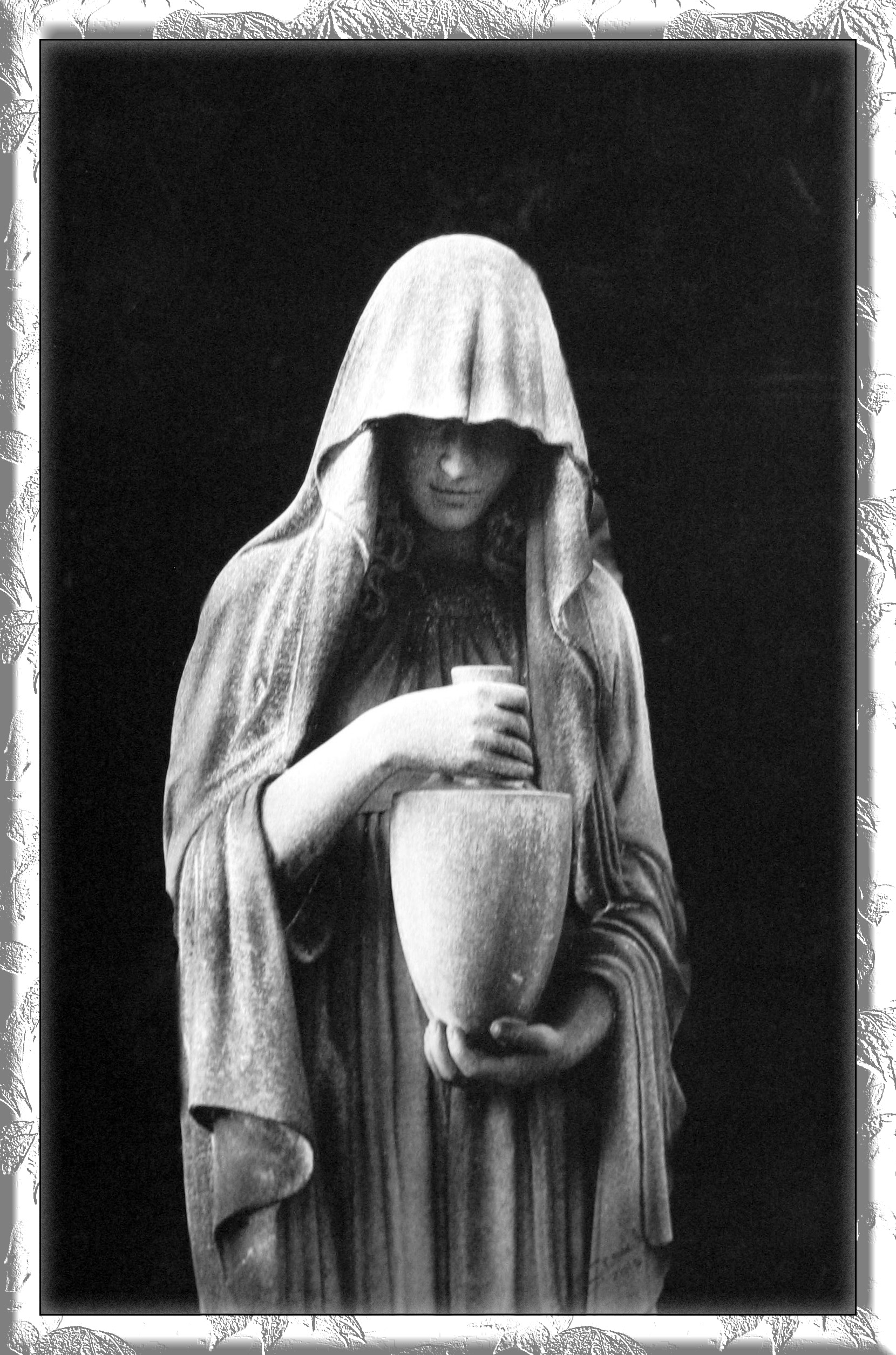
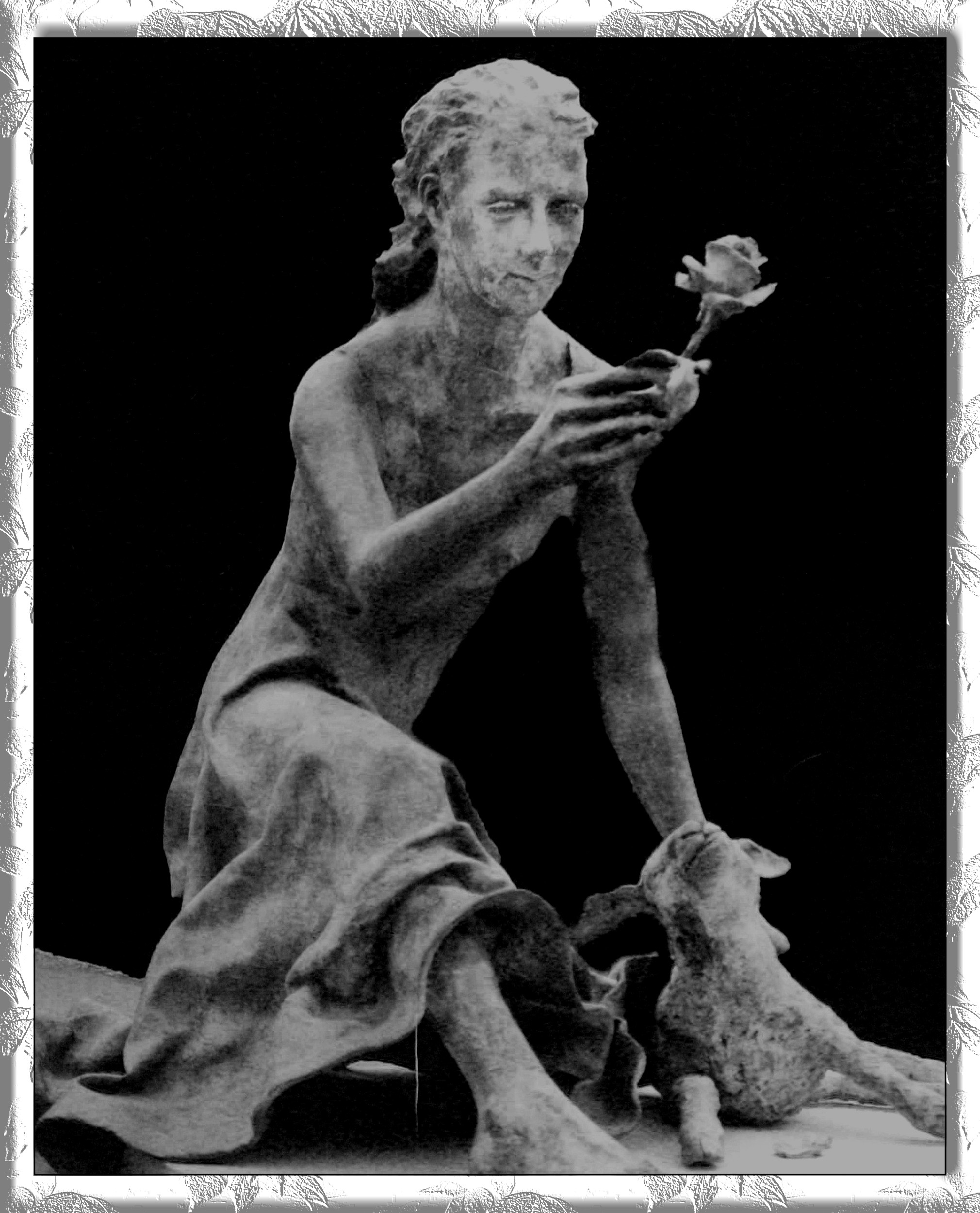
Now it becomes tricky.
I am trying to create art by photographing someone else’s artwork.
This is my purpose and challenge–to present to you my response through photography, not to steal the talent and sweat of the sculptor.
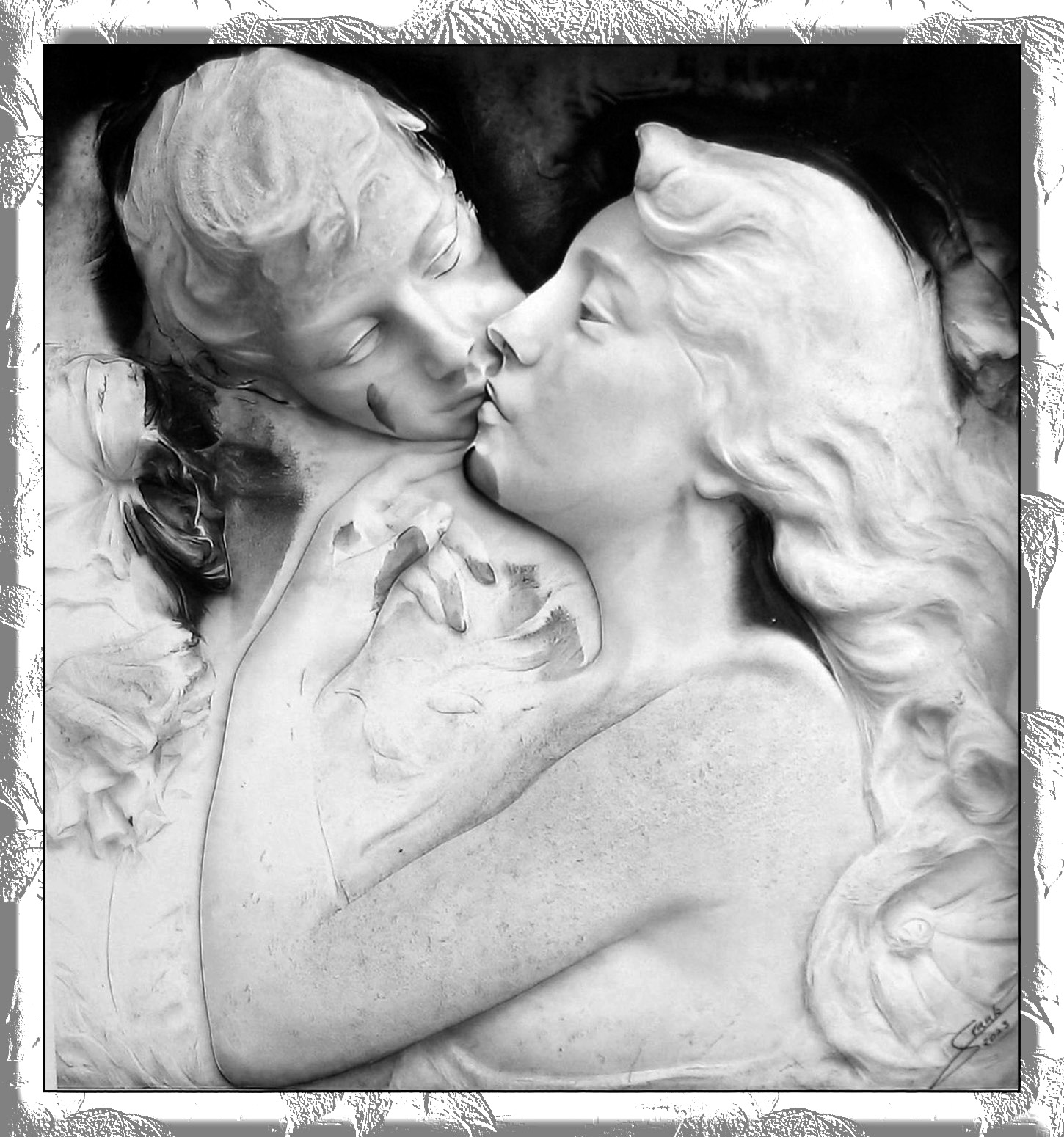
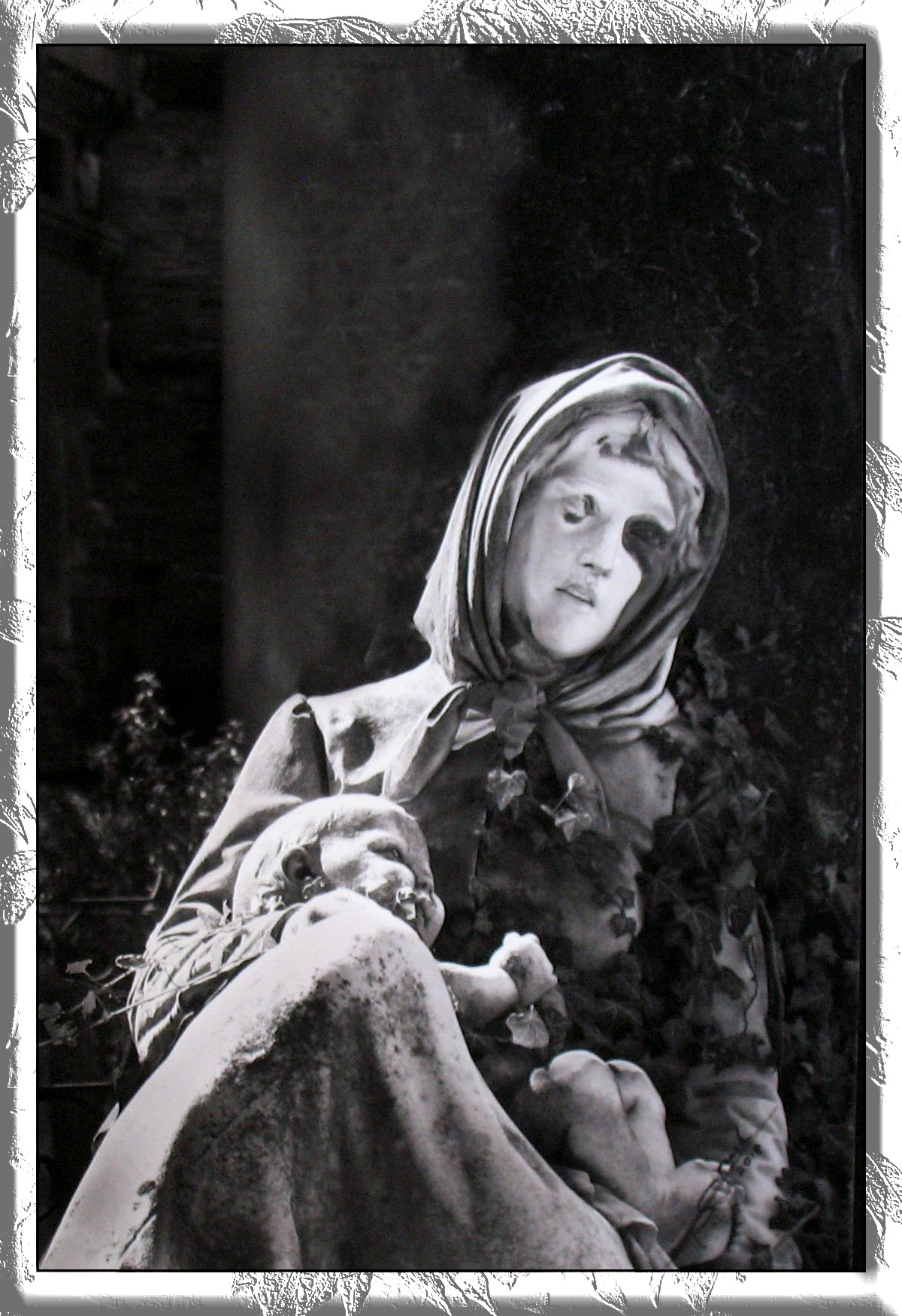
I have another more mundane, but equally important reason for my photography. Cemeteries are outdoor museums. I am documenting as many at-risk monuments as I am able. Many cemeteries and monuments are endangered or at great risk. Natural weathering, pollution, vandalism, and theft are taking a terrible toll. Cemeteries need our help and I hope that I contribute to the cause by making you the viewer of my work aware of what is out there and what is at stake [7].
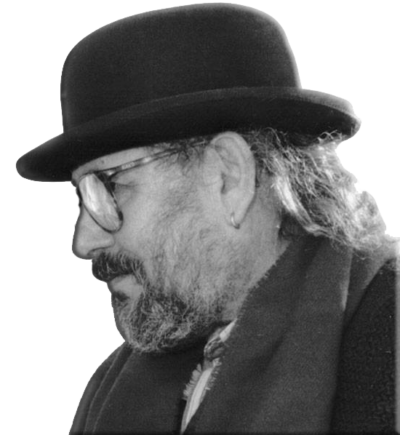
Special thanks to AGS Archives Committee chair Nancy Adgent, who first suggested curating a digital exhibit featuring archival media, and Frank Calidonna, who generously donated his work to the archives and provided crucial feedback during curation process. AGS board member and Assistant Professor of History at Prairie View A&M University Dr. DeWayne Moore worked with his graduate student research assistant Evelyn Todd to curate the exhibition in Wordpress.
NOTES
[1] “Instruction of Deaf Explained at Club,” The Concord (NH) Monitor, Nov 23, 1963, p.3.
[2] “Roman Attends Symposium,” The (Rome, NY) Daily Sentinel, Feb 5, 1968, p.12.
[3] John M. Cropley, “Cemeteries Rub Couple the Right Way,” The (Rome, NY) Daily Sentinel, July 24, 1992, p.3.
[4] “Artist & Artisans,” The (Rome, NY) Daily Sentinel, Sep 16, 1992, p.28.
[5] The extended exhibit text is taken from Frank Calidonna, “Stranger Stop and Cast an Eye,” November 28, 2007, https://fotograves.blogspot.com/ [accessed January 18, 2024].
[6] For more information on O’Hanlon and St. Agnes Cemetery, see https://www.findagrave.com/memorial/18541778/john-b_-o_hanlon [accessed January 26, 2025].
[7] All the original prints as well as the digital surrogates can be found in the Frank Calidonna Photograph Collection, PH021, in the Association for Gravestone Studies Collection at the Robert S. Cox Special Collections & University Archives Research Center, University of Massachusetts at Amherst Libraries.