Listening to Black History
Finding My Place at the Woolfolk Digital Preservation Lab
By Jacob Boisrond
A Whole New World
I never imagined myself working as a student researcher at Prairie View A&M University. Before joining the Woolfolk Digital Preservation Lab (WDPL), I did not even know that such an opportunity existed. I am grateful to Dr. T. DeWayne Moore for trusting me, recognizing my potential, and giving me the chance to contribute to work that has changed how I understand history—and my place in it.
I still remember my first assignment: transcribe a recording labeled “187.”
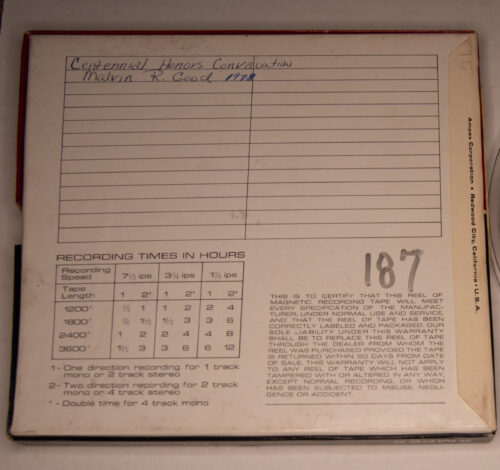
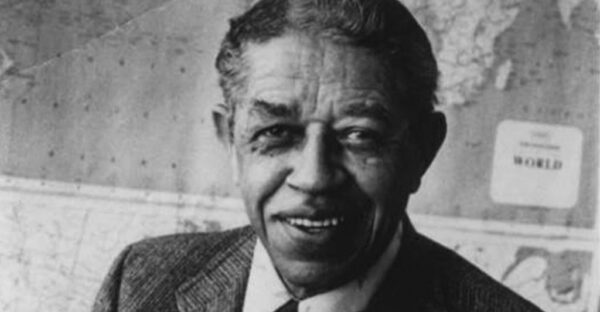
Before beginning, I decided to listen to a few minutes in the car. I wanted to get a feel for the speaker’s voice and learn what the recording contained. The speaker was Malvin R. Goode, the pioneering journalist who had worked as an ABC News correspondent. His speech dated to 1978. Although I was curious, I doubted that something recorded so long ago would have much to say to me today.
Then I started listening.
Goode spoke with an urgency that caught my attention. He encouraged young men to make a meaningful difference in the world and emphasized that doing so required people to support one another. His message about responsibility and collective action felt relevant to my own life.
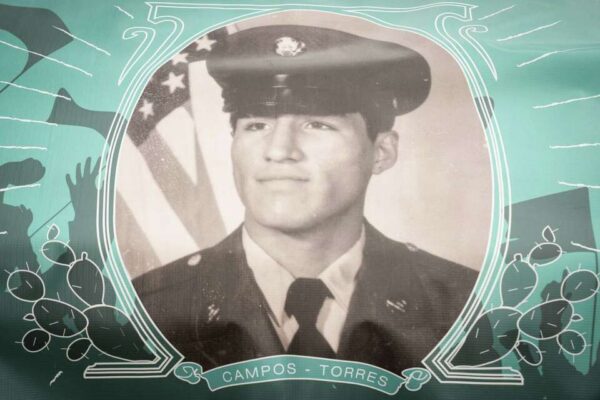
He also discussed injustices that were recent events for his audience. One was the killing of José “Joe” Campos Torres, a Mexican American military veteran who was beaten by Houston police officers in 1977 and whose body was later recovered from Buffalo Bayou. Two officers received probation following state convictions for negligent homicide; federal civil rights convictions followed. The case prompted widespread anger and demands for accountability. For more info, click HERE
Goode also described the case of Oliver Lee Davis, a high school basketball player who received a 99-year prison sentence. In Goode’s account, Davis had been convicted of a crime he did not commit.
That story struck me personally. As a former high school basketball player, I could imagine someone with experiences like mine facing the circumstances Goode described. I wanted to know more about Davis, what had happened to him, and why I had never heard his name. The YouTube video to the right explains more about Davis.
That realization stayed with me: these stories were unfamiliar to me, yet they were waiting in a recording I had been assigned to transcribe. How many other students had never heard them? How many other recordings contained voices and experiences that could change how we understood the past?
I was only beginning my first assignment, but I already understood why the work at the WDPL mattered.
Over the following months, I learned more about Prairie View A&M University through the voices preserved in its recordings. With repeated listening, some became familiar enough that I could recognize them within seconds, including Reverend W. Van Johnson and Dr. Alvin I. Thomas. That growing familiarity gave me a stronger connection to the university’s history.
I have now completed dozens of audio transcriptions and expanded my work to scanning documents. With every recording I transcribe and every page I scan, I help preserve stories that deserve to be heard, studied, and remembered. I understand the importance of that responsibility because a single recording changed how I saw the past.
When I joined the lab, I did not know what I could contribute. Now, I can point to work that will help others discover the people and experiences that shaped our university and our communities. I want the next student to feel what I felt when I first heard Goode’s voice: curiosity, urgency, and a reason to keep listening. These histories matter. Helping ensure that others can encounter them has become one of the most meaningful parts of my education at Prairie View A&M.